
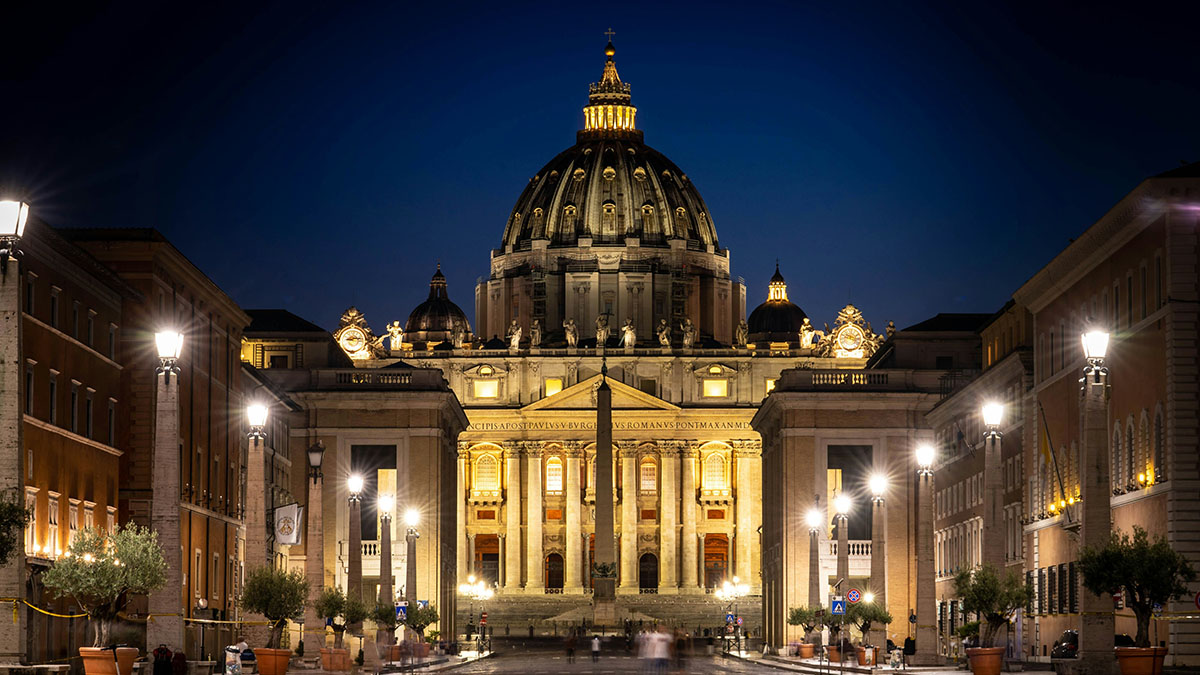
The defining moment of the Leo XIV papacy came after only 414 days.
On July 1, 2026, the Society of Pope St Pius X (SSPX) ordained Pascal Schreiber from Switzerland, Michael Goldade from the United States, and Michel Poinsinet de Sivry and Marc Hanappier from France as bishops without the consent of the Pope.
With that action, the SSPX incurred an automatic penalty of excommunication. They did it to themselves.
Pope Leo quite literally pleaded with the SSPX—”I plead with you and ask you with all my heart: please turn back!” The plea of Pope Leo fell on deaf ears.
They proceeded anyway.
This was not a contest and certainly Pope Leo did not emerge a loser.
Rather, these events have strengthened Pope Leo greatly at this early moment in his ministry by putting his and Pope Francis’s traditionalist critics in a tight spot.
Anyone who thinks division belongs in the Church now is in a difficult position.
Decoding a papacy
From the beginning of Leo’s papacy, there has been an avid effort to de-code him.
Is he a ‘liberal’ in the mold of Pope Francis? Yes, because he will continue synodality.
Isn’t he more ‘conservative’ than Francis? Yes, because he wears the papal mozzetta.
The whole game is silly. It requires us to think of the church in terms of an inevitable division between one side and the other, and more fundamentally it has misunderstood what Leo is doing.
Communion with the pope
The truth is more like this—”The Roman Pontiff, as the successor of Peter, is the perpetual and visible principle and foundation of unity of both the bishops and of the faithful” (Lumen Gentium, 23).
That is true whether the pope is named Benedict or Francis or Leo.
To remain in communion with the pope is both the most minimal definition of being Catholic and also, really, all of being Catholic.
And for that reason, the church cannot have anything like a party system or a loyal opposition.
Certainly we can disagree. But encamped disagreements are something else, and a well-funded opposition is even worse.
An uncomfortable moment
All of which is why this now is an uncomfortable moment for Cardinal Raymond Burke, Cardinal Gerhard Müller, and others who certainly have not broken communion but who have been vocal in their opposition.
Just as Pope Leo pleaded with the Society of Pope St. Pius X, he has extended olive branches to those who reject synodality, who question Amoris Laetitia, and who are uncomfortable with some of Vatican II.
But now he also has shown them that he is serious about unity.
There is a boundary. Those who choose to go past the boundary will suffer just penalties, and whether that happens is entirely up to them.
In the One, we are one
Leo’s motto is drawn from words of St. Augustine—In illo uno unum. “In the One, we are one.”
Unity has been a persistent theme of this young papacy.
For a long while, it was a gentle call to unity. Now, we also have seen something firmer.
The division of the Church since Vatican II has gone on too long and done too much damage.
Since July 1, we know that the Leo papacy will not give endless license to division and those who would sow dissension in the Church now have reasons to think twice.
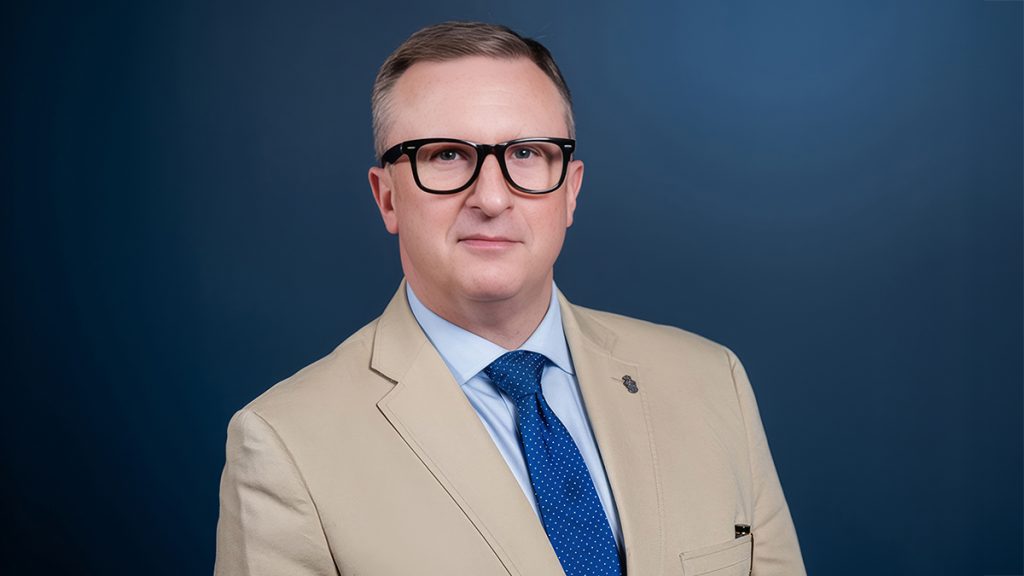
- Steve Millies is the director of The Bernardin Center at CTU. A political theorist who trained at The Catholic University of America, he taught political science for 15 years at the University of South Carolina Aiken before coming to Catholic Theological Union (Chicago, IL) where he teaches courses in history and Catholic social ethics.