

Rome’s refusal to grant Germany permission for lay preaching was never likely to end differently.
A Church repeatedly cautioned against pursuing its own path was hardly going to receive a special exemption.
However, as the Viennese pastoral theologian Paul M. Zulehner observed, it might have been more prudent not to seek formal approval at all, but simply to continue existing pastoral practice quietly, as had often been done in the past.
Yet the controversy has obscured a far more interesting question. The real issue is not whether Rome said “no,” but whether the theological reasons given for that “no” are as convincing as they appear.
A longer history than assumed
History offers a surprising perspective. Lay preaching is not a modern invention.
From the earliest centuries, lay Christians preached whenever circumstances required and the Church recognised their competence.
Later restrictions emerged as matters of church discipline and canonical order rather than as an inevitable consequence of sacramental theology. Even after the Council of Trent, exceptions continued to exist.
The deacon’s awkward exception
The modern argument rests largely on the claim that the homily belongs exclusively to those who act in the person of Christ.
But this explanation immediately raises an obvious question: if preaching depends upon acting in the person of Christ, why may deacons preach?
Deacons are ordained, yet they do not preside over the Eucharist in the person of Christ.
Their ministry suggests that preaching cannot simply be an extension of eucharistic presidency. The theological question therefore shifts from ordination itself to the liturgical nature of proclamation.
What the liturgy reveals
The liturgy provides a remarkable clue.
Before proclaiming the Gospel, the deacon bows and receives the blessing: “May the Lord be in your heart and on your lips.”
Originally, this prayer functioned as an invocation asking Christ to speak through the minister. Its focus is not the minister’s authority but Christ’s action.
The preacher does not become Christ; rather, Christ becomes the true speaker through the preacher’s voice.
Reframing the real question
This changes the entire debate.
If Christ remains the principal agent in the proclamation of the Word, then the essential question is no longer Who possesses the authority to preach? but How does the Church ensure that Christ is heard?
The priest’s responsibility is not diminished by recognising this principle.
On the contrary, his leadership is expressed by discerning, preparing, and, where appropriate, authorising others to proclaim the Gospel faithfully while remaining responsible for the liturgical celebration.
Perhaps the future conversation should move beyond arguments over who may occupy the pulpit.
The deeper liturgical question is whether the Church has forgotten the One whose voice the pulpit is meant to make audible.
When that question becomes primary, the debate over lay preaching looks very different.
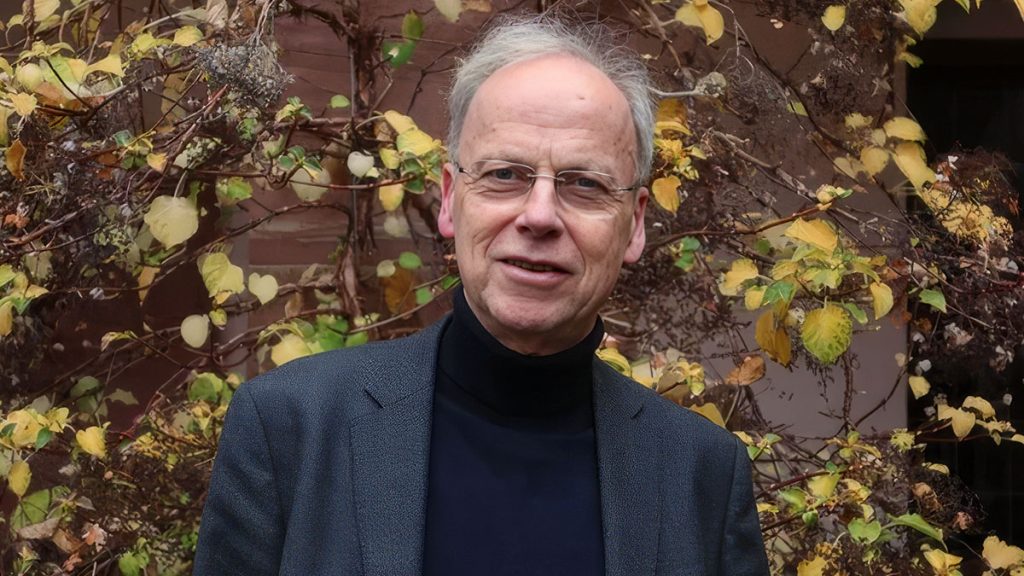
- Albert Gerhards is Emeritus Professor of Liturgy Science at the Catholic Theological Faculty of the University of Bonn in Rhenish. His scientific focus is on church construction, aesthetics, the history and practice of the liturgy, and ecumenism.
- Flash of Insight based on original. Republished with the author’s permission.