
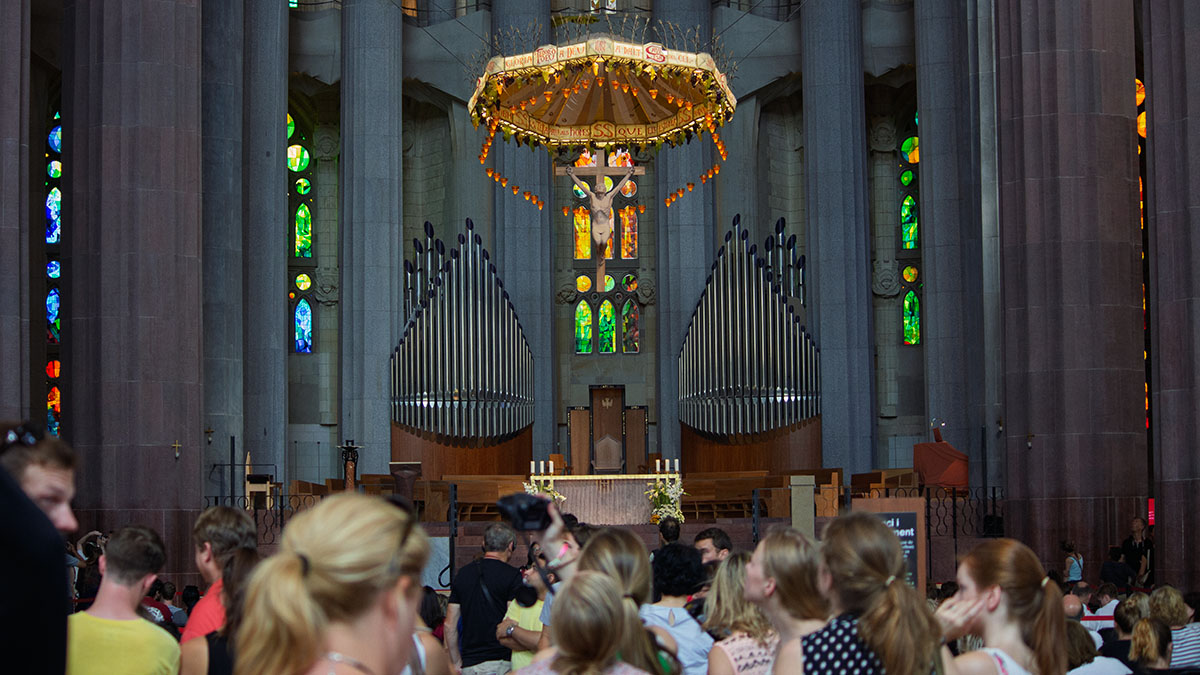
We visit cathedrals as if they were Europe’s most successful museums.
We photograph the vaulting. We admire the stained glass.
We locate the tombs, inspect the chapels, read the plaques, and perhaps light a candle. We marvel that people without cranes, computers, or reinforced concrete managed to build something so enormous.
Then we leave.
And perhaps we have missed the point.
More than a museum
A cathedral is not fundamentally a building preserved because something important once happened there. It is a church because something is supposed to be happening there now.
That distinction changes everything.
Objects tied to action
The altar is not an exhibit. The font is not ecclesiastical decoration.
The bishop’s chair—the cathedra from which the cathedral takes its name—is not antique furniture. These objects belong to actions: gathering, proclaiming, baptising, anointing, celebrating the Eucharist, ordaining, mourning, blessing, sending.
A cathedral makes little sense when separated from these actions.
Imagine visiting an airport while knowing nothing about flight. You could admire the architecture, photograph the departure boards and wonder why everyone keeps forming queues.
You might produce an excellent architectural study of Terminal 2 while remaining completely ignorant of what the building is actually for.
We often do something similar with churches.
Tourism versus worship
Tourism trains us to look at them historically: When was this built? Who designed it? Which style is it? Who is buried here?
Christian worship asks different questions: Who gathers here? What happens to them? What is proclaimed? What is celebrated? Where are they sent afterwards?
The contemporary purpose of a cathedral is therefore not simply to preserve Christian heritage. Nor is it merely to provide an impressive container for private spirituality.
It remains a public place in which Christianity becomes visible through ritual action.
Beyond an empty building
That is why even the emptiness of a cathedral can deceive us.
An empty cathedral looks like architecture.
A cathedral filled for Easter, an ordination, a funeral, or the Eucharist reveals something else: the building is an instrument of an assembled body.
Perhaps, then, the most interesting question when entering a cathedral is not, What am I looking at?
It is: What happens here that requires a building like this?
That question turns the tourist into an observer of living religion—and turns the cathedral from a monument back into a church.
- Dr Joe Grayland, a priest of the Catholic Diocese of Palmerston North, New Zealand, is a lecturer in the Department of Liturgy at the University of Wuerzburg (Germany).