

While coping with the enormity of the Nepal human disaster, my granddaughters brought me a nighttime reading book entitled “Noah’s Ark.”
The book began: “Long, long ago the world was a dark and dangerous place where only Noah and his family were good.” Then God said:
“Soon I will flood the Earth to wash all the bad people away.”
These words, suggesting God just sluiced these bad people away at the drop of a hat, are a revolting image of God.
Yet the blurb advertised this book as “essential reading for all children, irrespective of religion.”
God of compassion
Presenting God as a vindictive destroyer of all his creation contradicts the God of compassion as revealed by the Prophets and Jesus Christ.
While there is historical evidence of localized catastrophic floodings originating from the collapse of glacial dams, the flood as described in the myth of Noah as a universal devastating flood is inconsistent with the findings of geology, archaeology, palaeontology and the global distribution of species.
Fundamentalism and climate change
The image of God as presented in the myth of Noah still persists within Christian fundamentalism. It presents a version of Christianity where as a result of the original sin of Adam and Eve, the entire earth was corrupted.
Modern destructive weather is interpreted as a symptom of a broken, dying planet awaiting Christ’s return or as a result of an all-powerful God so angry with the wanton people that he intervenes in human history to discipline them.
A God who drowns the wicked
is not the God revealed in Christ.
However, this Fundamentalism refuses to place any responsibility on human beings for being the primary cause of climate change and the resultant natural disasters.
Modern scientific ‘uncertainty theory’ gives no assurance to humanity. Despite preventative measures, over 300 natural disasters occur around the world yearly.
Between 2000 and 2011, the most frequent natural disaster was flooding, while the highest death rates were attributed to earthquakes.
Christian response to natural disasters
Jesus used the collapse of the Tower of Siloam in Luke 13:4–5 to teach that sudden disasters are not direct punishments from God for specific sins.
- The Event: A stone tower in the Siloam neighborhood collapsed, killing 18 people.
- The Misconception: People assumed that victims of sudden tragedies were worse sinners than others who survived.
- Jesus’ Response: He stated that the 18 victims were no more guilty than anyone else living in Jerusalem.
The Cosmic Christ
The cosmic Christ theory is a theological concept holding that Christ’s divine presence permeates the entire universe and all of creation, existing long before the historical incarnation of God the Son.
Christ is the unifying, immanent life force like the ‘elan vital’ of the cosmos rather than just a historical figure who arrived on the earth to fix human sin.
Creation is not a finished work of God but a work in progress. God’s dream invites human beings to act in partnership with Him to bring creation to its fulfillment at the ‘Omega Point’ where “God is all in all.”
This partnership aims to create a world where justice and respect for human rights and creation will augur in the eschatological reign of God. There, the beatitudes Jesus proclaimed become a reality.
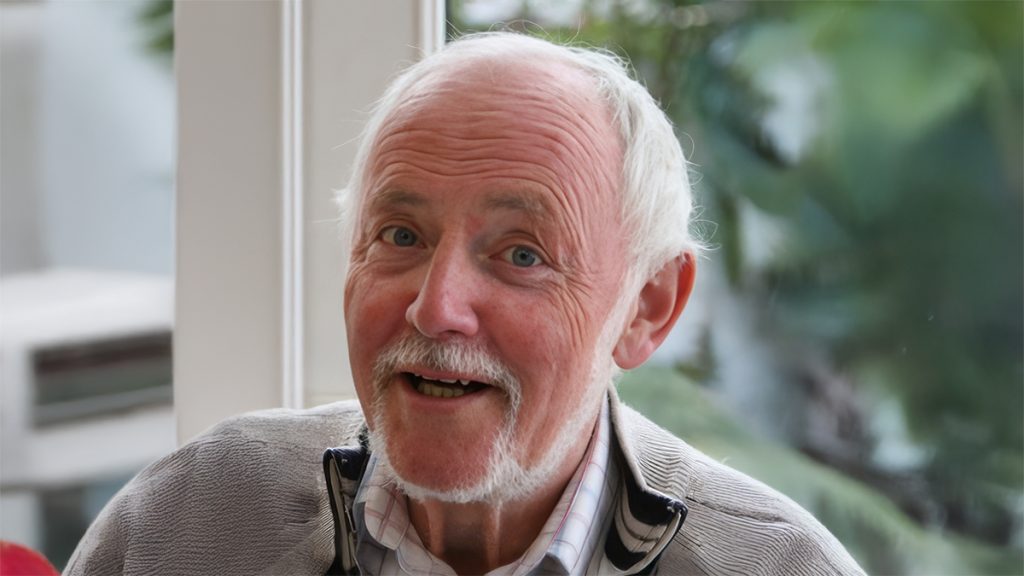
- Brendan Butler is a former secondary school teacher who specialised in teaching Religious Education. His postgraduate degree was in theology from the Antonianum University in Rome. In 1979, he co-founded “The Irish El Salvador Support Committee” and later “The Ireland Algeria Solidarity Group”. He was the co-ordinator of “The N.G.O. Peace Alliance” which was active in the Irish peace movement. He helped to revive the Catholic Church reform movement “We are Church Ireland”, of which he was joint co-ordinator and spokesperson for several years.
- He published My Story by Jesus of Nazareth, and actively contributes articles and letters on Church and human rights issues to Irish newspapers.