

We scan the horizon for dramatic signs while God works quietly in our kitchen sinks and morning commutes.
This disconnect between our expectations and God’s actual presence lies at the heart of why many people feel spiritually empty despite faithful prayer.
God prefers the mundane
The incarnation story reveals a pattern we would rather ignore: God prefers the mundane. No heavenly armies descended on Jerusalem’s walls.
Instead, a teenager experienced morning sickness. A carpenter wrestled with doubt. Neighbours gossiped. This was not the Messiah anyone ordered.
We have inherited this same impatience. We want breakthrough moments: the healed relationship, the financial miracle, the crystal-clear calling.
Meanwhile, we dismiss the friend who texts at precisely the right moment, the sunset that interrupts our anxiety, and the child’s question that suddenly illuminates Scripture. We are so busy waiting for earthquakes that we miss the whisper.
Why this matters now
Our culture worships the spectacular. Social media trains us to curate highlight reels while hiding the messy middle.
We have learnt to devalue the ordinary so thoroughly that we cannot recognise divine presence within it. The exhausted mother praying for help does not see God’s answer in her daughter quietly helping with homework or her husband washing dishes unbidden.
This blindness carries real spiritual consequences. When we cannot perceive God in daily life, faith becomes compartmentalised, something for Sundays and crises, disconnected from where we actually live.
The incarnation demolishes this false divide. If God chose nine months of pregnancy and thirty years of carpentry, nothing in human experience lies outside sacred possibility.
Reclaiming the ordinary
Perhaps our most urgent spiritual work is attention. Not more prayer time or Bible study, though these matter, but cultivating awareness of God’s footsteps in ordinary moments.
This requires humility to accept that divine action rarely matches our dramatic expectations.
Joseph received guidance through a dream, that most commonplace, vulnerable human experience. He woke and simply obeyed, living faithfully in the mundane.
His example challenges our addiction to certainty and spectacle. Sometimes God’s most profound work happens precisely where we have stopped looking: in the repeated kindness, the unattractive faithfulness, and the small obedience no one applauds.
Holy ground, hidden here
The scandal of the Incarnation is not just that God became human. It is that God keeps choosing ordinariness as the vessel for extraordinary grace.
The breakfast table might be holy ground. A difficult colleague might be today’s angel. Exhaustion might be exactly where God meets me.
These are our burning bushes.
The sacred is already here, hidden in plain sight.
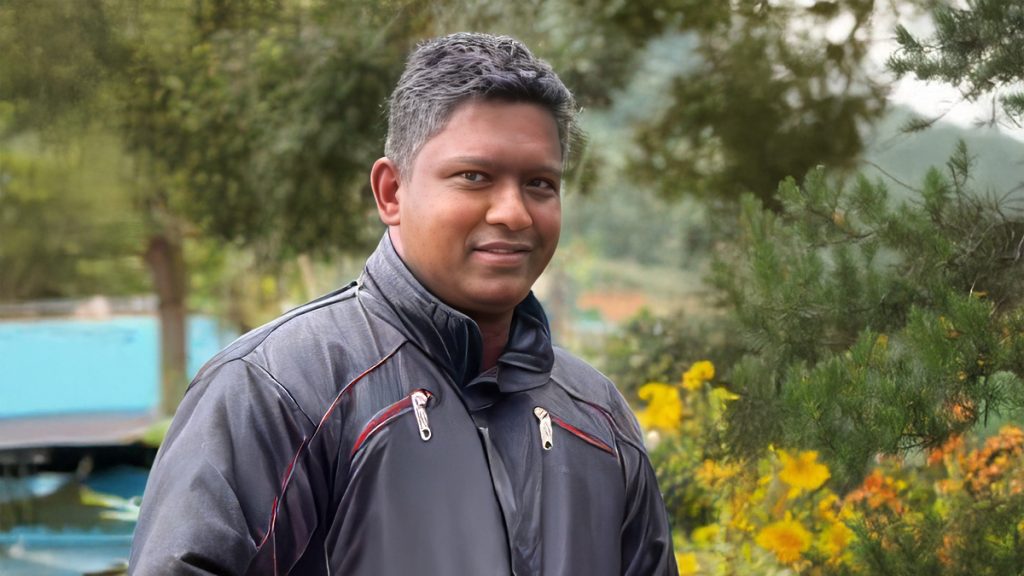
- John Singarayar SVD holds a doctorate in Anthropology. He is an author of several books and regularly contributes to academic conferences and publications focusing on sociology, anthropology, tribal studies, spirituality, and mission.