

Can the study of theology be part of the synodal path of the Catholic Church?
Here I want to give concrete form to the argument by looking at a basic problem of Christian theology and a current problem in Catholic practice.
We all ask theological questions and we cannot avoid them!
Sometimes we realize this and we carry on the questioning with skill and a cupboard full of resources, sometimes we do it badly, with a limited range of ideas, and make a mess of it.
A cook’s theology lesson
The poor cook has only a handful of recipes, relies on tins of sardines, and cannot cook a piece of meat without burning it; the good one has enough training and built-in resourcefulness that with the same ingredients we get an interesting meal!
So it is with the study of theology: the same questions that lead the untrained person to throw it all up and say that the world is mad and a mess, can, with some theological training, be seen to refer to basic human issues and it can be seen that there are ways out of our problems and the discourse can replace discord, and enlightenment can take the place of bigotry and ignorance.
I want to develop this by looking at a couple of situations where there is ‘a common sense answer’ and another, more theologically informed, answer and then leave it to you to chose.
Living as an individual disciple: What is ‘God’?
Everyone I meet appears to know what the word G-O-D means.
For a great many people I meet the answer is simple: there is no god – it is an illusion and the universe does not need a god and there is no evidence in human life for god: just look at suffering!
Everyday images of God
For others, there is a god and there are ways of describing god. There are ‘Acts of God’ which are always nasty like fires or floods or earthquakes.
There is ‘The Man Upstairs’ and it’s a good idea to ‘keep in with him.’
This Man Upstairs is very much like a lord of the manor whom you do not really like, indeed resent, but you know that you have to be ‘nice’ to him, as you do not want the consequences of making him angry.
I know other people who cannot utter a sentence without mentioning god and god seems to be the actual motive force of everything – except for some reason he keeps hiding.
So it is ‘Thank God for a lovely day’ – but what about the storms that kill people? Or “God is above us all” – so no need to worry! – So why bother doing anything?
Or “do not be sad, God loves us” – but I am sad and I want to shout out in anger as the agony of death, decay and destruction I see around me.
A word too easily used
By contrast, most other words need very careful definition. I have to learn how to use language precisely and if I were a car mechanic and referred to a ‘rocker arm’ as a ‘yoke’ you would probably (wisely) not trust me to service your vehicle.
Much of education is trying to explain how to use language so that it illuminates rather than obscures. But ‘god’ is so simple a word we all seem to know all about it.
Naming an unnamable mystery
The atheist knows there is no god, while some religious people know more about god than they do about the physics of their refrigerator.
So why have theologians asserted over and over again: we do not know what we mean by the word G-O-D and that the whole task of theology is to ask the real question (it is not a learning game): what is God?
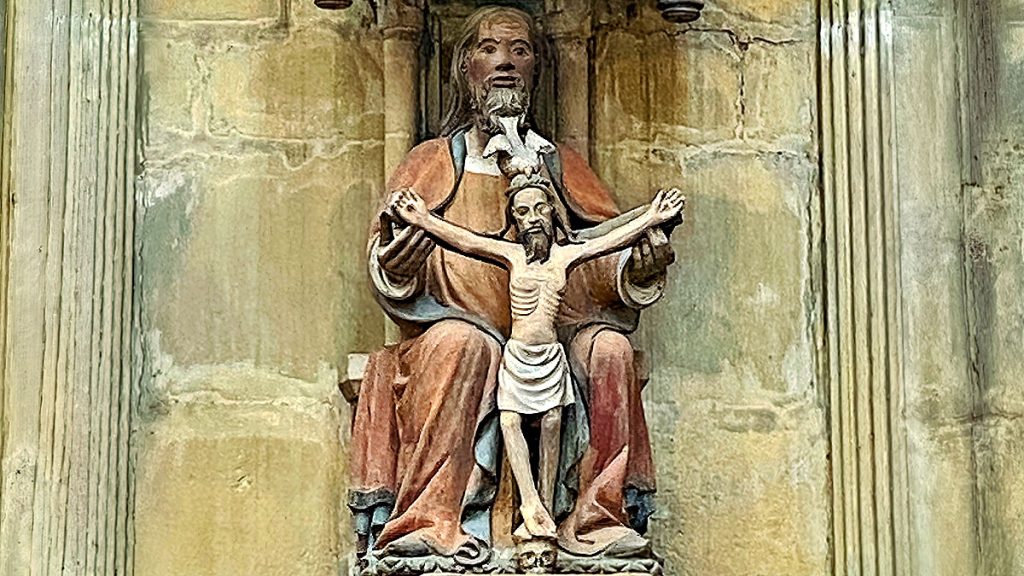
Could it be that we confuse the question ‘what is god?’ with the question ‘how many gods are there?’
To the latter question the answer must be 0 [zero] – the reply of the atheist; 1 – the official answer of Jews, Christians, Moslems, and many other religions; or 1+ – the answer of many religions but also many individuals such as the person who referred to ‘the Man Upstairs’ who thinks of God as the super-boss and one of a class of bosses.
By contrast, ‘what is God?’ is an attempt to put words on mystery. It is a mystery that is glimpsed here and there for a moment, felt intensely and then felt as absent, a vision which is more akin to poetry than to prose, a sense rather than a cold-blooded deduction from evidence.
‘What is God?’ is a question that is the pursuit of a lifetime and while we may pray and worship and work, we must always resist the falsehood of thinking we have an answer.
If you think you have captured God in a sentence or a single idea or ‘have it worked out’ then that is your projection, your idol, rather than the Reality which is beyond the universe but which beckons us.
It takes a lot of training in theology to appreciate this fundamental maxim: Deus semper maior – ‘whatever G-O-D is, is always greater than what we think God is.’
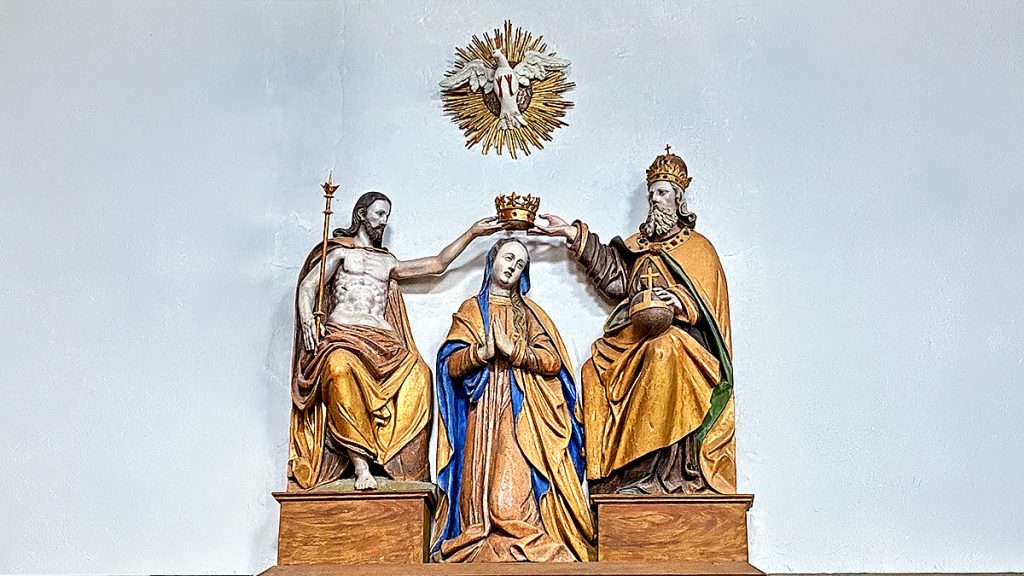
So let us use the word G-O-D with reverence and be sensitive to how we can be spreading confusion by overuse.
Living in a community of Catholic disciples: Are we short of presbyters?
Anyone even vaguely familiar with the Catholic Church today knows that there are not enough priests to staff the parishes, that communities are loosing their churches due to this shortage because the remaining priests are usually greying and often exhausted through trying to cover too much territory, and while priests from Africa and India may bring welcome help, this is far from ideal: they are needed in their own cultures and often have difficulty adjusting to a western European religious environment.
To many people the answer is so obvious as to need no reflection: ordain married men, abolish compulsory celibacy, or even consider ordaining women – as other churches have done.
But as soon as these possibilities are suggested a series of counter-arguments, usually designated as ‘from tradition,’ are advanced so as to make any change appear impossible or so far in the future as to be beyond any visible horizon.
Looking to the past
Faced with this impasse, most arguments seem to revert to the history of practices: could what happened in the past tell us about the future?
But once we turn to the past we find that cases are put forward from each side as to what happened or did not happen in the past, the significance of Jesus doing or not doing something, whether or not ‘apostles’ equal ‘bishops’ and whether or not those around Jesus were ‘ordained’ or simply picked – or maybe there is no difference?
Then, even when answers to these questions emerge, another problem pops up: can the church do something that appears never to have been done, or if something has always being done in one way whether it can now be done in another?
So faced with a crisis in the present and the future, we seem to pore over the details of the sixteenth century (Trent’s rejection of those who challenged the notion of celibacy as a more perfect form of discipleship) or the twelfth century (first imposition by the western church of celibacy as a pre-requisite of ordination), or even (to the dismay of biblical scholars) the exact details of Jesus’s meal on the night before his crucifixion (asking, for example, were women present). Can theology throw light on this question?
The first point to note is the style of the argument: it looks backwards to the past while imagining the past as a (1) complete, (2) clear and (3) adequate statement of all that we need to know about the structure of the church.
Tradition as an encyclopedia
The past, it seems, sets the parameters of discussion and contains the precedents for what can and cannot happen now.
So we might start by noting that the notion that ever closer scrutiny of the past (as containing the answers to any possible question now or in the future) is very similar to the way as some Protestant Christians relate to ‘the bible’ as having within it a clear answer to every possible question.
So asking ‘does the tradition allows women to be priests?’ is like asking ‘does the bible allow slavery or capital punishment?’ The assumption is that there is an answer in the book so that if it countenances the practice, then it is allowed, while if it criticizes it, then it is forbidden.
Slavery, stoning, and silence
But the bible has no criticism of slavery or capital punishment and does not condemn those who would stone a woman who committed adultery.
Likewise, until the later nineteenth century the tradition had little problem with slavery and I knew a priest who had been a prison chaplain and was with many men before they were hanged – and could not understand why people now thought it immoral.
Likewise, I have met Christians from cultures where stoning women still occurs – and they say they can ‘understand’ the practice!
Focusing on the future
But asking these questions of the past misses a more basic fact of life: cultures change and sometimes their insights amount to an enrichment of human life and sometimes to its diminution – but a culture’s past is as different from its present as that culture is from a foreign culture, and the future will be different again.
So maybe we need to refine our questions. Perhaps we should ask: what can we do now that would help us pursue the goal of building the kingdom of God, affirming the dignity of each person, recognizing the presence of the Spirit in every one of the baptized.
We shift the focus from where we have come from (because we are no long there) to where we are going (because that is where we soon will be). This question allows us to assess what we value, value what we possess, and asks what it means to say ‘thy will be done’ today

We are only asking these questions – about celibacy, the form of ministry, and about who can be ordained – because we are no longer in the older situation: so we look forward and know that we may make mistakes – we have made many in the past – but if we focus on purpose, what are we called to become, we will at least be honest.
And, moreover, we will break out of the circle of endless details about what some verse in some first-century text means or what happened in the fourth or fifth century.
These questions may be great historical questions (and, as such, respond to our needs as history-producing beings), but they are not questions about what is demanded of us on the path of discipleship moving into the future.
Clearer questions
One thing that the study of theology should do is to help us clarify our questioning.
The past – and all its texts such as those that are in the bible – is our memory, an important key to our identity, and one of the deep common bonds between us – it is not ‘the universal religious encyclopedia’ in which are all the answers just waiting for one of us to go and ‘look them up.’
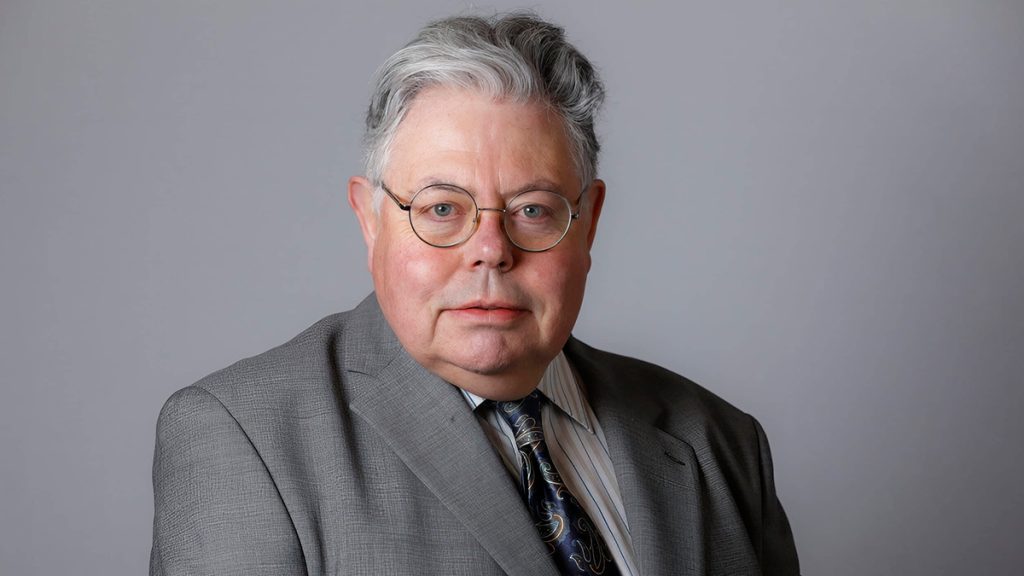
- Thomas O’Loughlin is a presbyter of the Catholic Diocese of Arundel and Brighton and professor emeritus of historical theology at the University of Nottingham (UK).