
One day in Rome, I went for pranzo at a restaurant known to most American priests and seminarians, in the shadow of the Gregorian University.
At the table next to me sat a recently arrived seminarian in a tightly buttoned cassock, accompanied by an older couple who seemed to be his aunt and uncle.
He was apparently eager to join the clerical culture and was holding forth authoritatively to his visitors on a wide range of topics. It was less a lunch conversation than a lecture.
They seemed to be from the southern United States, and the young man was outlining his version of the Church’s historical views on slavery to them while explaining the American Civil War, racial tension, and recurring unrest in American cities.
He spoke with what struck me as an astonishing sense of self-confidence and an eagerness to share.
While he was not particularly articulate, he didn’t break stride as he moved on to explain the ins and outs of his understanding of both the Apostle Paul’s theology and worldview, as well as Paul’s and the Church’s constant opposition to slavery in every time and place.
He was, umm, very incorrect in what he was putting forth.
Paul and the parousia
He misread history pretty badly, I think, or maybe he was just making stuff up.
He seemed to have missed that St Paul lived in anticipation of the imminent parousia, believing the second coming of Christ would certainly occur in his own lifetime.
And if Christ is soon to come, maybe you don’t need to worry about funding a Roth IRA, writing a theology of marriage, or listing every way that chattel slavery offends human dignity.
Otherwise, how could Paul have written, “slaves: obey your masters”?
Remember Charlie Brown wryly observing that Linus would need an extra year of school just to unlearn everything his sister Lucy had taught him? Well, I felt like Charlie Brown as I considered the beleaguered aunt and uncle, who had to endure the lesson and pay for lunch!
Lessons still ahead
But the seminarian was very young, and his relatives were patient, quiet, and generous.
Soon, the young man would learn that in Rome, one can always assume there is a theologian at the next table.
And one of the things he’ll learn to measure is well described by Joe Hoover, SJ, in America: “how long it takes a young priest to purify a chalice versus how long it takes a chalice to purify a young priest.”
I’m pretty sure he would soon meet a scripture professor who’d explain St Paul’s understanding of the imminent parousia and maybe suggest how that might have affected Paul’s considerations about what to do until the Messiah comes.
Carroll’s 1805 letter
And wait until he learns about the first American Bishop, John Carroll, in Baltimore, who, in an 1805 letter, expressed hope of paying some bills by “The sale of a few unnecessary Negroes.”
Not a happy chapter in our history, that one.
Anyway, I felt hopeful for the young guy and have remembered him and his family in prayer.
Eloquence in the locker room
But then I learned about Shiyazh Pete, a Dallas Cowboys lineman, who gave a 59-word talk in the team’s locker room after winning a preseason game.
His speech brilliantly highlighted shared identity, sacrifice, and teamwork.
He said:
“Well, that was an incredible win. I am very fortunate to be amongst you and to play in the same field, with the same star, holding on to our chest, and I’m proud of us, proud of how far we’ve come. Oh, man.
“Fate brought us here as strangers, but this game, this star, this team, will make us brothers.”
The author and speaker of those 59 words is 23 years old and the first member of the Navajo Nation to sign with an NFL team.
His speech went viral; it was an internet sensation.
I found great theological content in that speech and consider it far better than many homilies I have heard, including those I’ve given.
We Catholics should wish and pray that our bishops, pastors, preachers, and seminarians might be so eloquent in highlighting our shared concerns, our call to communion, and our commitment to the poor, so that our tired world is transformed and our path to heaven is paved.
Paul’s 39 words
Maybe St Paul could have played for the NFL too, because he could also be succinct in describing, in just 39 words, what we are about and why: “whatever other commandment there may be, / are summed up in this saying, namely, / ‘You shall love your neighbor as yourself.’ / Love does no evil to the neighbor; / hence, love is the fulfillment of the law.”
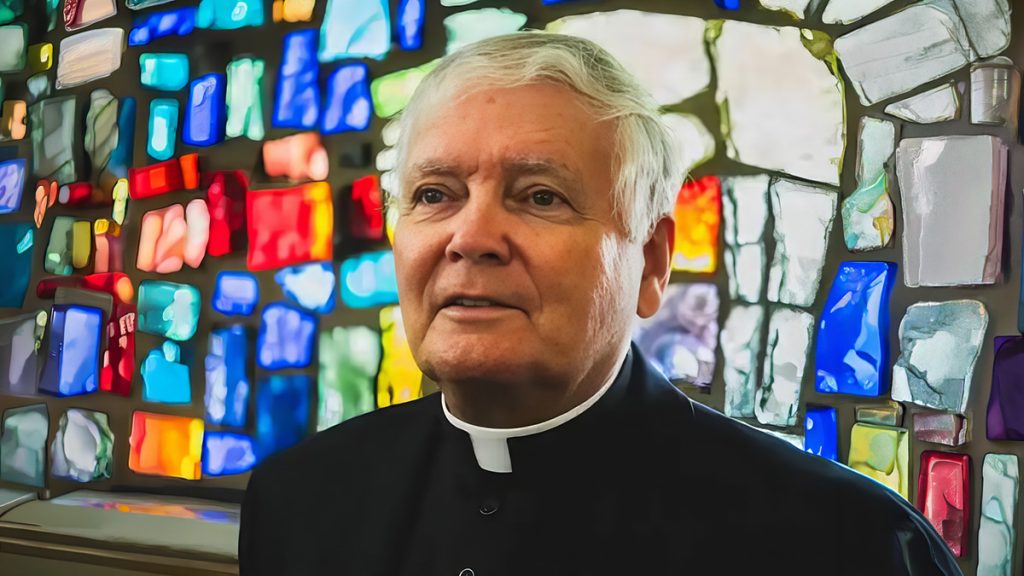
- William C. Graham holds a PhD from Fordham University. He has served as a high school teacher, pastor, professor and director of liturgy at St Paul the Apostle in New York City.