

Hundreds of thousands gathered along the Champs-Élysées as Pope Leo XIV offered a striking reminder: the Church is not merely a crowd, an institution, a collection of buildings, or a system of rules.
The Church is Christ alive, Christ’s face to the world and whoever shows that face carries Christ’s presence into the world.
That final word does important work. It resists speaking of the Church as a policy, programme, or brand.
Instead, it points to something personal, maternal, embodied, and alive.
The Church is not simply an organisation one joins.
Why this matters now
We live in an age that turns almost everything into data. Institutions are assessed through attendance figures, budgets, influence, and survey results.
Even those who defend or criticise the Church can begin to speak as a system to be measured, managed, reformed, or dismantled.
The Pope’s image challenges that framework. A face cannot be reduced to statistics.
Flesh cannot be optimised. A living community cannot be understood entirely through screens, platforms, or performance indicators.
The Church becomes real wherever people meet one another with attention, compassion, and responsibility.
The risk of sentimentality
Yet the image must not become a beautiful way of avoiding difficult questions.
To say that the Church is Christ alive today does not excuse institutional failure, clericalism, abuse, exclusion, or bureaucratic indifference. It makes accountability more urgent.
People can be wounded. They can turn away.
A body can suffer when one part is ignored.
If the Church truly bears Christ’s life, it must listen to survivors, protect the vulnerable, examine its structures, and make justice visible.
Theology that cannot face suffering becomes sentimentality.
What it asks
Read generously; the Pope’s words shift attention from the crowd to the encounter: from speaking about “the Church” in the abstract to recognising the person before us.
That is demanding. It is easier to give money to an institution than to remain present to someone who is lonely, poor, displaced, or wounded.
Yet this is where the Church’s credibility is tested. The Church is most visible not when she appears powerful, but when Christ’s mercy becomes tangible through ordinary human lives.
The Church is therefore neither machinery nor spectacle.
It is a wounded but living body, called to make Christ’s compassion recognisable in the world.
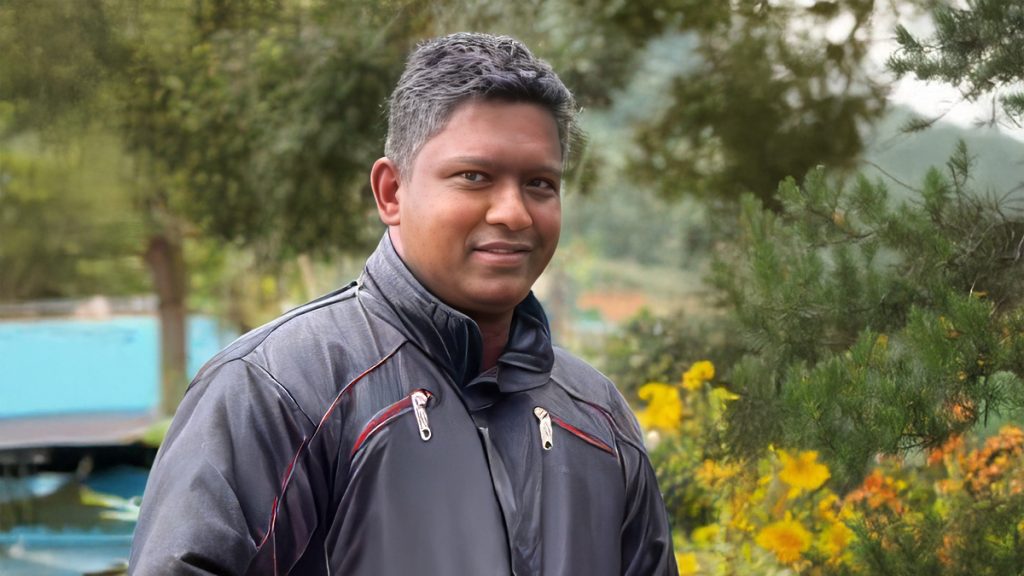
- John Singarayar SVD holds a doctorate in Anthropology. He is an author of several books and regularly contributes to academic conferences and publications focusing on sociology, anthropology, tribal studies, spirituality, and mission.