

The Society of Saint Pius X (SSPX) will trigger automatic excommunication on July 1, 2026, by ordaining four bishops without a papal mandate, solidifying a permanent schism and total rejection of Vatican II.
The Society of St Pius (SSPX), founded in Écône, Switzerland, in 1970 by French archbishop Marcel Lefebvre in opposition to the reforms of the Second Vatican Council, is a small group that claims to have some 600,000 members and 700 priests in 77 countries.
But SSPX is the most important in the galaxy of Catholic ultra-traditionalism, and their decision to ordain four new bishops without a pontifical mandate on July 1 (the second time after the first four in 1988) constitutes an important moment in the history of the post-Vatican II Catholic Church.
The canon law penalty
The penalty for ordaining bishops without the permission of the pope is excommunication “latae sententiae” (automatic).
In the Catholic Church, no bishop can ordain another bishop without the consent of the bishop of Rome (Code of Canon Law of 1983, can. 1013).
Those who do so leave communion and excommunicate themselves for a schismatic act (Code of Canon Law of 1983, can. 1387).
We will see how Pope Leo XIV, a canon lawyer by formation, will frame the question of how this community of fierce anti-Vatican II Catholics and the Catholics in communion with Rome will remain in some kind of relationship, as members of the one large and diverse family of Christians.
Certainly, it is now a matter of a very peculiar ecumenism, something that the bishops at Vatican II did not imagine when they approved Unitatis Redintegratio, the 1964 decree on the relations with non-Catholic Churches and traditions.
Vatican’s failed attempts
The Vatican’s attempts to convince the SSPX to avoid making that traumatic step have failed.
The negotiations of the past decades, especially during the pontificate of Benedict XVI, have been a diplomatic failure but a doctrinal success for Rome, in the sense that they made it clear that acceptance of the teachings of Vatican II is not a matter to be negotiated.
The concession made by Benedict XVI in 2007 on the liturgy (motu proprio Summorum Pontificum) did not result in a reconciliation between the SSPX and Rome, while causing other side effects among Catholics in communion with Rome.
The lifting of the excommunication, decided unilaterally by Benedict XVI in 2009, did not produce reconciliation.
Francis’s recognition of the validity of the sacraments of confession (2015) and matrimony (2017) administered by the SSPX did not work either.
The abolition by Francis in 2019 of the Vatican Commission “Ecclesia Dei” (created by John Paul II after the schismatic act of 1988) was probably a point of no return in the history of the relations between Rome and Écône, a turn to realism away from the idealism of a previous phase.
Pope Leo XIV and the prefect of the Dicastery for the Faith, Cardinal Victor Manuel Fernandez, appealed to the SSPX in recent weeks, to no avail.
In an informal exchange with journalists on June 16, Leo XIV said, “Certainly, division among Christians is always a painful point. But they refuse to accept certain fundamental elements of the church, starting with several points from the Second Vatican Council. If they make that choice, I am sorry, but we must move forward.”
Indeed.
It has become clear that the only possible passage for a formal reconciliation would entail for Rome and those in communion with Rome something like a repudiation of Vatican II – and not just on the liturgical reform but on all of it: from the constitution Dei Verbum on the interpretation of the Bible to the declaration Dignitatis Humanae and its rejection of antisemitism by the Catholic Church.
A radical profession of faith
This is clear from the 28-page Profession of Catholic Faith of the Society of Saint Pius X, dated June 24, a document intended to enlighten souls in the face of modern errors, accompanied by a letter signed by Superior General Davide Pagliarani, together with the Society’s principal superiors and former superiors general.
This documents says, among other things, that non-Christian religions are “the work of the devil” (par. 62) and that heads of state have the duty not to recognize religious organizations other than the Catholic Church, rejecting the false and heretical principle of religious freedom which gives everyone the right to act publicly according to their own conscience without being prevented from doing so by civil authority.
One passage in the letter states that “modern errors represent a dreadful threat to the whole of the Catholic order, and that their penetration into the life of the Church, under the influence of the Second Vatican Council and the post-conciliar reforms, has provoked a crisis of exceptional gravity” (par. 145).
This is a total opposition to a council which is a milestone (not the only, nor the last) in the Catholic tradition, called by Saint Pope John XXIII, promulgated by Saint Pope Paul VI, and confirmed by all his successors.
There was never any real intention by the SSPX to negotiate with Rome, in the sense of creating space for a reception of Vatican II, because rejection of Vatican II is the reason for their existence.
It speaks volumes that this rupture is happening in the same year that Pope Leo XIV is dedicating all the catecheses of the 2026 general audiences to Vatican II (and, in these last few weeks, to the liturgical constitution Sacrosanctum Concilium).
The interpretation of the tradition by the SSPX is that there is no interpretation: just the letter of the documents of the pre-Vatican II tradition they choose to follow – which is a fundamentalist idea of religion.
In the footnotes, the above-mentioned Profession of Catholic Faith of the Society of Saint Pius X cites the Council of Trent (1545-1563) 26 times, which was not a mere repetition of the past but a moment of reinterpretation of the Catholic tradition.
A market share problem
For the SSPX, there is a problem of keeping its market share.
For all the SSPX’s claims to uphold absolute continuity, there are also significant differences from the previous rupture in 1988.
The digital advantage
The first is the effect of the internet on religion. This small group demonstrates the typical adaptability of contemporary fundamentalist religious movements to modernity.
The SSPX is not one of those groups that reject the internet as demonic. There is a website dedicated to the July 1 event.
There is also a carefully manicured merchandising page for the sale of souvenirs. This care for online communication is not just a money-making operation but part and parcel of the culture of the new generation of ultra-traditionalists.
It is the use of modern technology against modern culture – something we have also seen in other religious traditions.
A fragmented market
The second major difference is that the SSPX had also been affected by the fragmentation of religious identities. The internet has offered anti-modern and anti-Vatican II Catholics many more options.
The first generation of schismatic traditionalism in the 1970s-1980s positioned itself in a black-and-white picture – with Rome or with us.
Now, the relationship between Rome and the galaxy of small traditionalist groups is made of many different shades of grey.
The 1988 ordinations were something like the initial public offering (IPO) for this new brand. Now, whether intended or not, the episcopal ordinations of July 1 are the equivalent of a company selling additional new shares to raise more capital.
Multi-generational divide
Third: the now multi-generational history of the SSPX makes the prospect of a reconciliation much more difficult. These episcopal ordinations are a step towards the consolidation not only of a parallel ecclesiastical structure but also of a parallel theological tradition increasingly distant from the Catholic one as articulated by the popes, the synods, the Vatican, and the life of the universal Catholic Church.
This generational factor affects Rome too: contrary to Paul VI, John Paul II, and Benedict XVI, Pope Leo, born in 1955, was never at Vatican II with Archbishop Marcel Lefebvre.
It remains to be seen whether there will be new, formal steps – besides those already made by all popes since Paul VI – towards those SSPX members who are open to a return to full communion with Rome.
Effects on Rome-aligned Catholics
Fourth: we will see how this schismatic act will reposition Catholics who harbor not-so-secret SSPX-sympathetic rhetoric. Different loyalties overlap here.
This is clear among those who advocate more concessions from Rome for the pre-Vatican II “Latin Mass” in order to continue making their case against Vatican II.
The real question is indeed about the effects of this rupture with the traditionalists on those Catholics in communion with Rome who harbor sympathies for the SSPX: not just those who empathize at a human level with a community of misguided fellow Christians (as I do), but those who have theological sympathy for the way in which the SSPX looks at Vatican II.
Leo’s path forward
Ultimately, the traditionalism of the SSPX is not an issue that will be solved by the law – the excommunication “latae sententiae” – and not just a problem external to the church.
Leo knows this. The decision to deliver a series of catecheses on the Second Vatican Council during the Wednesday general audiences throughout the year interprets the reception of the council as an ecclesial, not merely theological or legal, question.
Leo is replacing the battle over conciliar hermeneutics in previous pontificates with a return to the conciliar texts and their authors.
This moment is a call to all those with a voice in the Catholic Church – beginning with the bishops – to support Pope Leo’s effort to enlarge the tent of the Church of Vatican II.
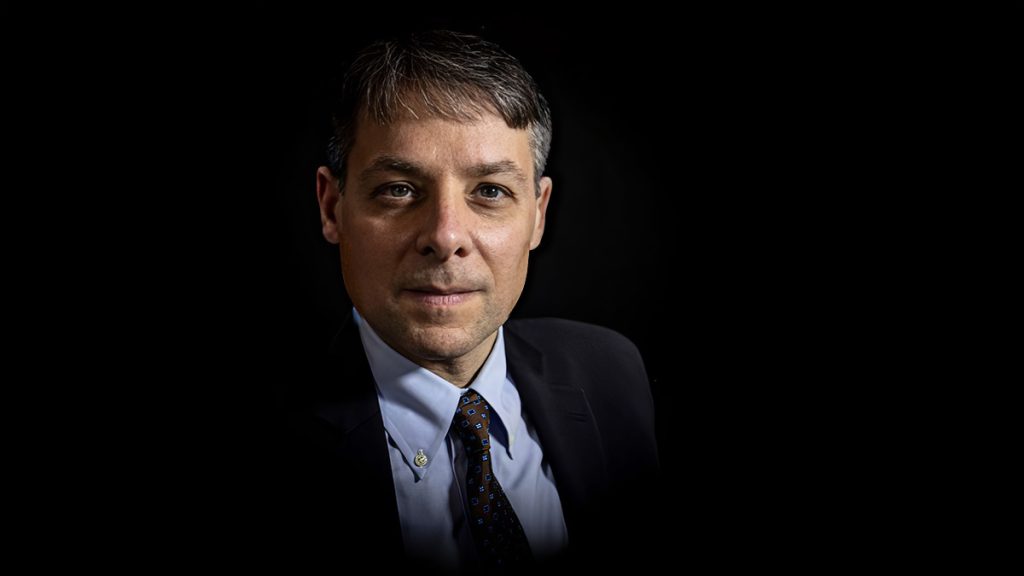
- Massimo Faggioli is a professor of ecclesiology at Trinity College Dublin. A specialist in modern church history, he focuses his research and commentary on global Catholicism, synodality, and the papacy.
- Published by Global Catholic. Republished with permission.