

An essential element of being a synodal church in mission is often neglected: the question of how to lead a synodal church in mission.
As Sean Hall highlighted in last week’s Flashes of Insight, leadership is imperative.
Who are the leaders?
It can be tempting to categorise church leaders as ‘ordained’ and ‘unordained’ just because the obvious leaders are those in hierarchical and ordained roles.
To describe whole groups of people as ‘un-‘ or ‘non-‘ is lazy and offensive.
It ignores the leaders who grace our church, such as educators, pastoral council members, chairs (preferably ‘lay’) of diocesan commissions, committees and boards, ministry coordinators in parishes and diocesan offices.
Others offer leadership through scholarship and the charism of provocation.
They include faithful dissenters and pot-stirrers whose love for a church that is faithful, poor and synodal cannot be extinguished and who constantly call us all to be our best as church.
Language that clarifies
To find an adequate way to include all those who actually offer real and effective leadership in building up the Kingdom in their communities is a challenge when a common assumption is that ‘church leader’ equals ‘ordained’.
The terms ‘ordained’ and ‘commissioned’ (which I have sometimes used) omit many actual church leaders.
‘Lay’ leaders can carry the association of ‘unprofessional’ or ‘unqualified’.
Until a better word is found, maybe we can start by speaking of ‘all’ leaders in the church – and add – ‘including the ordained’.
However we describe leaders, their formation in synodality is essential.
Formation of all the baptised – including (especially) the ordained – is one of the strongest themes coming from the XVI Synod.
This is highlighted again in the recent Report from Synod Study Group 4 which focusses on candidates for ordained ministry.1
Clergy formation is lagging
In some dioceses and parishes, such formation seems to have scarcely begun.
Lamentably, even to the point of scandal, some of the ordained appear reluctant to seek such ongoing formation.
From the outside, and from the perspective of an educator, clergy formation appears limp and half-hearted.
There might be spasmodic nods to synodality but no sense that this is a core priority.
Is it that those making decisions simply do not know how to begin the task?
Yet a church faithful to synodality needs leaders who are eager to learn together so they can live it together.
A church faithful to its synodal character implies a presbyterate with a sense of searching together, as well as in the company of all the faithful and other leaders in their communities.
Leaders as disciples first
Leaders in synodality are first disciples.
Revitalising the church’s sense of mission requires leaders who, being in the world, actively seek to read the signs of their place and time through the lens of the Gospel so they can, with their community, discern their next steps in mission.
In a church characterised by a culture of synodality, all leaders – including the ordained – are called to be disciples who are energised and impassioned by the call to serve a mission founded in the Gospels.
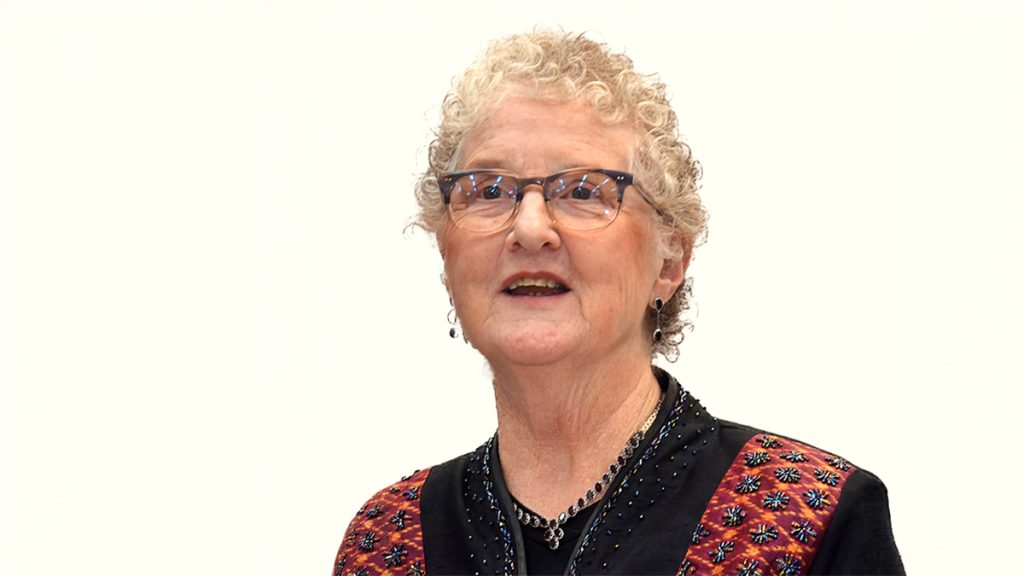
- Anne Benjamin DSG is Honorary Professor, Australian Catholic University, Honorary Fellow University of Western Sydney and Faculty Board Member, Holy Spirit Seminary, Diocese of Parramatta. She was a member of the Synod Writing Group, Diocese of Parramatta Synod 2023. Her published books include After All this Time. Reflections on Jesus (2022). She co-authored with Charles Burford Leadership in a Synodal Church (2021) and Leadership after the Synod (to be published in 2026).