
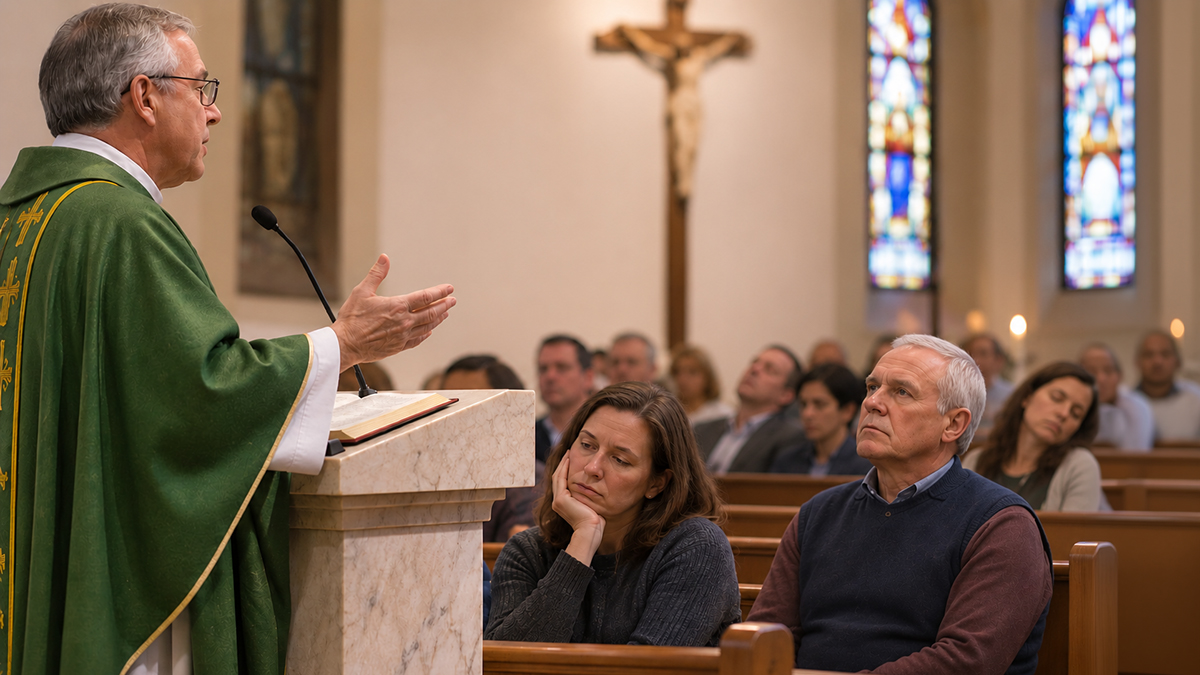
One of the major cultural shifts in western society in the twentieth century has been the decline – in many places: the disappearance – of the culture of deference.
Many reasons have been advanced for this shift in how people relate in society, but all are agreed that it has occurred.
What is deference?
Deference can be seen in the notion that one would greet another not as an equal in status and dignity.
Deference assumes someone inherently deserves respect. It assumes that you acknowledge the other’s authority, superiority, or worth as radically different to your own.
In those countries that are still monarchies, there is still an in-built system of deference.
This deference is based on just who the person is: people are not born equal – and so one must bow, curtsy or salute that person whose status is greater than yours.

Deference beyond monarchy
More widely, there was the deference that went with positions of authority.
People offered respect to police and army officers – in some countries there was / still is – a cult of honouring the army.
They offered deference to the civic officials, to medical experts, to teachers, and – of course – to the clergy.
The basic idea is that they were somehow ‘more’ than the rest, should be given the first word, should be heard with respect (i.e. not contradicted), and given the last word.
The new situations
Anyone who has been in hospital or a classroom recently knows that that the culture of deference is dead.
People do not want to be ‘spoken down to.’ They want to be informed – and then make their own decisions.
The age when the professor-is-god is over!
The age of calling out ‘mansplaining’ has – for many women – arrived.
Moreover, those who used to be on a pedestal have been shown to be no different – and sometimes much worse – that the rest of us.
In the developed world, the age of automatic deference is over.
And when we see people who imagine they merit such deference we react with a deep sense that we are all equal as humans and should just be treated with equal care and respect.
Deference and money
However – a warning – there is a deference that comes from money.
We have all seen just how quickly a concierge or a receptionist in a hotel will respond to the needs of ‘VIPs’ – and we find it insulting.
But this deference can be less obvious.
When we are told that someone is worth billions, this is often presented as equivalent to saying that it is OK for that person to use their money to buy influence at elections.
Here we have a new form – just as wicked as the older forms – entering our culture.
The church situation
Deference has been feature of Christian life at least since the time of the Synod of Elvira (AD 306 – and note that this was before Constantine’s Edict of Toleration) when Christian ministers began to claim the special privileges that Roman culture granted to the pagan priesthoods (sacerdotia) such as the flamines and the pontifices.
Indeed, very soon these titles were adopted by Christian ministers – they called themselves sacerdotes (and justified this by an unfounded appeal to the Old Testament) and pontifices – we still call the book of ceremonies used by bishops the ‘Pontifical’ and refer to the Bishop of Rome as the ‘Supreme Pontiff.’
Along with the titles went the uniforms – the ‘heel length gown’ (vesta talaris) which (usually called a ‘soutane’ or a ‘cassock’ in English) is still used by those ministers who like being clerics.
The use of purple – look at the soutanes of monsignori and bishops – and the use of the title ‘reverend’ (literally: O revered one) also comes from this ancient imperial culture of deference.
More importantly than the kit, is the attitude that being the subject of deference brings.
It assumes that the revered one can speak first, is not challenged as to what he says, and then has the last word.
In a culture of deference, ‘what Father says, goes!’
But we see ourselves not as subjects, but as brothers and sisters in baptism on a common pilgrimage of faith.
All of us need to recall that no one likes to be patronized or ‘spoken down to.’
Who speaks
Just imagine going into any group of adults (or even a school room for that matter) and then speaking for 5-10 minutes.
What else would happen? There would, at the very least, be questions!
Only an idiot would not make room for a ‘time for questions’ into the plan for this communications slot.
Others would probably want to share their experience of what the speaker had been talking about.
At the very least, into a 10-minute slot, a speaker would build in some time for reactions and comments.
If the communicator has had any training – or native skill in talking to people – the whole event would take the form of a dialogue.
It would be more like a class than a lecture. It would be done – at the very least – with some ‘Q&A’ style dialogue.
The style would be informal – it might pick up on the common jokes of the group on that day – and, unless one wants to intimidate a group when giving them a ‘dressing down’ – it would be done at the same level as them.
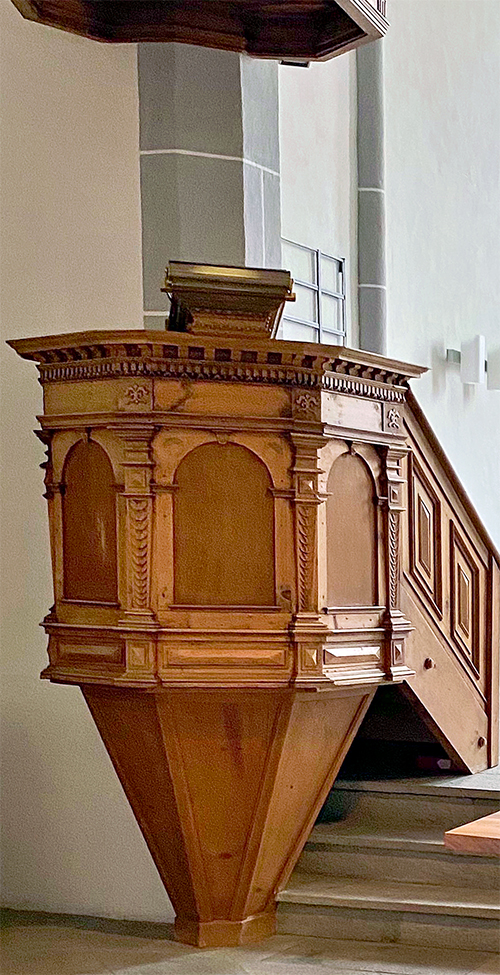
Moreover, it would not be done from any throne or lectern.
Now think of the way that most homilies are given.
The culture of deference still exists for most of those – be they bishops, presbyters, or deacons – who preach at our celebrations of the Eucharist.
If you want proof that it no longer works – then stand at the back and watch the assembly:
- How they are moving their heads.
- How many are actually listening? How many are engaged?
- How many are looking at their iPhones?
A complex problem
The Church is out of synch on the subject of deference.
That which most clergy take for granted is given them – but resented and it becomes just a token. People have moved away.
Bishops are often glad to get presbyters from developing countries where deference is still part of the culture.
But these men in not realising that deference is no longer part of our culture are often pushing people away from the gospel. This is a matter that needs cultural education.
We have a variety of ministries in the Church, we have to learn anew how to respect these differences without appealing to the modes of deference.
We are seeking to become a synodal church – but the assumption of every synod is that all who meet at ‘the cross-roads’ (the synodos) do so on a level-playing field.
If we try to become synodal, while ignoring that many of the laity involved no long live in a world of deference, then the process will lead to resentment, frustration, and rejection.
Hope or trap?
We need to make a virtue of living in a post-deference society.
If you miss that – for instance people deferring to you or greeting you by kissing your ring – then that is sad!
But learning to cope without receiving deference will be good for your soul.
- Thomas O’Loughlin is a presbyter of the Catholic Diocese of Arundel and Brighton and professor emeritus of historical theology at the University of Nottingham (UK).