
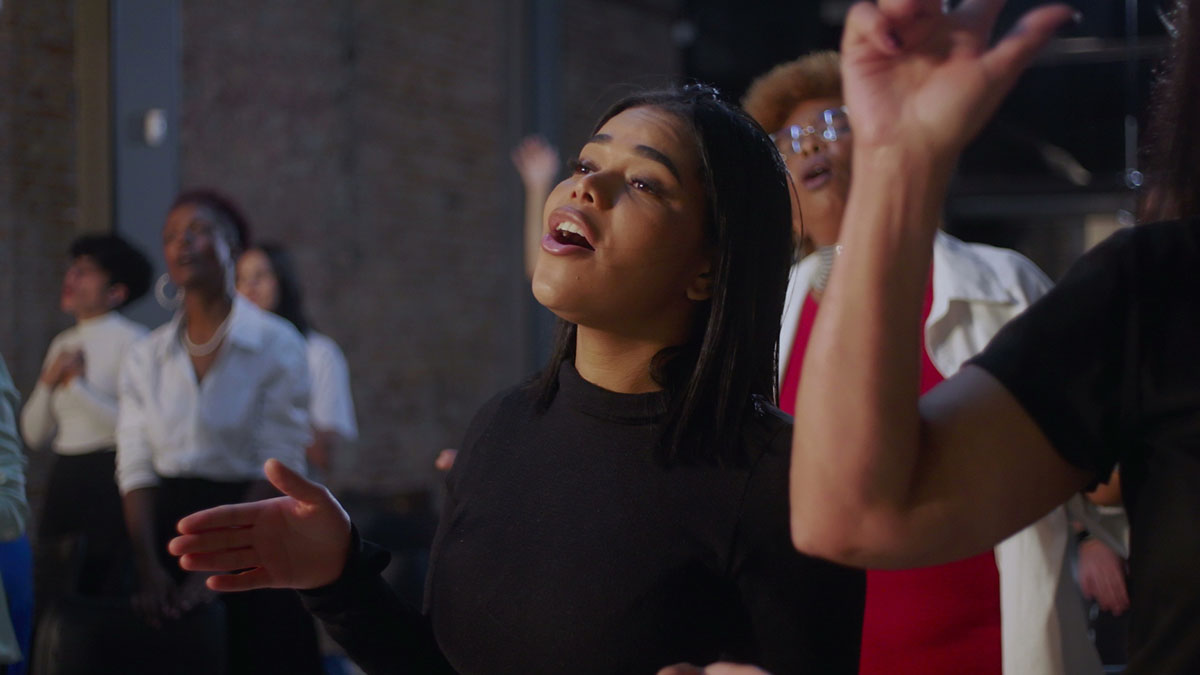
There is something remarkable about a room full of strangers singing together. Anyone who has experienced Australia’s Pub Choir has seen it happen.
People arrive as individuals, many insisting they are not singers. Under the exuberant direction of Astrid Jorgensen, they learn different parts of a familiar song.
Tentative voices become more confident. People listen to those around them, find a common rhythm and gradually hundreds of separate voices become one sound.
Research into communal singing suggests that this is more than a pleasant feeling. Studies have found that singing together can accelerate social bonding, even among people who have never met before.
Synchronised activity and the shared experience of making music can create connection surprisingly quickly.
The Church has known something of this for a very long time.
A church that sings
Last week, on 19 August, Pope Leo XIV devoted his Wednesday catechesis to sacred music, reminding us that music is not an embellishment added to worship.
It belongs to the liturgical action itself.
Singing, he said, fosters communion, overcomes differences and brings people together in a “symphony of voices”.
Centuries earlier, St Augustine expressed another dimension of this: Cantare amantis est. Singing belongs to one who loves.
We sing what we believe
But the Church sings for another reason too. We sing what we believe.
The US Bishops’ document Sing to the Lord (2007) describes congregational song as a “common, sung expression of faith”.
Our singing not only gives voice to faith but strengthens it. “Faith grows when it is well expressed in celebration.”
Words that shape belief
This is an important reminder that the words we sing matter. The ancient principle lex orandi, lex credendi tells us that what we pray shapes and expresses what we believe.
Over time, what we sing shapes our understanding of God, Christ, the Church, ourselves and the world, and becomes embedded in our memories.
Music has an extraordinary capacity to lodge those words deep within us. Long after a homily has been forgotten, a sung phrase can remain.
Choosing music for worship, then, carries a theological responsibility. A song may have an appealing melody and still offer an impoverished image of God, an overly individualistic vision of discipleship, or words that sit uneasily with the faith the Church professes.
What we repeatedly sing can gradually become part of what we believe.
Becoming what we sing
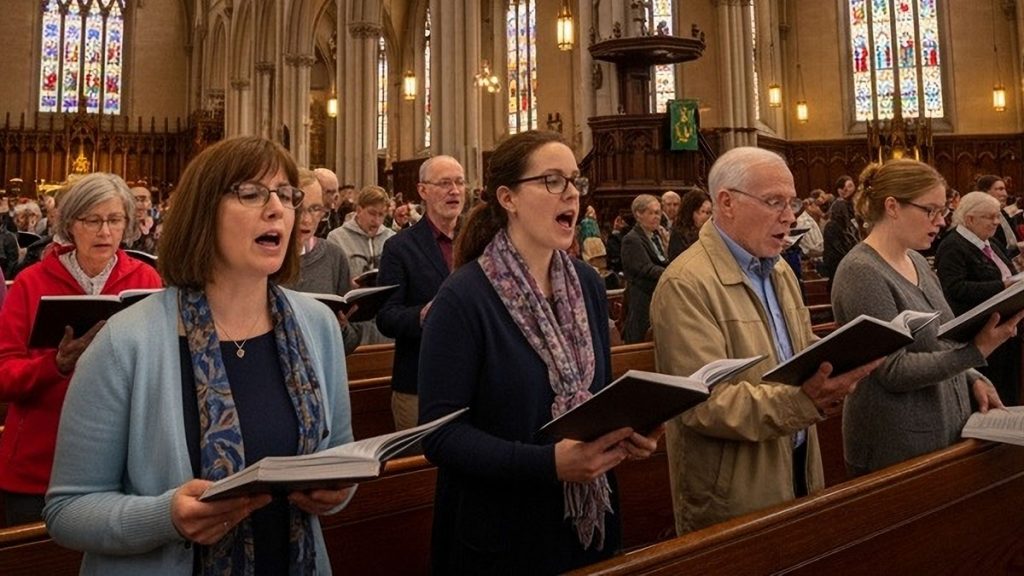
When the whole assembly sings together, we are not simply several hundred individuals expressing private faith simultaneously. Liturgy is a communal action.
We listen and adjust ourselves to the voices around us. The confident singer is joined to the hesitant one.
The stranger beside me becomes part of the sound I am making. Many voices remain distinct, yet together they create something that belongs to no single person.
Our bodies begin doing what our theology says we are. Yet we do not sing together simply because we are already the Body of Christ.
Singing is one of the ways in which we learn to become it. Sunday after Sunday, the Church puts faith on our lips and asks us to give it voice together.
We sing what we believe. And, even more mysteriously, we become what we sing.

- Clare Schwantes holds a PhD from the University of Queensland and a Master of Theological Studies with a focus on Liturgy, in addition to Bachelor’s degrees in Education and Psychology. She also has diplomas in Editing and Publishing and is a graduate of the Australian Institute of Company Directors. She is the Director of the Archdiocesan Liturgy Office in Brisbane, Australia and Chair of the National Liturgical Council in Australia.
- Clare is the author of From Page to Proclamation – Interpreting Scripture in the Context of Liturgy (2024).