
Wednesday 5 August
The Canaanite woman is, for me, one of the most honest figures in the Gospel, because she refuses to let a closed door remain the last word. She argues with silence itself, and then with a hard saying, and she does not flinch from either.
What she models is a faith that is not passive acceptance but a kind of holy insistence, a willingness to stay in the conversation past the point of politeness.
Christ’s admiration for her, “great is your faith,” suggests that God is not offended by our persistence. He may even be waiting for it.
Thursday 6 August
The mountain gives them a glimpse, and then it takes the glimpse away. This, I think, is the essential rhythm of contemplative life: not the permanent possession of light, but its brief disclosure, enough to sustain us through the long return to the valley.
Peter wants to build tents, to make the vision stay, and who among us has not wanted the same, to freeze a moment of clarity into a permanent structure.
But the voice from the cloud does not ask for architecture. It asks only that we listen, and then descend.
Friday 7 August
There is a strange freedom hidden in this hard saying about losing one’s life. We spend so much of our energy protecting a self we have half invented, defending its reputation, its comfort, its narrative of being right.
Christ suggests that this self is precisely what must be set down if we are to receive the deeper self that God is calling into being.
I do not think this is a call to self-erasure. It is an invitation to stop clutching, so that something truer than our grip can finally be given to us.
Saturday 8 August
The disciples ask why they could not heal the boy, expecting perhaps a technique they had overlooked. Christ answers with something closer to a diagnosis of the heart than a method: a faith the size of a mustard seed is enough, if it is real.
This has always struck me as mercy rather than reproach. We do not need vast, unwavering certainty to participate in God’s work; we need only a small, genuine opening.
Smallness of faith is not disqualifying. It may be the only kind of faith that is honest.
Sunday 9 August
Reading the sea walk once more, I am drawn to the moment before Peter steps out, when he says simply, “Lord, if it is you, command me to come.” There is something devastatingly modern in that conditional, that need for confirmation amid uncertainty.
Faith, it seems, does not abolish the “if.” It steps out in spite of it, or perhaps because of it.
And when Peter cries out, sinking, the response is immediate, not a lecture but a hand. I find this the most consoling detail in the whole account.
Monday 10 August
A grain of wheat must fall into the earth and die, or it remains alone. I have come to think this is not primarily a teaching about the crucifixion but about the shape of every mature life, including the afternoon of a faith that has passed its youthful certainties.
We resist this dying instinctively, wanting to keep our first, unbruised form. But the seed that refuses the ground never becomes bread, never becomes harvest.
Loss, borne rightly, is not the end of fruitfulness. It is very often its hidden beginning.
Tuesday 11 August
The child set among the disciples is not a symbol of innocence so much as a rebuke to their appetite for rank. Christ answers a question about greatness by pointing at someone with no status to defend at all.
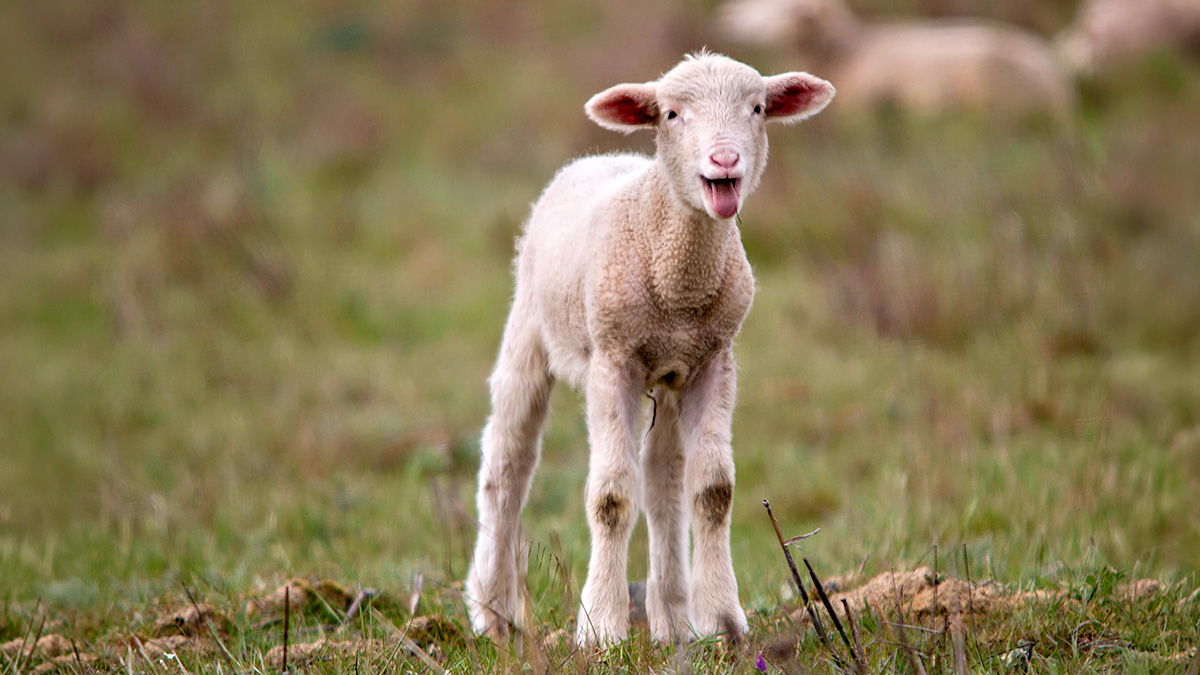
Then comes the shepherd who leaves ninety-nine sheep for the one that is lost, an image of a God whose arithmetic does not resemble ours.
I find this combination decisive: true greatness looks like the willingness to go searching for the overlooked, rather than counting oneself among the secure majority.