
When Jesus is challenged by the chief priests and elders to prove his authority, he replies with a question — “John’s baptism. Did it come from heaven, or was it of human origin?”
Isn’t he saying that the kingdom of God is not about human authority? It’s about the Spirit. He’s asking them, “Was God’s Spirit at work in John or not?”
And they refuse to answer because an unbounded Spirit would be a threat to their own status and power.
Authority and succession
The church did not consolidate its authority until the 4th century. Only then did it begin to say that it operates in direct historical, physical succession from Peter as first bishop of Rome and more generally in direct succession from the other apostles.
If you are not ordained in this physical succession, you are not ordained. But if you are, then you — and only you — are invested with the authority that Jesus gave to Peter and the other apostles.
Peter’s real role
The obvious first question is, what authority did Jesus invest in Peter? What the church in the Gospels and in Acts shows us is that Peter — whom Jesus calls the rock — is a man who plainly cannot lead.
Peter gets it wrong every time. And more important, the early church knew it, and recorded it.
The implication must be that Jesus did not intend to establish a hierarchic and authoritarian church. But one of the Spirit.
Peter and Rome
The second less important question is, was Peter the first bishop of Rome? Well, there were no bishops in Rome (as we understand them) until hundreds of years later. Nor is there any evidence he ever went to Rome, unlike Paul.
Acts charts Peter’s movements in detail up to the early AD50s, and he is almost exclusively in Jerusalem. Then he disappears from the historical record.
So where did the myth of Peter as bishop of Rome come from? Perhaps it’s connected with the destruction of Jerusalem in AD70?
Although Christians from Jerusalem fled south to places like Alexandria, wealthy Roman Christians now wanted to make Rome the new centre of Christianity. And they identified more with Peter — the boss — than with Paul, who had been executed in Rome as a common criminal.
Now stories began to grow up about the extravagant miracles Peter performed in Rome and about various rival sites for his burial. Finding Peter’s bones in Rome wouldn’t prove his authority, but it would be a wonderful connection with the early church.
Bones and belief
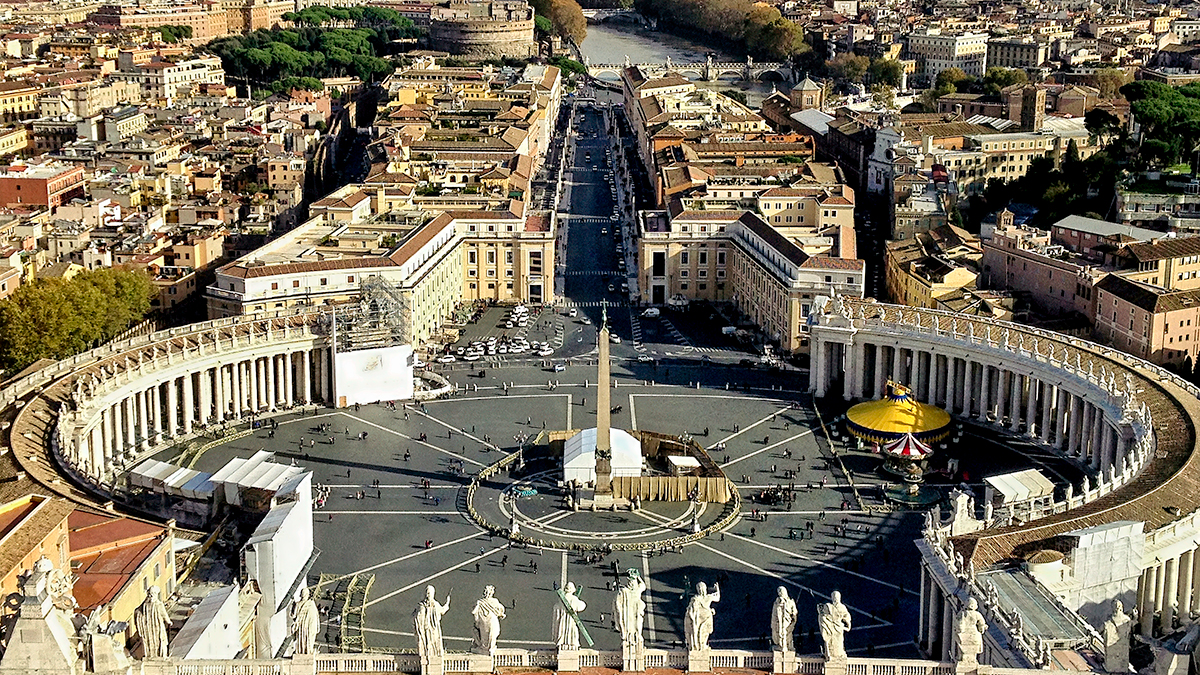
So when, in 1940, Mussolini began digging for pagan sites in the city to boost his authority, Pius XII went in search of Peter’s bones under St Peter’s.
28 years later, bones his amateur diggers had haphazardly stored in the maintenance room were declared Peter’s, until John Paul II and Benedict XVI decided they were not, and Francis announced they were.
Perhaps this helps explain why I cannot obey a hierarchy that has opted for authority over Spirit, and bases that authority on empty historical claims.

- Penelope Middelboe is a writer and journalist who has articles for publications such as The Tablet, The Irish Catholic, and The Synodal Times. Her work often explores themes related to faith, social issues, and history.