

Churches frequently speak of peace, justice and reconciliation. These words appear in sermons and public appeals after war, political violence or social conflict.
Yet in secular public life, such language is often seen as indifferent or innocuous.
To political leaders, Christian appeals may sound idealistic and detached from the realities of power. To activists, calls for reconciliation can appear premature while injustice remains unaddressed.
To victims, religious language about forgiveness may sound like pressure to remain silent before those responsible have acknowledged the harm they caused.
This raises an uncomfortable question: Have Christian principles failed, or have churches failed to embody them credibly?
The answer cannot be placed entirely on one side. Secular politics often measures success through immediate and visible outcomes: an election won, a law passed, a conflict suspended or public order restored.
“Peace without justice
is just silence wearing a religious label.”
By those measures, the slower work of rebuilding trust, preserving memory and repairing relationships can appear ineffective.
But Christians cannot blame secular misunderstanding alone.
Churches have often weakened their public witness by separating peace from justice, reconciliation from truth and charity from structural change.
Christian principles have sometimes been made so safe and undemanding that they no longer challenge the conditions they were meant to transform.
Scriptural warnings of peace
The Prophet Jeremiah criticized those who treated deep social wounds superficially, saying, “Peace, peace,” when there was no peace (Jeremiah 6:14).
His warning remains relevant whenever churches choose silence over confrontation or institutional harmony over uncomfortable truth.
Silence is not the same as peace. A society can appear calm even as some members remain excluded, exploited, or unheard.
A community can appear united even as people wounded within it are discouraged from speaking.
Christian peace cannot mean merely the absence of visible conflict. Biblical peace points to right relationships marked by dignity, justice, participation, and belonging.
Jesus said, “Blessed are the peacemakers” (Matthew 5:9). He did not bless those who merely avoid conflict.
Peacemaking is active, difficult, and sometimes disruptive. It may require exposing injustice before genuine harmony is possible.
Christian peace-building loses credibility when churches become more concerned with reducing tension than with confronting what produced it.
The problem of reconciliation
The same problem appears in Christian language about reconciliation.
The apostle Paul writes that God has given believers the “ministry of reconciliation” (2 Corinthians 5:18–19). Yet this ministry is sometimes understood as a duty to urge victims to quickly forget the injustice and move on, and to refrain from reopening painful wounds.
That may not be reconciliation. It may become enforced forgetting.
“A church that fears conflict
cannot be trusted to name the truth.”
Such an intervention is unchristian and, in itself, an act of injustice.
When truth has been suppressed, reconciliation must begin with truth-telling. When institutions have caused harm, accountability is necessary.
When relationships have been distorted by injustice, reconciliation may require repentance, restitution, and institutional reform.
Truth as foundation
Jesus taught that the truth would make people free (John 8:32). Therefore, truth is not the enemy of reconciliation but one of its foundations.
Christian communities lose moral credibility when they urge injured people to forgive more quickly than they urge powerful people and institutions to repent.
Forgiveness is central to Christianity, but it cannot be demanded by outsiders or used as a substitute for justice.
Beyond interpersonal disputes
Churches also tend to discuss reconciliation at the interpersonal level while ignoring the structures that repeatedly generate conflict. A disagreement between two individuals may require dialogue, confession and forgiveness.
But poverty, discrimination, political repression, labor exploitation and social exclusion cannot be resolved simply by asking people to improve their attitudes toward one another. Such problems are sustained by institutions, laws and unequal access to power.
Here Christian theology and community psychology share an important insight. Human suffering is not produced only by personal weakness or individual moral failure.
It is also shaped by environments, relationships and institutions. Repairing communities therefore requires attention both to people and to the conditions surrounding them.
The same distinction applies to social justice.
Christian principles have not failed because they ask too much of the world. Too often, they have seemed to fail because churches have asked too little of themselves.
Charity without justice
Christian churches have a long history of providing education, medical care, food, shelter, disaster relief and support for people in need. Across Asia, Christian institutions have often served communities with courage and persistence.
These ministries represent some of the Church’s most faithful work.
“The Church earns its voice in public life
only by listening in private first.”
Charity alone is not justice.
Charity responds to suffering after it occurs. Justice also asks why the suffering continues, whose interests are protected by existing arrangements and whose voices are excluded from decisions.
A church may distribute food without questioning why wages remain inadequate. It may counsel exhausted workers while remaining silent about exploitative employment practices.
It may care for migrants while avoiding discriminatory laws. Compassion without structural analysis remains incomplete.
The prophet Amos confronted religious communities that worshiped faithfully yet tolerated injustice. He rejected the notion that ceremonies and offerings could atone for social wrongdoing, declaring, “Let justice roll down like waters, and righteousness like an ever-flowing stream” (Amos 5:24).
This is a judgment on religion that remains spiritually active even as it becomes socially harmless. Micah expresses the same demand: believers are called “to do justice, and to love kindness, and to walk humbly” with God (Micah 6:8).
Justice, mercy, and humility belong together. Mercy without justice may become paternalism. Justice without mercy may become harshness.
Both require humility, because churches are not called to enter public life as morally superior institutions. They must examine their own practices, confess their failures, and listen to those who have been ignored.
What critics get right
The secular world is therefore not entirely wrong to question Christian public language. Churches have sometimes condemned the anger of oppressed people more strongly than the systems that oppressed them.
They have defended institutional unity while neglecting those injured within their own institutions. They have spoken clearly about private morality while remaining cautious about public injustice.
These failures must be acknowledged plainly. Yet it would also be a mistake to conclude that Christian principles are obsolete.
Why faith communities endure
Secular politics often operates on short time frames. Governments seek immediate stability, while media attention shifts rapidly from one crisis to another.
Faith communities, at their best, can remain.
They can accompany people after public attention fades. They can preserve memories that authorities would rather forget.
They can provide spaces for mourning, confession, and moral reflection, bringing together people divided by nationality, class, ethnicity, or political allegiance.
Christian peacebuilding
The Church also has a language that challenges narrow definitions of success. A policy may be popular yet unjust.
An economy may grow even as loneliness and insecurity deepen. A peace agreement may halt violence while leaving its causes untouched.
A society may become efficient while treating people chiefly by their productivity.
Christian faith holds that every person possesses a dignity that cannot be reduced to economic value, political usefulness, or social status. This conviction gives the Church a distinctive public responsibility.
It must ask: Who has been forgotten? Whose suffering has been normalized? Who bears the cost of social peace? Whose voice is absent from decisions that affect their lives?
But the Church earns the right to ask these questions only when it directs them inward as well.
Christian peace-building must shift from the language of calm to the practice of just relationships. Christian reconciliation must shift from appeals for forgiveness to truth, repentance, accountability, and repair.
Christian social action must move beyond charity alone and address the institutions that repeatedly create vulnerability. Christian public witness must shift from statements to sustained presence.
The Epistle of James warns that “faith by itself, if it has no works, is dead” (James 2:17). That warning applies not only to individual believers but also to churches.
Statements about justice mean little without institutional courage. Appeals for peace ring hollow when churches avoid conflict at all costs.
Calls for reconciliation grow hollow when leaders refuse to acknowledge harm.
Christian credibility will not be restored through better public relations. It will be restored when churches remain with wounded communities after the headlines fade; protect vulnerable people at an institutional cost; challenge unjust systems rather than merely comfort those harmed; and acknowledge their own failures.
Christian principles have not failed because they ask too much of the world. Too often, they have seemed to fail because churches have asked too little of themselves.
The Church’s task is not to make these teachings more acceptable by making them harmless. It is to embody them with courage, humility and endurance.
Only then can peace become more than silence, justice more than charity and reconciliation more than forgetting.
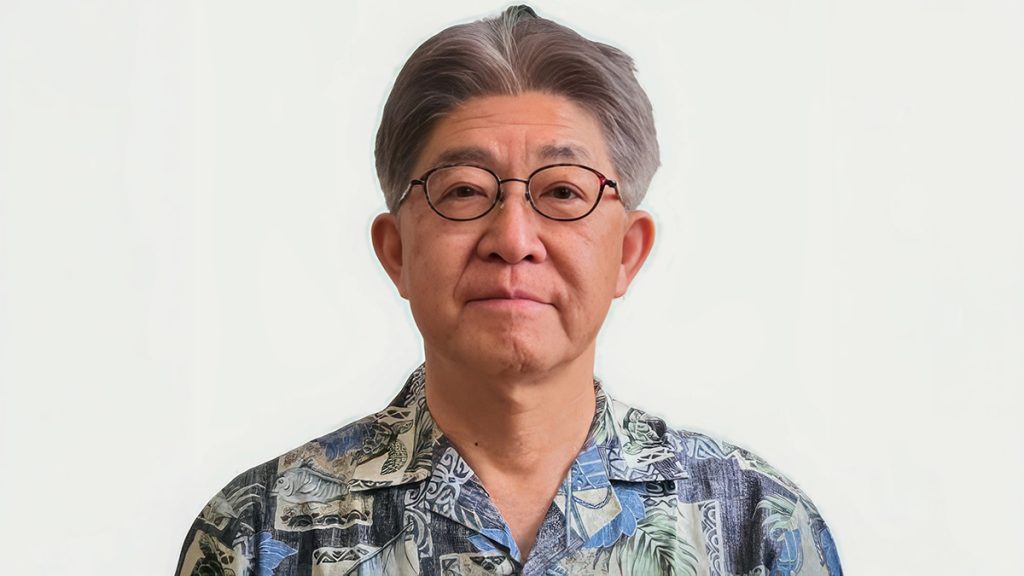
- Toshiaki Sasao is Professor Emeritus of Community Psychology and Peace Studies at International Christian University (ICU), Tokyo, he is a Fellow of the American Psychological Association and Senior Advisor to the ICU Peace Research Institute.
- First published in Global Catholic. Republished with permission.