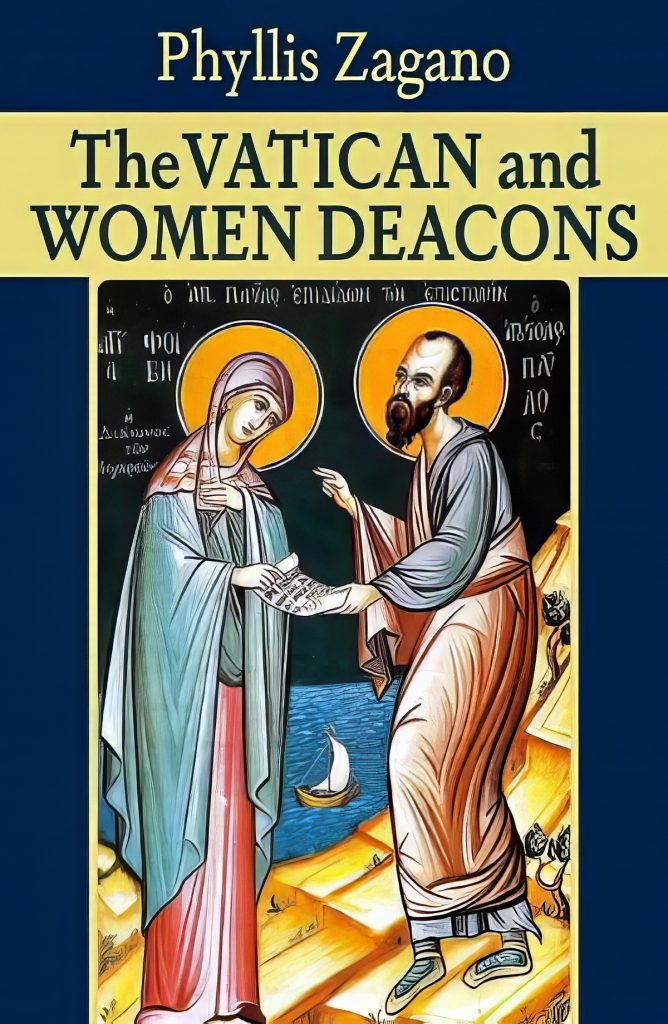
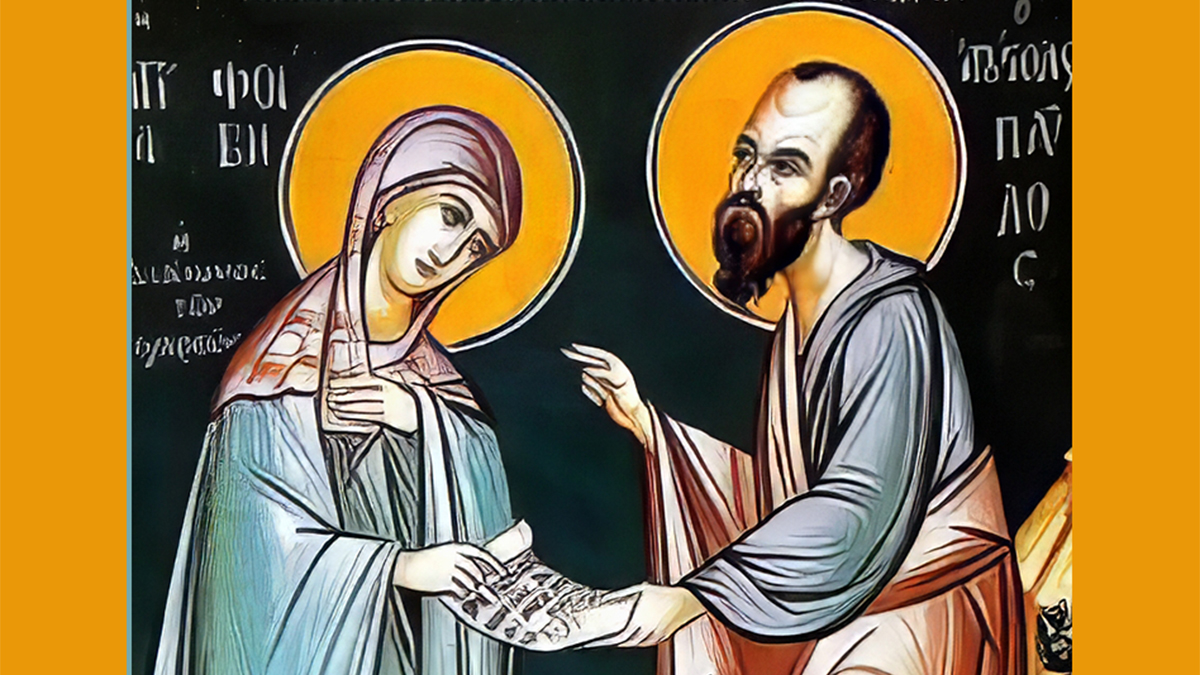
In a meticulous study (Phyllis Zagano, The Vatican and Women Deacons (New York: Orbis Books), 2026), the latest in her impressive series of studies of women deacons in Church history, canon law and church practice, Zagano presents the entire relationship between the Vatican and the position of women in the Church.
By using Vatican documents and analysing them in the greatest detail, she provides a comprehensive historical account of the development of the various Roman documents, setting out this position from the beginning to the present day.
The question of women in ministry, she states, “is part of an ongoing discussion throughout the Catholic Church” and is not limited to the issue of women deacons.
But by addressing what she so rightly refers to as “the simmering question” (p.23) of the admission of women to the ordained diaconate, she makes it clear how much of the consequent dealings have remained unpublished and secret.
We find, presented over nearly 200 pages, the whole history of the Vatican’s dealings over the centuries with the issue of the ordination of women to the diaconate (and also to the priesthood).
She makes the important point that “The Church, not Jesus, which has established this ministry of service” (p. 4).
The simmering question
She begins by stating clearly that “the Final Document of the Synod states that the question of restoring women to the ordained diaconate remains open.”
She traces parallels with the restoration of the male diaconate as a permanent vocation in the decrees of Vatican II.
On a positive note, Zagano makes it very clear that there is no doctrine forbidding the ordination of women as deacons (p.12).
The results of the synodal process, she points out, “demonstrated worldwide requests for women in both Church management and ministry” (p.180).
Ancient rites rediscovered
Zagano traces the fortunes of deacons and deaconesses (were these simply “the wives of deacons”?) in both the Eastern and Western Churches through the centuries.
She delineates the actual duties that women deacons were expected to perform in both east and west.
Some of her most fascinating — and telling — research concerns the actual rituals for the ordination of women to the diaconate.
Some of these reside within the Vatican library itself (pp. 7-9; 181-188).
These “ancient and medieval” liturgical documents reveal that women were ordained to the diaconate within the sanctuary during Mass by the bishop.
This was by means of the laying on of hands and by the invocation of the Holy Spirit.
The bishop placed the stole around their necks and addressed them as deacons or deaconesses (p.182).
Buy the book
For shipping inside the US click this link.
For shipping outside the US, click this link, then place your order via the international distributor nearest you.
If you have trouble contacting the distributor closest to you, please send an e-mail to orbisbooks@maryknoll.org and enter International Book Order in the email’s Subject area.
Trent to Vatican II
The chapter headings in themselves form a commentary on the background to the Vatican’s attitude to women deacons: chapter one looks at the history of the diaconate in the early Church up to the Counter-Reformation Council of Trent (1545-1563).
Chapter two provides a commentary on post-Tridentine theory and practice regarding women’s diaconal ordination.
It presents little-known evidence from the Maronite Church and details the work of the polyglot Jean Morin (1591-1659), a view that was contradicted by the Belgian Bollandist Jean Pien (1671-1749).
Chapter three brings us to the Second Vatican Council (1962-1965) and its debates on the restoration of the diaconate as a permanent vocation for men.
An overwhelming vote passed this on October 30 1963.
But women deacons were “barely considered” (p.23).
Paul VI did deliver a message to women, which Zagano qualifies as “seeming hopeful.”
At the same time, he was “repeating the virtues of women in the usual categories as wives, mothers, women in consecrated life and women living alone” (p.25).
Synods and commissions
Chapter four addresses the Synods of Bishops established by Paul VI, focusing on the second synod in 1971, where the ministries of women in the Church were discussed.
It particularly addresses the paper given by Canadian Basilian Cardinal Flahiff (1905-1989), which raised the issue of women deacons.
By 1973, this topic had become “one of widespread interest, even controversy” (p.35).
In April that year, Paul VI established the Commission on the Role of Women in the Church and in Society.
Chapter five examines all six of its Plenary Sessions in some detail.
Chapter six recounts that in 1969, Paul VI had formally established the International Theological Commission.
Its thirty members included some of the leading theologians in the Church at the time, particularly Yves Congar, who made his support for women deacons known.
Documents suppressed and shelved
Chapter seven brings the saga almost up to date by discussing the declaration “Inter Insigniores: On the Admission of Women to the Ministerial Priesthood” and all that followed from its publication in 1976.
It discusses the ongoing academic debate on all aspects of the issue, particularly the fallout from Inter Insigniores.
In chapter eight, we move on to the fifth quinquennium of the International Theological Commission, which produced a final document.
This final document, although “printed, numbered, and voted on,” was — interestingly — never promulgated (p.94).
Following this came the Sixth Quinquennium of the International Theological Commission, discussed in minute detail in chapter nine.
Its concluding document “may have leaned away from history” (p.110).
But although negative in approach and tone, it did not completely rule out restoring women to the ordained diaconate.
Papal commissions and Amazon
Chapter ten recounts the setting up of the first Papal Commission, of which Zagano was a member.
Some of the documents associated with this commission are notable for their non-publication.
Chapter eleven examines an important event in the recent life of the Church — the Amazon Synod in 2019.
The vote on women as permanent deacons resulted in 137 in favour and 30 against (p. 123).
Pope Francis’ attitude toward the various questions involved is well documented.
An entirely new commission was named and is the subject of chapter twelve.
Apart from one or two women members, these commission members appear to have been either noncommittal on the subject of women deacons or largely negative.
Synodality and hope
Chapters thirteen and fourteen describe in detail the Synod on Synodality, 2021-2023 and 2023-2025.
Opposite conclusions can be drawn from the somewhat ambiguous synod documents.
But Zagano quotes a statement that “could not be starker:”: “By virtue of Baptism, women and men have equal dignity as members of the People of God” (p. 168).
Her conclusion ends: “The most likely scenario is that the current pope, or the next pope, will present a motu proprio that affirms the decisions of several popes before him, granting permission for bishops to ordain women as deacons …” (p.174).
Zagano, in a footnote, quotes Walter Kasper, writing in Communio and published in 2021, as saying that the ordination of women as deacons is “theologically possible and pastorally sensible” (fn. 29, p. 93).
Her whole argument can be neatly summed up as: “The real question is not whether women can be ordained as deacons but should women be ordained as deacons” (p.171).
For those wishing to follow the frequently fluctuating and capricious relationship between the Vatican and the position of women in the Church, this book is essential reading.
Zagano has done an enormous service by collecting, scrutinizing and evaluating these various documents, setting them in their historical, canonical and theological contexts and presenting the findings fairly and with clarity.
If her findings are at times depressing in their misogyny and clerical bias, the words from the final Synodal document with which she begins her study and then returns to at the end offer hope:
“That which comes from the Holy Spirit cannot be stopped.”
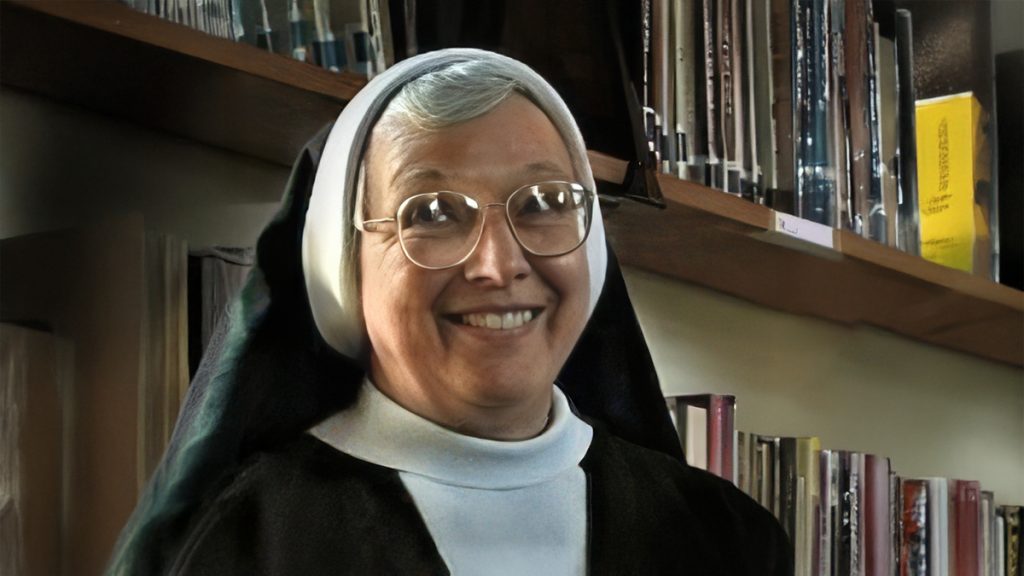
- Patricia Rumsey is the Abbess of a Poor Clare monastery. She has an MA and a PhD in Theology from the University of Wales, Lampeter, UK. She has written and published on liturgy and early Irish monasticism and has lectured in England, Ireland and Scandinavia.
Buy the book
For shipping inside the US click this link.
For shipping outside the US, click this link, then place your order via the international distributor nearest you.
If you have trouble contacting the distributor closest to you, please send an e-mail to orbisbooks@maryknoll.org and enter International Book Order in the Subject area.