

John Kerr Locke (1933-2009) was an American-born Jesuit who worked in Nepal for about half a century.
Specialising in Buddhism, he used to take classes in its philosophy and spirituality at various centres, including seminaries.
In Delhi, once he told us in the class: “If you met a taxi driver who was rude to you today, simply say that you met a taxi driver who was rude to you today. Do not generalize and say that taxi drivers of this country are rude.”
He cautioned us to avoid generalizing or stereotyping what we know from singular and particular experiences.
Locke’s argument was simple: in our lifetime, we will meet only a few taxi drivers, and some will be rude, and many will be polite.
Generalising that taxi drivers of this city, country, or culture are rude is actually false, period.
Many of us in the class argued the pros and cons of what he said, but many of us remember him and his wise statement founded in Buddhist thought.
Studies of all types rely on the principle of generalization and we need generalizations to understand our societies and cultures and behaviour patterns, and, simply, how to live in a complex world.
How we generalize
Most of us indulge in generalizations — we do so, not only when we have negative experiences but also when we have positive experiences.
For instance, after a visit to Sri Lanka, you may say that people of Sri Lanka are hospitable or very religious.
When we share our own experiences — the only ones we truly own — we almost always bring communities into it, identifying people by nationality, region, language, ethnicity, religion and culture.
The media amplifies the harm
In today’s media-impacted world, generalizations, both positive and negative, are extremely common and they heavily feed gossip and public discourses.
Sharing of negative stories, amplifying them and attributing vices to groups does a lot of harm to individuals and communities.
Image of God
From Christ’s own words (Mt 16:3) to the Second Vatican Council (Gaudium et Spes, §4), the call has been consistent: read the signs of the times carefully, humbly, without distortion.
Each person we bury under a label is an image of God we have chosen not to see.
A culture that generalizes carelessly is a culture slowly losing its capacity for love — and for God.
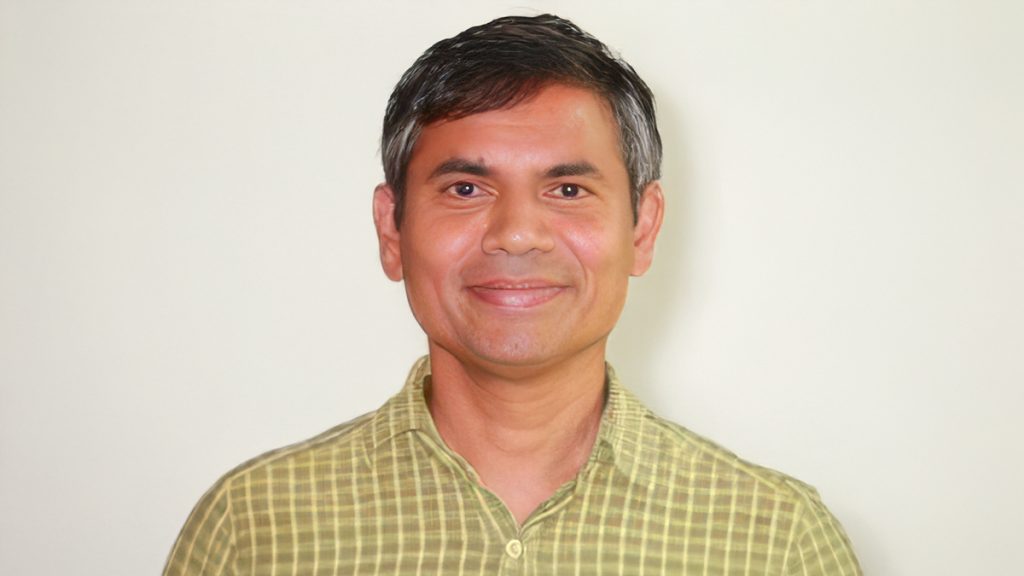
- Stanislaus Alla SJ holds a doctorate from Boston College, USA. He is an internationally published writer with interests in ethical concerns. He currently teaches at Vidyajyoti College of Theology, Delhi.