

Pope Leo lit the flares while speaking off the cuff young Confirmation candidates in Rome.
Speaking to around 1,000 young Catholics from the Archdiocese of Genoa who had made a pilgrimage to Rome, he asked them to continue to live the gift of the Holy Spirit and to be missionaries of Christ.
He said one of the greatest joys of every Bishop is the opportunity to celebrate Confirmations, since it is “truly the gift of the Holy Spirit — giving us enthusiasm, strength, and the ability to follow Jesus Christ, to say ‘Yes’ to the Lord always, and not to be afraid to live the faith in a world that so often wants to lead us far from Jesus.”
But what’s the reality?
A bishop’s response
After a confirmation ceremony more than ten years ago, my then-bishop was candid.
I asked him, given his widely respected pastoral experience, what we might do to keep in touch with the newly confirmed.
His short response: we were unlikely to see most of them again.
Sadly that was the last attendance for most.
Pope Leo was totally realistic. Just as Confirmation marks great joy for Bishops, it often brings sadness, he said, “since many young people never set foot in the church again, disappearing from their parishes.”
He appealed to young Catholics to pay special attention to perseverance, living their faith together in community.
“We do not live the faith alone; we live it together. Forming relationships of friendship and community is a way to live perseverance as disciples of Jesus.”
How do we compete?
Most parishes celebrate Eucharist every weekend, and many offer activities that younger people could participate in.
But we also know that participation in either is unlikely.
A feature of our post-secular world is that church cannot compete with swimming groups, football matches, or children’s parties.
When the current crop of faithful grandmothers departs, there will be fewer candidates still.
What will we do as a Church to heed Pope Leo’s alarm?
Will our attachment to tradition — of whatever claimed kind — prevent us from responding to a demonstrated need to change?
Meeting the desire for connection
In these liminal times, we must meet our people’s desire for connection, community and agency — through relatable liturgical language, a return to Gospel values, homilies that speak plainly, and activities that provide a pathway back to church.
We are competing for people’s time. That is an unwelcome consideration, but a necessary one — making more bishops sad is infinitesimal compared with the loss of the next generation.
Sixty years after Vatican II, we face a new age of renewal — a Genoan aggiornamento under a new Pope who has sounded the alarm.
Possibly early shades of Pope John XXIII at the Basilica of St Paul Outside the Walls in 1959?
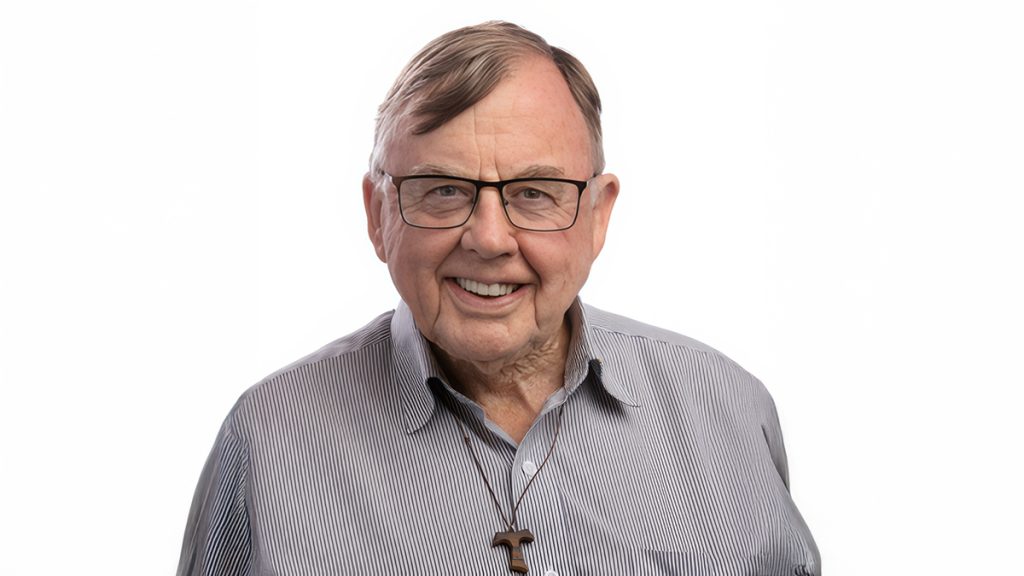
- Justin Stanwix is an active permanent deacon in the Diocese of Wollongong, Australia. After 40 years in commercial law practice he was ordained deacon. He has a love for liturgy and especially for its artful practise dating from Vatican II deliberations. He presents and writes on current Church topics including for some years in La Croix International. Justin has a commitment to synodal layout of church interiors and the way we assemble for Eucharist.