

I was born into a rural, small-farming household in the West of Ireland just after the Second World War. From a religious point of view, my upbringing was about as traditional as you could imagine.
Mass, confession, benediction, and novena to Our Lady in a nearby monastery every Saturday.
My parents were religious, but I think towards the end of their lives, they began to have questions of their own. Maybe not so much my father, who died in his early sixties, but more obviously my mother, who lived almost to ninety.
As she approached death, she no longer had the traditional certainties about what awaited her, but she didn’t seem to be afraid. She seemed to trust that death was not the end, and that goodness and love, in whatever Divine form, would be her destiny.
Vows at eighteen
I was eighteen when I knelt in the sanctuary of that monastery and proclaimed my vows to religious life and to the road to priesthood.
Now, on the verge of eighty, I have travelled a long way from the certainties of my upbringing.
Being suspended from ministry for my writings over the last fourteen years has increased the number of questions I have about our Church.
Caught in the loop
The complexity of the Bible and how to interpret it have occupied much of my reflection and study.
Stuart Delony has put very succinctly the challenge facing the Church in this area, in his description of what he calls ‘The Loop’:
‘The Bible is true because it is the Word of God. How do we know it is the Word of God? Because the Bible says so. How do we know we can trust what the Bible says? Because it is the Word of God. We trust the church because the church teaches the Bible correctly. How do we know the church teaches it correctly? Because the church says it does.’
I know that many Scripture scholars have a more nuanced view, but very few will say that outside of the strictly academic setting. They would fear the consequences. And the ordinary faithful are left with the traditional view.
Power from the top
Something similar operates in how the Church exercises authority.
Everything is top-down; the Vatican has all the power, resting in the various dicasteries with the Pope at the top, and they are effectively unreachable and untouchable.
Bishops are reputed to have power in their diocese, but it is largely illusory.
Here in Ireland, we had a bishop who was a fresh thinker and not afraid to express his views. He was hauled over the coals by the Vatican on a number of occasions.
It didn’t deter him, for one simple reason. He did not care if they sacked him, and that gave him freedom.
But he was a rare species. Most are more careful to hold on to the mitre.
Insufficient courage
Religious orders are supposed to have authority over their members. But that too is very limited.
Matthew Fox, in a recent interview, said that what disappointed him most in his affiliation with the Dominican order was their “insufficient courage to stand up to institutions, forces and powers that are acting badly”, referring to the Church institutions.
My own personal experience has been similar.
For the past fourteen years, various members of my order, superiors and legal people, have tiptoed around the Vatican institutions, trying to secure some type of just process to deal with my case, but to no avail.
Insufficient courage!
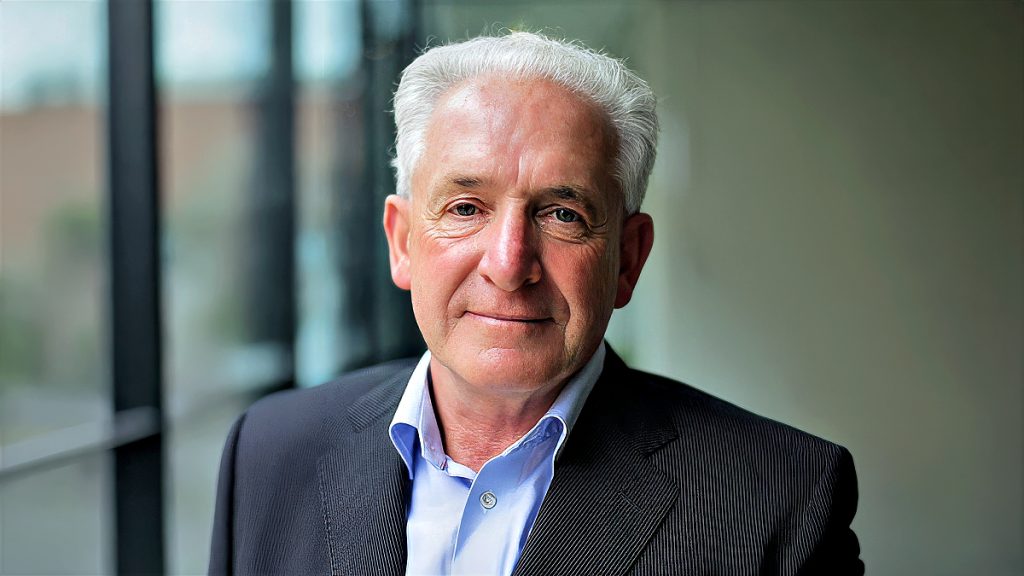
- Tony Flannery (www.tonyflannery.com) is a native of Galway, Ireland. He joined the Redemptorists and was ordained in 1974. In 2010, he co-founded the Association of Catholic Priests, and two years later was sanctioned by the Vatican for writings it considered heretical. Since then, he has been forbidden to minister publicly as a priest.