
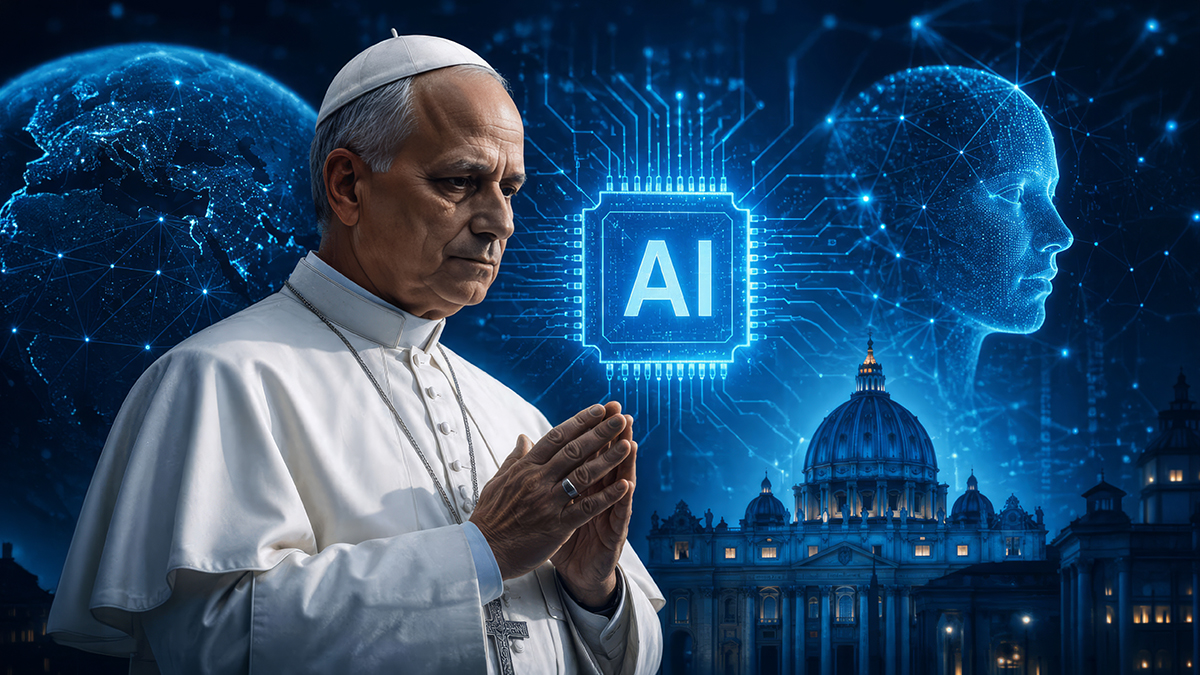
AI is everywhere. Just five years ago, the only group who used the abbreviation “AI” was farmers in the First World. It meant “artificial insemination.”
Now everyone reading this – on a screen – is hearing about “artificial intelligence.”
The rate of change in our world is, as the late Pope Francis noted, what is most distinctive about our time.
AI is here and, like it or not, for the foreseeable future is here to stay. You may have probably used it and were very pleased with the results.
The same foundational AI technology that answers simple everyday questions — like “what’s the best way to remove stains from a white cotton tee-shirt?” — also powers autonomous weapons systems capable of making kill decisions on their own, with consequences that could lead to the deaths of thousands.
Technology asks religious questions
Every technological development carries an implicit vision of what it means to be human. As those tasked by the Creator with caring for and building our world, we must ask fundamental questions about developments that affect humanity as a whole.
Such basic questions are religious questions; despite the fact that many people in the developed world reject this and would tell religious people (such as the pope) to keep their noses out of such wealth-producing business.
The pope weighs in
But the pope has put his nose in, and the result is the new encyclical: Magnifica humanitas.
It is not an easy read, and with 245 paragraphs, it is a document that takes time to digest.
However, it was originally written in English – probably a first for an encyclical – and so is far easier to read than the “translationese” that has been the hallmark of many Vatican documents.
A new departure
It marks a new departure in the Catholic Church’s teaching – a new departure because the issue is new.
The moment it appeared on Monday, 15 May, on the Vatican’s website, I began to try to come to grips with it – and this is the sentence that really grabbed me:
Our first task is neither to demonize nor idolize technological tools, but to utilize them on the basis of a fundamental principle, namely that truth is a common good and not the property of those with power or influence. We must therefore promote an ecology of communication.
It is from paragraph 137 – and it is worth memorizing.
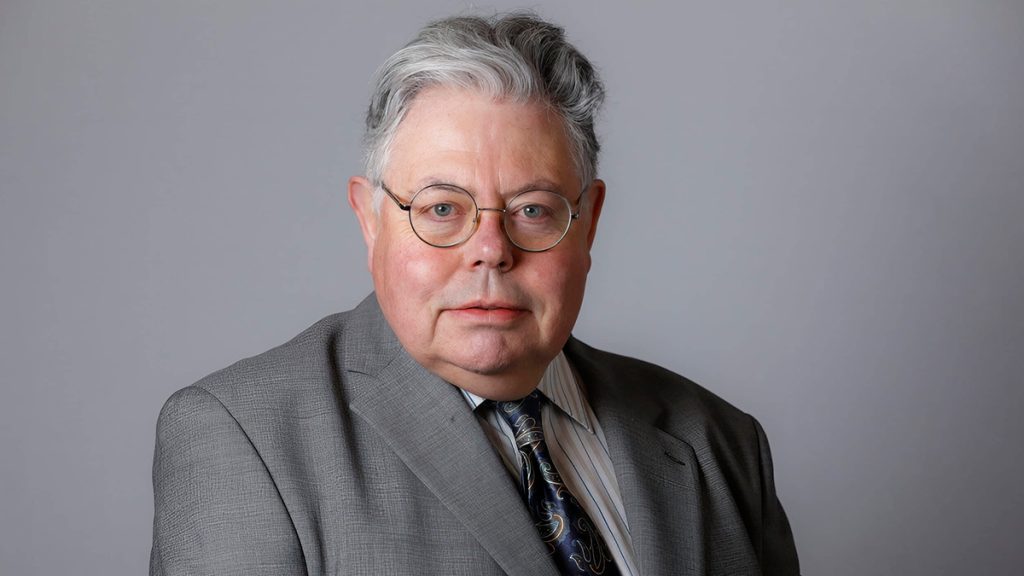
- Thomas O’Loughlin is a presbyter of the Catholic Diocese of Arundel and Brighton and professor emeritus of historical theology at the University of Nottingham (UK). His latest book is Discipleship and Society in the Early Churches.
- His latest book is “Shaping the Assembly: How Our Buildings form us in Worship”.