

Reading Phyllis Zagano’s analysis of the Petrocchi Commission’s “report” on women’s diaconate (America 13 March 2026), and in Flashes of Insight, I was confirmed in my growing conviction that we need to be asking different questions on the subject.
As is her gift, Zagano deconstructs Petrocchi’s letter to Pope Leo XIV to demonstrate its assumptions regarding women and to lay bare its wilful theological ignorance in linking the diaconate to the sacramental priesthood in the “unicity of orders.”
As she notes, there is no “historical, theological or anthropological documentation or analysis” to back up the report’s conclusions and points out that it digresses from the issue of women’s diaconate to speak of “new ministries” for women.
And of course, we hear yet again that the issue needs further study and discernment.
Contradiction at the core
Zagano’s articles goes to the heart of the matter when, in her concluding comment, she points out the glaring contradiction in Petrocchi’s letter – it calls for “evaluative freedom and discursive transparency” but, in reality, it is an attempt to “close the Church’s discernment on the inclusion of women in the ordained diaconate.”
Vatican control persists
Given that the issue of women’s diaconate has been in the ether since the early 1970s, it is not going away despite all the delaying tactics of the Vatican.
Of course, that is a significant part of the problem – the control of the Vatican. It controls the establishment (or not) of a commission to study the topic. It controls the selection of personnel appointed to the commission.
It controls the dissemination (or not) of the findings of a commission – the Petrocchi letter was only issued in Italian, limiting knowledge of its contents.
It can punish theologians for speaking out on the matter, though Francis did not engage in this, nor does Leo; the potential for this harm remains.
The deeper question
So instead of the question: can women be ordained deacons? Our burning question needs to be: Why has the magisterium deified the penis?
By making the masculinity of Jesus the defining feature of the imago Dei that is what the Church leadership has done.
Scripture and tradition allow for women deacons – Eastern Christianity still values them. The literature makes the case, both historically and theologically (Zagano, Ramelli, Kateusz, Baldini, and many others).
Synodal consultations show that around the world, many, many communities are ready for it and want it. Further study is simply a deflecting and delaying mechanism and a cover for the deeper issue of misogyny.
Faithfulness beyond biology
If a woman can be theotokos, carry God incarnate into the world, and be faithful in accompaniment to the end at the Cross, her sisters in faith can be equally steadfast and faithful in celebrating this remembrance for the community.
A willing spirit and a prayerful disposition are essential, not a specific body part.
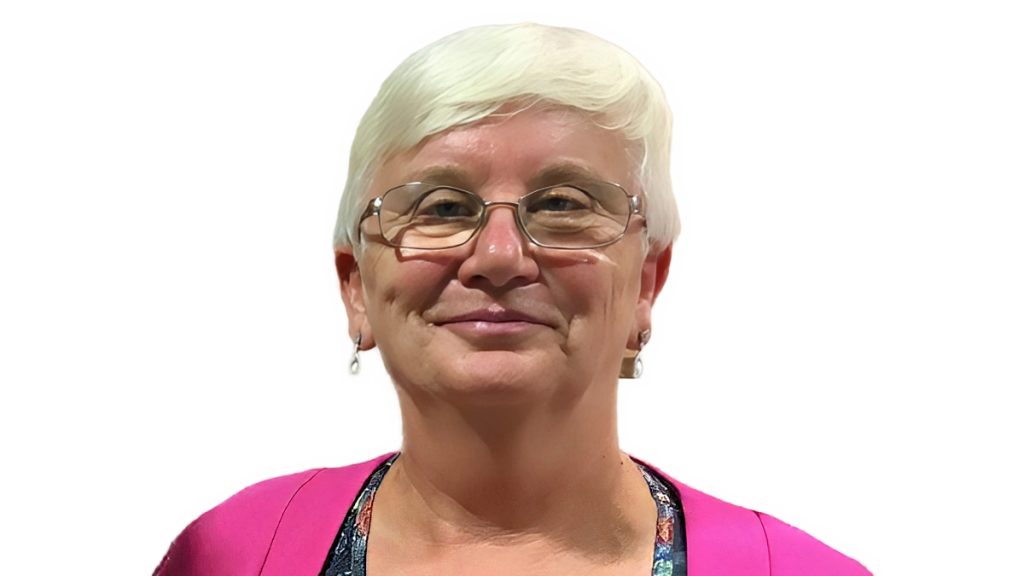
- Angela Hanley studied theology as a mature student, graduating in 2010. In 2015 she completed a research MA on Catholic same-sex relationships. She is currently undertaking PhD studies. She has published many articles and two books, Whose a la Carte Menu?: Exploring Catholic Themes in Context and What happened to Fr Sean Fagan?