
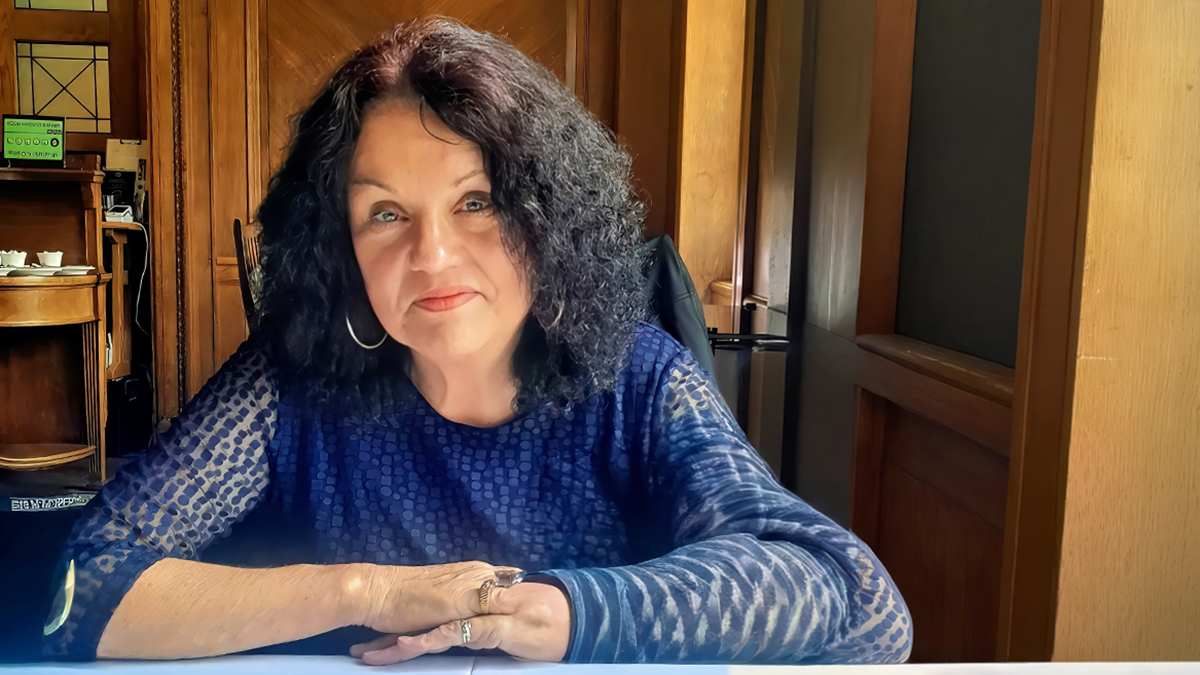
I am from a non-Catholic background, and my parents divorced when I was small.
My mother had custody of me but was an unstable person. However, I survived due to the support of other family members and my conversion to Catholicism.
When I was 15, my mother remarried a Greek, and spending time in that country sparked my interest in religion. When I returned to the UK, I converted to Catholicism.
Later, at 23, I enrolled in a Catholic college to study theology and philosophy. That period of study changed my life, and I became both a progressive thinker and a fervent Catholic.
At that time, I considered the consecrated life, but I met and married Bill, who shared my passion for theology.
The Catholic Church had a major influence on me throughout my marriage. It was my rock.
Bill was divorced and applied for an annulment, which was granted.
My passion for theology also led me to make many interesting friends, including clergy, laity and the provincial of a religious order. I was always discussing theology passionately with someone somewhere!
A path to consecration
Bill was a lot older than me and died 12 years ago. I knew immediately that I never wanted to marry again and sought a consecrated path.
This was not to wallow in grief as a consecrated widow, but because I saw the vocation as an opportunity to live an independent life focused on God.
I spent five years in formation, working many hours visiting the sick, writing a book about the consecrated life, and training to be a spiritual director.
I loved the path I was following and in February 2020 met with a bishop and a priest to set a date for my consecration. It was set for 3 May 2020 and was announced to the diocese.
However, shortly after this meeting, a COVID lockdown began. During this lockdown, I became very ill due to an antibiotic allergy and nearly died.
The bishop also wrote to me and said my consecration would have to be postponed. I asked him if there was any way I could have a private ceremony as I was so ill.
However, he said that wasn’t possible.
A consecration cancelled
After the lockdown I emailed the bishop and asked if we could set a new date for my consecration. I was still very ill and suggested some dates a couple of months hence.
The bishop asked to see me in person, and I went to meet him.
No sooner had I sat down than he told me he was cancelling my consecration because the pandemic had cancelled it, so it couldn’t be God’s will; and because I had asked for a private consecration during the lockdown, I should have waited.
I was completely stunned but was simply too ill to argue.
Later I discussed the matter with my spiritual director and friends. My spiritual director knew nothing about it and hadn’t been consulted.
After these discussions, I wrote to the bishop and asked him to reconsider, but he refused. I was absolutely devastated.
The Catholic Church, which had always been there for me, had now done this to me! It was the worst thing that had ever happened to me.
I wrote to the Conference of Bishops and asked if they could do anything about my plight, but they said they had no jurisdiction over any bishop, since a bishop is the supreme governor of his own diocese.
Leaving the diocese
I sold my house and left the diocese and the country.
I joined the Independent Catholic Movement and was ordained but, although I support the ordination of women to the diaconate, I did not feel comfortable being ordained outside the Church.
I continued living as a consecrated widow, keeping my vows, visiting the sick, and writing.
I wrote to Pope Francis four times, but he never acknowledged or answered my letters.
A letter from Rome
When Leo became Pope, I thought I’d make one last attempt to restore my vocation and return to the Church.
I wrote to him, told him my story, and copied in several cardinals and the dicastery. Two months later I received a letter from the dicastery for the Institutes of Consecrated Life and Societies of Apostolic Life acknowledging the suffering I had endured and my desire to belong more fully to the Lord.
The Vatican stated that to live the vocation proper to the widowed state, particular juridical structures are not always necessary, as there is the reality of grace, faith and the personal response to God’s call.
They stated that no authentic vocation lived in love is ever lost to God.
After receiving this letter, I wrote to my current archbishop and asked him what I should do now.
He counselled me to continue living as I am, but I could, if I wished, make a private or public vow in accordance with Canon 1191.
I am so delighted to return to the Catholic Church because, for me, this Church, despite its failings, remains my spiritual home, and the vocation I discerned 12 years ago has never let me go.
- Debra Maria Flint is a Catholic writer whose books include ‘No Place for a Woman’ and ‘The Sins of Mandatory Celibacy’ (co-authored with Paul Murphy Sanderson).