
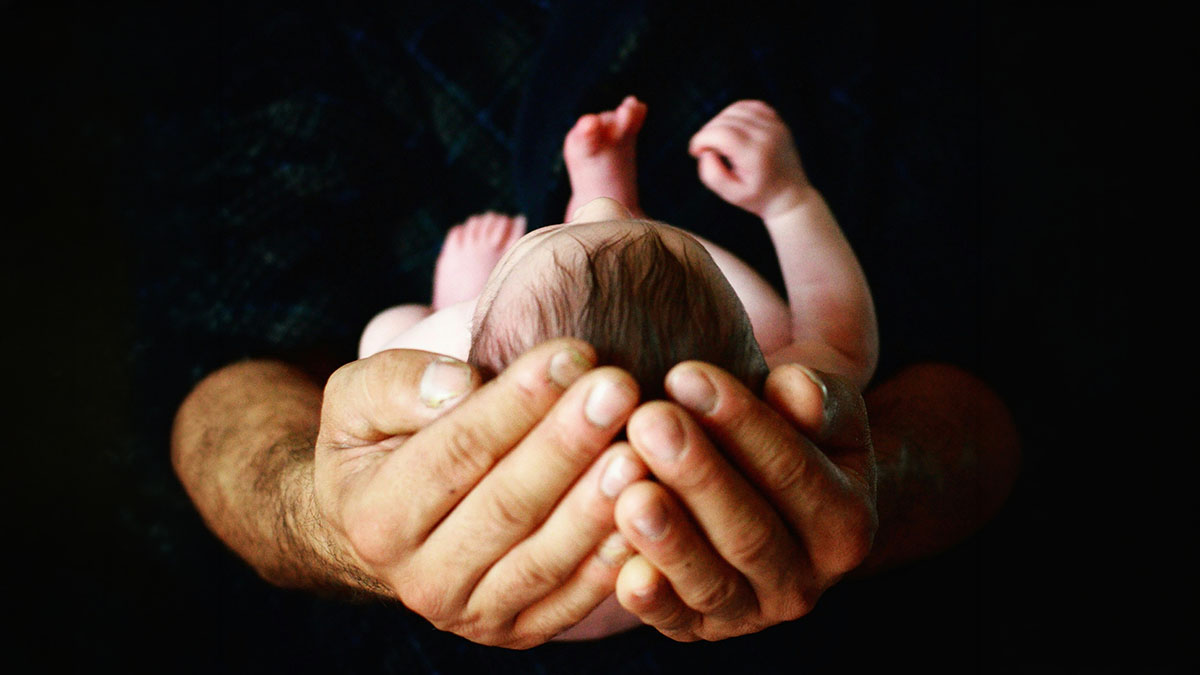
In Catholicism infant baptism is always presented as good thing.
Who wouldn’t want to bestow a spiritual gift on a new baby? Don’t we take care of the baby’s bodily and material needs — why not the spiritual needs?
Not to do so would seem negligent. So the narrative went.
But lately I wonder: what is a blessing and what is entrapment?
A captive audience?
According to the Vatican’s figures, there are 1.422 billion baptised Catholics in the world. How many of those freely chose their membership?
Following Christ is a conscious choice. Jesus used neither threats nor force to win people to his Way.
He invited people to follow him freely. He made it clear it would not be an easy path, but the decision had to be freely taken.
That alone would suggest the importance of adult baptism as a free choice. I now ask myself: to what extent has infant baptism become a way to ensure a captive audience?
A different kind of ceremony
Having been part of many Catholic baptisms, participating in a secular naming ceremony for one of my grandchildren last year was a very positive experience.
The focus was on raising him in community, with an ethical concern for others and the natural environment.
The guideparents (not godparents) were an important part of the ceremony, and their supporting responsibility was emphasised.
It reopened the conversation for me on the purpose of infant baptism.
Vatican II and its reforms
In the past, infant baptism was important because of high child mortality and the literal interpretation of scripture that we are not saved if not born of water and the Spirit.
But this changed after the reforms of Vatican II. In the years after the Council, many scholars expressed their reservations on infant baptism.
But those concerns were firmly closed down in 1980, when the CDF issued a document on baptism that reinforced the necessity of infant baptism.
Toward adult baptism
I think adult baptism would be far healthier for the Church. There could be a naming and blessing ceremony for infants to welcome them into the community.
Education in the faith would continue through childhood. At 12, a ceremonial equivalent of simple vows could signal a willingness to commit to the faith.
The sacraments of initiation could then take place at age 15 or 18 as a conscious, informed choice.
A baptism of choice made by an adult would mean the Church leadership as a whole would have to work much, much harder to demonstrate the characteristics of Christianity so that when they say “come and see,” what is found is a wholesome, inclusive, compassionate, safe, and welcoming community.
A place anyone would want to belong to.
- Angela Hanley PhD studied theology as a mature student. In 2015 she completed a research MA on Catholic same-sex relationships and in 2026 attained her doctorate. She has published many articles and two books, Whose a la Carte Menu?: Exploring Catholic Themes in Context and What happened to Fr Sean Fagan?