
Thriving ecclesial landscapes look very different from what we see today in the German Church and elsewhere. Wherever one looks, there are anonymous mega-parishes, while deserted, closed, repurposed, or demolished church buildings—consequences of the shortage of ordained clergy—give the lie to the claim that the Church is embarking on a new beginning rich with opportunity.
What we are witnessing is a profound collapse, accompanied by the drying up of the Church’s concrete presence. It exposes as false the oft-repeated mantra that the celebration of the Eucharist is “the source and summit of the whole Christian life.” The few remaining oases of regular eucharistic celebration do not alter the fact that, in practice, the Church in Germany lives under a state of interdict—even if only specialists in canon law are likely to recognise the term.
A self-imposed interdict
In canon law (de iure), an interdict is a prohibition against celebrating acts of divine worship. It may, for example, be imposed as a penalty for supporting an organisation hostile to the Church (can. 1374 of the Code of Canon Law). However antiquated such a penalty may appear today, it returns—like a ghost of Christmas past—to describe the barren ecclesial landscapes of the present. The difference is that today’s interdict is one the Church has imposed upon herself.
A self-inflicted shortage
The scandalous shortage of priests is self-inflicted. Even where most well-intentioned diocesan offices want to promote priestly vocations, they cannot change the fact that an unattractive vocation does not become attractive simply through more prayer services and hymn singing. Neither should the traditional calls for reform nor the smokescreen of “the New Evangelisation” distract us from seeing that nothing is possible without a workforce.
Equally misplaced is the diversionary accusation that the Church suffers from a “forgetfulness of Christology” (as suggested recently by Cardinal Kasper), as though the condition of the Church today was not itself the consequence of the contemporary forms of faith in Christ.
Renewal through correction
An interdict should serve as a means of correction and renewal. Therein lies the irony of the present situation: perhaps the ecclesially destructive logics of preserving male-centred power, the quasi-dogma of clerical celibacy as a badge of clerical exceptionalism, and the pseudo-sacramental elevation of the priest—with its correspondingly catastrophic potential for failure—might themselves finally be brought to heel.
If this self-inflicted punishment were to achieve renewal, this prolonged disaster would at least have accomplished something — but that would require both manpower and womanpower. We must be more concerned with this than lamenting the loss of a small traditionalist splinter group, determined to remain out of step with the times.
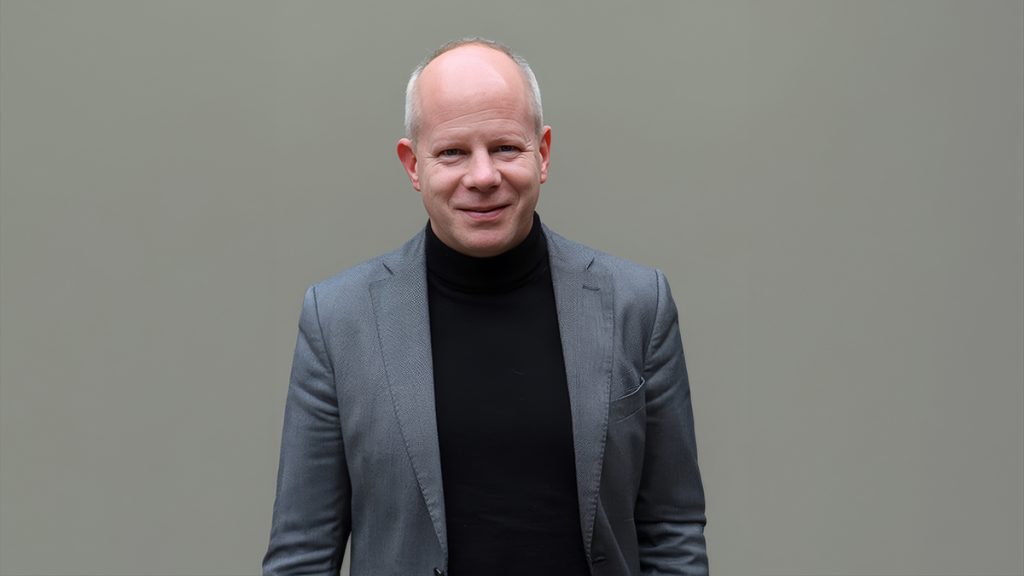
- Oliver Wintzek is a Professor of Dogmatics and Fundamental Theology at the Catholic University of Applied Sciences Mainz and a cooperating priest at the Jesuitenkirche in Mannheim. A vocal advocate for intellectual rigour in the Church, his commentary frequently tackles theological superficiality, digital fundamentalism, and the need for a modern, well-reasoned faith. He writes an occasional column at Katholisch.de
- Translated from German by JP Grayland. Reproduced with permission.