

Mawlawi Sheikh Mohammad Khalid al-Hanafi, the Minister for the Promotion of Virtue and Prevention of Vice of the Taliban, and the hyper-fundamentalist rulers of Afghanistan, since 2021, has decreed that women are no longer allowed to pray aloud even in the presence of other women.
This is because, like their bodies, their voices must be covered in public.
The rule has rightly been described as “bizarre.” Perhaps the real rationale for it is fear that women who can speak together can conspire together to chip away at or even break the Taliban’s oppressive control over their lives.
It is easy for outsiders to move from thinking that a bizarre rule in the name of religion means that the religion, in this case Islam, is also bizarre. And in a sense, and to some degree, they would be right.
However, we should examine our own religion to see if and how the bizarre might not be limited to the religions of others. After all, when we point one finger at another, three fingers point at ourselves, and every religion has bizarre aspects, even if they are not its core elements.
Usually, they are not aspects of the religion at all, merely a sign that the religion has some or many bizarre adherents, and some in positions of authority.
A pope’s forbidden choir
That is a reason to recall that in his 1903 moto proprio (issued on his own authority) Tra le sollecitudini (among the concerns of the pastoral office), Pope St. Pius X ruled that women could not be members of church choirs or play musical instruments in the liturgy.
“Women … cannot be admitted to be part of the choir or musical chapel.”
The saintly pope added, “The use of the piano is forbidden in church, as well as that of noisy or light instruments, such as the drum, the bass drum, cymbals, bells and the like.” With a bit of softening, he did allow the limited use of woodwinds.
Bizarre.
Finally, the pope enjoins everyone in authority “to promote with all zeal these wise reforms, long desired and unanimously invoked by all so that the very authority of the Church, which repeatedly proposed them and now inculcates them anew, may not fall into contempt.”
With rules like these, it would be strange if “the very authority of the Church” did not “fall into contempt.”
Even long before the changes brought about by Vatican 2 the rule about women had quietly died of neglect.
So, before satirizing Islam with its Minister Mohammad Khalid Hanafi we should recall Catholicism with its Pope St. Pius X.
And then mock them both.
The magic prayer card
When I was a high school boy, a devout elderly neighbor gave me a prayer card. As I recall, the prayer was addressed to St. Joseph.
It was similar to other such cards, with a picture of the saint and an innocuous prayer.
What stood out to me, though, and remains in my memory, was some small print at the bottom of the prayer, like the warnings that often appear on drugs. The warning stated that one should not use the prayer unless he or she were certain that what was prayed for was really desired, because it was such a powerful prayer that it would be granted no matter what.
The promise was that a properly performed human action, in this case, saying a certain incantation, would force a certain action. That is a definition of magic.
I doubt I have ever seen a clearer example of pagan magical thinking than that Catholic prayer card, published “with ecclesiastical approbation.”
Bizarre.
When religion turns dangerous
Religion is important, even essential, but it can be dangerous. From trying to guide and enable believers on their journey to God, it can move to trying to control the journey, the believers, and even God.
When it does that, religion can be dangerous, even evil. On the other hand, it can be merely bizarre, in which case it either weakens whatever true authority it has or simply provides entertainment and practice for the cynical and sarcastic.
What can believers do about the bizarre in their religion? Should we just ignore it as part of the lunacy that is part of most human endeavors?
To some extent, we have no choice since such bizarre behaviors and beliefs will never be totally absent, and they are not the heart of the religion.
However, we must not be complacent. For a religion that invites others to accept it, clearly bizarre elements are an obstacle to thinking men and women who might otherwise join.
Even believers who become more aware of and embarrassed by their religion’s bizarre elements find it harder to live and advocate their faith. Some even quit.
Pulling up the weeds
I must look not only at my religion but especially at my living of it to see where non-essential bizarre ideas and practices may have contaminated it.
Then I must, to the extent that I can, pull up those weeds so that faith might grow in a more healthy way and present a more accurate and effective image to the world’s people of a faith that can engage them intelligently, realistically, and maturely.
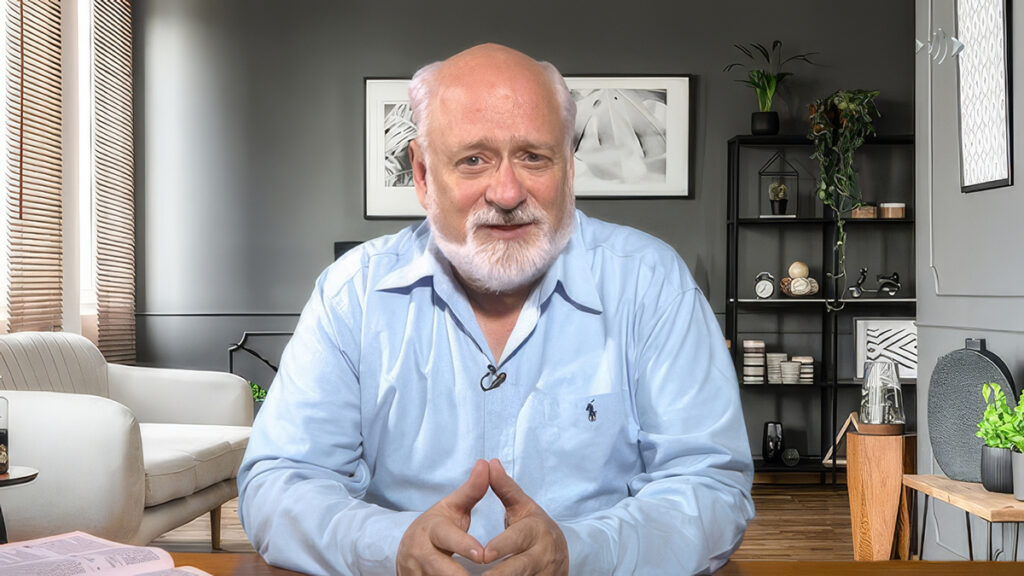
- William Grimm, a native of New York City, is a missioner and presbyter who since 1973 has served in Japan, Hong Kong and Cambodia. A graduate of the Columbia University Graduate School of Journalism in New York, he is the publisher of UCA News.
- First published on UCANews.com. Republished with permission.