

Pope Leo XIV has dismantled a centuries-old theological consensus, explicitly declaring the traditional “just war” framework obsolete.
His recent encyclical Magnifica Humanitas strips away the moral cover long used to justify state-sanctioned violence, forcing the Church to confront an uncomfortable reality: the use of military force is not a sign of geopolitical strength, but a confession of profound relational poverty.
When nations reach for weapons, they reveal that their moral imagination has failed and that the slower, harder work of human connection was abandoned too soon.
The pope also railed against the use of artificial intelligence in war, arguing that “moral judgment cannot be reduced to calculation.”
“It is not permissible to entrust lethal or otherwise irreversible decisions to artificial systems,” Leo writes.
“No algorithm can make war morally acceptable”.
Today, more than ever,
Pope Leo – Magnifica Humanitas
without prejudice
to the right to self-defense
in the strictest sense,
it is important to reaffirm
that the “just war” theory,
which has all too often been used
to justify any kind of war,
is now outdated.
The failure of permission
For generations, the just war theory functioned as a reluctant framework, yet it was all too often weaponized to rubber-stamp conflict.
By hiding behind technicalities like right intention, proportionality, or last resort, leaders routinely dressed national ambitions in the language of moral permission.
Cardinal Robert McElroy’s assessment of the U.S.-Iran conflict proves this systemic failure is not a theoretical abstraction.
When major powers bypassed existing avenues for negotiation and dialogue, the decision to fight became morally indefensible — a verdict, not a technicality.
The anatomy of confession
As Emeritus Professor Tom O’Loughlin sharpens, reading just war principles alongside Pacem in Terris also reveals a sobering truth.
“The framework looks less like moral permission and more like a confession — tragic evidence that the work of building peace was abandoned too soon.
“The modern illusion that we can bomb our way to stability has finally shattered against the hard reality of global escalation.
“True security requires an active commitment to international reconciliation, an alternative path of diplomacy and forgiveness that demands far more courage than launching missiles.”
Humanity possesses
Pope Leo – Magnifica Humanitas
far more effective and capable
tools for promoting human life
and resolving conflicts,
such as dialogue, diplomacy and forgiveness.
The use of force, violence and weapons
reflects a relational poverty
that always has disastrous consequences
for civilian populations.
An Easter reordering
We cannot outsource this labor to state departments while feeding division and rehearsing anger in our own fractured domestic hearts, families, and political lines.
This radical diplomatic imperative directly recasts the familiar resurrection narrative we celebrated a few weeks ago.
When the risen Christ appeared to his apostles, he offered no geopolitical strategy, no political coalition, and no roadmap out of Roman occupation.
Instead, he presented his wounded body with a standard greeting that doubled as a total disruption of worldly power: “Peace be with you.”
Prayer isn’t enough
This peace isn’t a passive sentiment or a private buffer against a distracting digital world; it is a citizenship we must actively inhabit.
It requires moving past spiritual language alone to engage in lobbying, public dissent, and a permanent ceasefire born of moral necessity.
Peace is something we choose repeatedly, inconveniently, and at a cost.
It begins by quieting our own restless judgments and ends with a collective willingness to say no when war threatens to reignite.
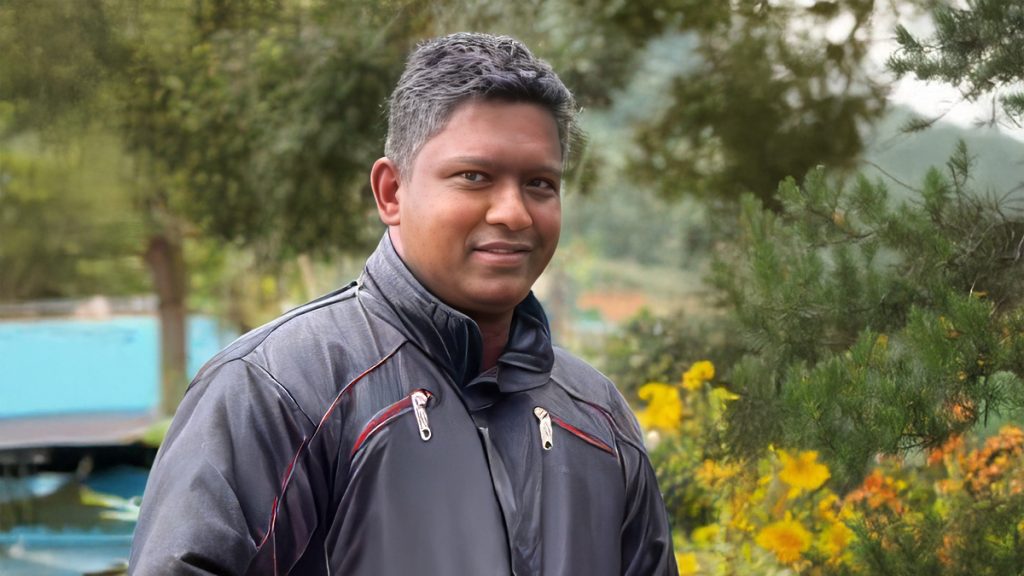
- John Singarayar SVD holds a doctorate in Anthropology. He is an author of several books and regularly contributes to academic conferences and publications focusing on sociology, anthropology, tribal studies, spirituality, and mission.