
Pope Leo’s comments in an in-flight interview during his African visit last April have passed largely unnoticed both by the secular and ‘religious’ media. He was responding to a question from a journalist about same-sex marriage:
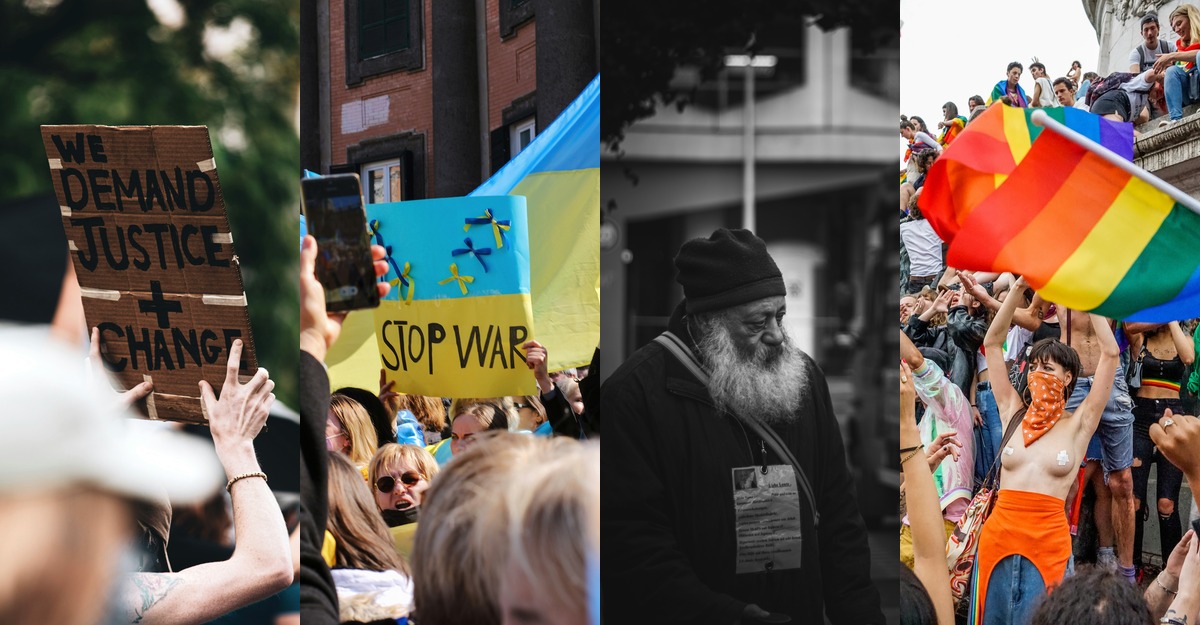
“We tend to think that when the church is talking about morality that the only issue of morality is sexual. And in reality, I believe there are greater and more important issues such as justice, equality, freedom of men and women, freedom of religion that would all take priority before that particular issue.”
These words mark a recalibration in Church moral teaching and may prove long-lasting for the Church’s 1.4 billion members.
This statement may be seen as a significant moment paralleling Pope Francis’s ‘Who am I to judge?’ comment – both shifting focus from sexual morality to broader social concerns.
A marked contrast
Pope Leo’s words are in marked contrast to those of Pope Benedict XVI, who, on his first trip to Africa in 2009, stated that the Church could not relax its ban on Catholics using condoms, even to help fight the transmission of HIV/AIDS – comments that shocked many people.
There is little doubt that the two Popes were not reading from the same page, and that their different perspectives are not just a difference in emphasis but represent a radical shift in Church teaching from the past.
It was a time when sexual morality was the only lens through which Catholic morality was seen and judged.
The cost of shame
Such a uni-focussed emphasis led to Catholics being characterised as being ashamed of their God-given human sexuality, which led to unhappy, guilt-laden lives.
Worse still, it was largely responsible for the establishment of Magdalen Homes, where single pregnant women were unjustly punished and kept behind the closed doors of a misogynistic society.
When morality integrates real life
A person escaping repression or a homeless family struggling to exist in Western affluent society are not focused on culture-war debates.
They are struggling to survive with dignity and searching for help to break away from the chains of structural injustices and from those identified by Pope Leo who:
- “invoke law and even justice as though it were a commodity to be bought and sold”,
- “degenerate culture into lies and propaganda”
- “use science at the service of an inhumane will to destroy and kill”
Jesus challenged his society’s injustices
One of the most consistent features of the Gospels is how often Jesus challenged his society with the words of Micah:
“What the Lord requires of you is to do justice, to love kindness, and to walk humbly with your God.”
He confronted religious leaders with a warning:
“You have neglected the weightier matters of the law, justice, mercy and honesty”.
Thankfully in today’s world we have a courageous person like Pope Leo who is following in the steps of Jesus of Nazareth in denouncing injustices and hypocrisy.
- Brendan Butler is a former secondary school teacher who specialised in teaching Religious Education. His postgraduate degree was in theology from the Antonianum University in Rome. In 1979, he co-founded “The Irish El Salvador Support Committee” and later “The Ireland Algeria Solidarity Group”. He was the co-ordinator of “The N.G.O. Peace Alliance” which was active in the Irish peace movement. He helped to revive the Catholic Church reform movement “We are Church Ireland”, of which he was joint co-ordinator and spokesperson for several years.
- He published My Story by Jesus of Nazareth, and actively contributes articles and letters on Church and human rights issues to Irish newspapers.