
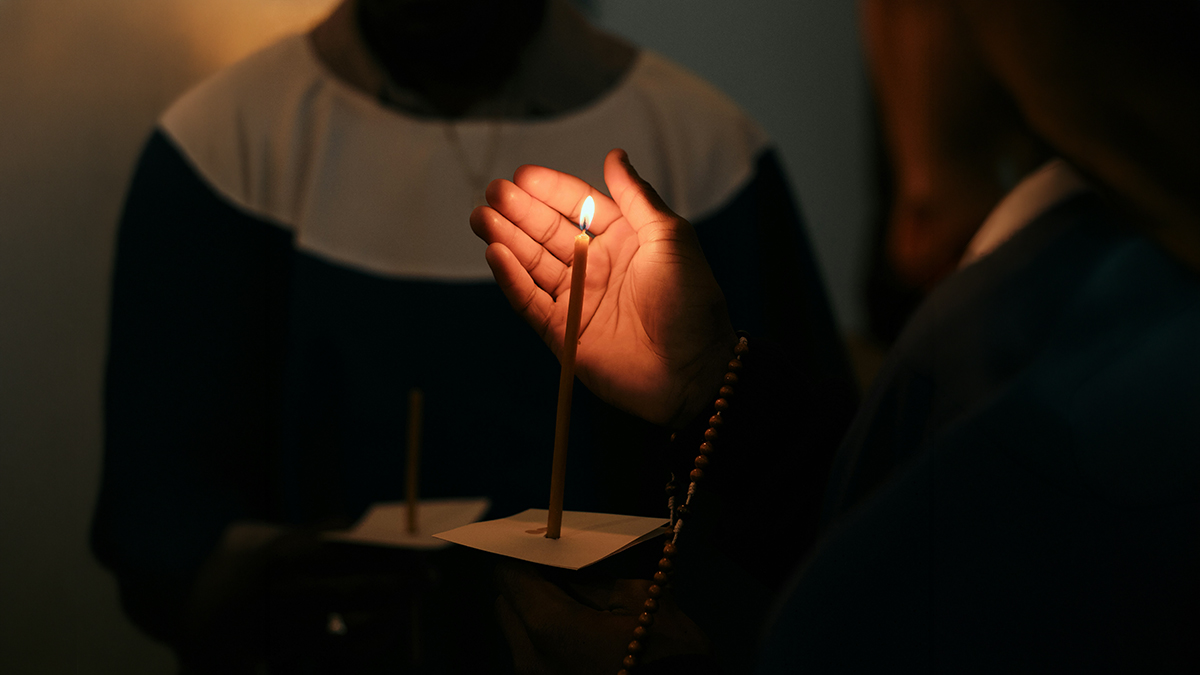
The catechumenate is not a programme the Church runs; it is a way the Church becomes Church.
The conversation between catechumens and Pope Leo in Paris (September 2026) showed that the catechumenate is not primarily a way of preparing people to receive sacraments; it is a way of making the Church.
Because it is primarily for adults (over the age of 14 years), it focuses on creating and sustaining adult believers. This is important in a church that, through many sacramental programmes and catholic school systems, has become too child- or infant-focused.
Although the catechumenal structure can and should be adapted for various peoples, for children’s initiation and faith-formation, and for parents of infants wanting baptism, the point should not be lost: this is a process, not a programme.
Process, not programme
Seen this way, much of what has gone wrong with contemporary approaches to initiation becomes clearer. We have become accustomed to thinking programmatically.
Someone wants baptism, confirmation, or reception into the Church, so we find a course, establish a timetable, deliver the content, celebrate the sacrament, and conclude the programme.
The person has passed through the system. The local church has provided the service.
But that is almost the opposite of the catechumenal vision.
The catechumenate belongs to the Church’s ancient tradition because initiation is not principally about completing a course. It is about becoming Christian by learning to inhabit a Christian community.
The catechumen is evangelised, formed, accompanied, taught to pray, introduced to the liturgy, and gradually enculturated into a particular way of life. The Church does not simply tell the catechumen what Christians believe; it teaches the person how Christians live.
Suddenly, the significance of OCIA becomes much larger.
Imagine a different parish
Imagine allowing the catechumenal principle to shape the whole sacramental life of a parish: adults seeking baptism, parents bringing infants for baptism, children approaching the Eucharist, people preparing for confirmation.
Instead of separate sacramental programmes, each largely disconnected from Sunday worship, a common presumption emerges: Christian initiation happens through participation in the life of a worshipping community.
That does not mean making initiation more arduous. It means making it more human.
Someone accompanies each person. Someone knows their name. Someone sits beside them on Sunday.
Someone else teaches the faith. Another person helps the catechumen understand what is happening in the liturgy.
And sometimes the most important catechesis is simply the person beside the catechumen saying after Mass, “It’s okay. I’ll see you next Sunday.”
That is how the Church forms people: not by instruction alone, but by keeping them company.
Simpler and more radical
It also reveals the weakness of approaches to evangelisation that depend heavily upon programmes, techniques, intense group experiences, or carefully engineered processes of belonging.
The catechumenate does something simultaneously simpler and more radical: it places people inside the ordinary worshipping Church and allows the Church’s liturgy, Scriptures, relationships, ministries, seasons, and practices to form them gradually.
The liturgical year
This is why the liturgical year matters. Easter is not the deadline for finishing the RCIA course.
The Easter Vigil is the privileged sacramental expression of a journey already taking place. Lent, Easter, Pentecost and the whole rhythm of the Christian year provide a grammar within which initiation becomes intelligible.
And perhaps this is what the church community desperately needs. The catechumenate does not only form catechumens.
It requires Christians to know what they believe, why they believe it, how they worship, and what kind of community they claim to be. It becomes adult formation, liturgical formation, theological formation, and renewal of the Church all at once.
- Dr Joe Grayland, a priest of the Catholic Diocese of Palmerston North, New Zealand, is a lecturer in the Department of Liturgy at the University of Wuerzburg (Germany).