
A specter is haunting Catholicism: the specter of another informal schism after the one following Paul VI’s 1968 encyclical Humanae Vitae and the Church’s teaching on contraception.
This time, it would be about immigration.
On September 11, the Washington Post published an opinion piece titled “This issue is splitting the Catholic Church,” by Nathan Pinkoski.
The author is a senior fellow at the Center for Renewing America (a right-leaning think tank founded in 2021 by Russell Vought, who served as Director of the Office of Management and Budget during the first Trump administration) and is currently translating the bestseller The Suicide of the French (original title: Le Suicide français) by Éric Zemmour, French far-right politician, writer and political journalist.
A widening lay-hierarchy gap
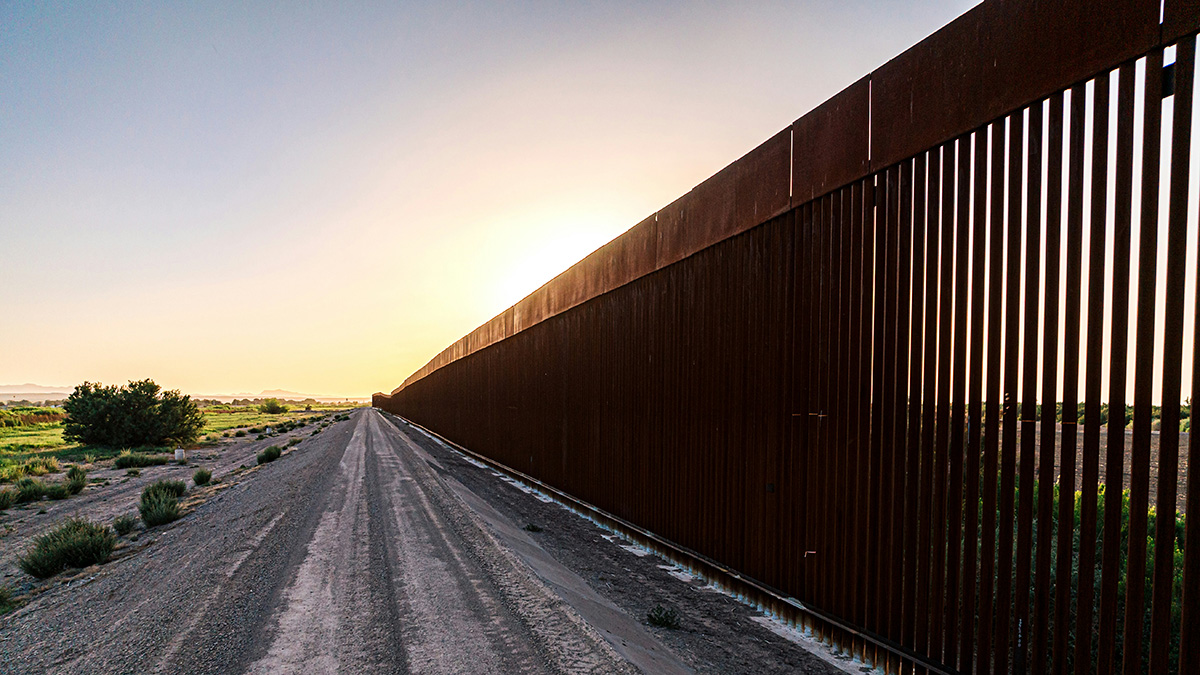
Pinkoski states that the Catholic bishops and the laity are drifting apart over immigration: “Lay Catholic support for a border wall is sharply at odds with the official views of the hierarchy.”
He says that, given the current demographic trends (more conservative churchgoing laity ministered by a rising number of foreign-born clergy), this rift is destined to persist in the Catholic Church.
In conclusion, he has a suggestion: “Catholic bishops hoping to strengthen the church’s witness should consider talking about immigration in more pragmatic terms — encouraging voters to weigh the pros and cons for the countries and communities receiving migrants. That stance might help lower the political temperature and reduce dehumanizing rhetoric in a fractured nation and church.”
The picture in Europe is not very different, once we take Trump and MAGA Catholicism out of the equation. But Pinkoski refers mostly to the USA in his article, where these days the issue has reached a new level.
A new DHS appointment
On September 10, it became public that Catholic theologian Chad Pecknold, since 2008 professor at the Catholic University of America in Washington, D.C. (the university of the US Catholic bishops) joined the Department of Homeland Security (DHS) as the principal director of public outreach for the Office of Public Engagement.
Pecknold has repeatedly defended the Trump administration’s immigration policies on theological grounds.
On February 4, professor Pecknold appeared at the Hungarian Embassy in the nation’s capital for a panel on migration organized around a paper from Budapest’s Axioma Center and with participants from the U.S. State Department and the Heritage Foundation among others.
Pecknold endorsed the paper, which said that although Christian teaching requires compassion toward refugees, rulers also have obligations to preserve security, public order and social cohesion. It added, “Mass deportations may be a legitimate response to mass migration.”
Pecknold is a scholar of Saint Augustine, and it will be interesting to see how he relates with the most important “son of Augustine” in the Catholic Church today, Pope Leo XIV.
Echoes of JD Vance
Pecknold seems to be closer to US Vice President and fellow Catholic JD Vance, who at the Republican convention in Dallas (September 9-10) said that “We were tired of being called racists for noticing that our country was becoming dirtier and poorer” and in 2025 he invoked the concept of ordo amoris (the “order of love”) to justify the Trump administration’s immigration restrictions and mass deportations.
Postliberal Catholic voices
This case raises three issues. The first one is political.
This contraposition between different American Catholic voices (theologians like Pecknold and other “postliberal” figures on one side and the US bishops on the other side) is unlikely to prompt a reaction from Rome.
It is in America that this issue is relevant in the framework of the relations between the US bishops and the federal government.
Especially since the beginning of the second Trump administration and the election of Leo XIV in the first semester of 2025, the US bishops have raised their voice with a series of messages and actions that are opposing the anti-immigration and anti-immigrant policies of the federal government.
Bishops push back
For example, the president of the USCCB, Archbishop Paul Coakley, has recently (September 8) sent a letter urging President Donald Trump to cease the deportation of “large numbers” of Haitian immigrants.
One wonders what happens if the person at DHS to whom Coakley’s letter is assigned for action turned out to be Catholic theologian Chad Pecknold, tenured professor at the university of the US bishops.
The more interesting political question is whether there is an emerging gap between what the pope and the American bishops are saying about immigration and what Catholic laity and younger priests believe.
While many laity do support Trump on immigration, the younger clergy may not: they are more aware of what the future of the Church looks like. I doubt that young priests who want to say Mass in Latin think anti-immigration policy is the ecclesiastical hill they want to die on.
A theological question
Then, secondly, there is the theological question. Pecknold is one of those Catholics who does not see a contradiction between mass deportation of immigrants and Catholic teaching on immigration.
In a recently published book, Mass Expulsion: The Politics of Forced Population Removal (Oxford UP, 2026), Meghan Garrity explains when and where expulsion occurs, who is targeted, and what regimes are most likely to expel.
Garrity identifies two overarching categories of mass expulsion — security and economic — and develops a typology of four corresponding types: counter-irredentist, counter-subversive, reprisal, and nativist.
From what we know of the post-liberal Catholic position on immigration, the argument in favor of mass expulsion seems to be based on a mix of counter-subversive (the alleged political incompatibility of some immigrant groups with America’s national interests and foreign policy), nativist (their inability to assimilate into what they think American culture and religion is about), and economic (the effects on the wages for native-born workers, fiscal burdens on public services, etc.).
The mix between these arguments is clearly at odds with Catholic doctrine on immigration.
The question is whether and how this doctrine will be further developed, given that these arguments come from an internal dissent that has consequences that go far beyond the life of the Church.
The canonical question
The third issue, related to the second, is canonical. Under the bylaws of Catholic University of America (CUA), the sitting archbishop of Washington automatically serves as the chancellor of the university.
Cardinal Robert McElroy, archbishop of the nation’s capital since March 2025, has made no secret of his very critical views of the immigration policies of the Trump administration, and in some sense there has been already a public rebuke of the substance of the matter.
CUA was already at the center of a cause célèbre around the teaching of the Catholic Church about contraception.
Echoes of the Curran case
In 1986, American Catholic theologian Charles Curran (1934-) was removed from the faculty of the CUA as a dissident against the Catholic Church’s moral teaching.
In the July 25, 1986, letter to Curran, then Cardinal Joseph Ratzinger (prefect of the Congregation for the Doctrine of the Faith) wrote:
“the Congregation has confirmed its position that one who dissents from the Magisterium as you do is not suitable nor eligible to teach Catholic theology. Consequently, it declines your compromise solution because of the organic unity of authentic Catholic theology, a unity which in its content and method is intimately bound to fidelity to the Church’s Magisterium.”
Cardinal Ratzinger continued:
“the faithful must accept not only the infallible Magisterium. They are to give the religious submission of intellect and will to the teaching which the supreme pontiff or the college of bishops enunciate on faith or morals when they exercise the authentic Magisterium, even if they do not intend to proclaim it with a definitive act.”
Again, it remains to be seen how the Vatican will respond to the challenge coming from this new kind of dissent.
Drinan and Böckenförde compared
Possibly a closer analogy is the case of Jesuit priest Robert Drinan (1920-2007), when he was an elected Congressman from Massachusetts and ran into trouble for his votes on issues contravening church teaching.
The similarity with Pecknold is the intersection of dissent with actual government law and policy, something that never factored into the Curran case.
Another possible analogy — and a warning to integralist Catholics — might be the freedom that Catholic legal thinker and judge Ernst-Wolfgang Böckenförde (1930-2019) claimed when he accepted a position to the then West German Constitutional Court and knew he might be ruling on changes in the abortion law of the Bundesrepublik after the reunification with the German Democratic Republic (East Germany).
As a strong believer in academic freedom, I do not think that the case of Charles Curran should be a precedent to follow.
Pecknold has the right to be wrong. Pecknold’s rights here are further protected in that he has taken a leave of absence, which puts some distance from him and his status at CUA.
On the other hand, professor Pecknold is bringing his dissent from the Catholic teaching on immigration far beyond the doors of the classroom or the pages of academic journals.
This case raises, once again, the crucial issue of the existential effect of Church teaching on the lives of ordinary people — Catholics and non-Catholics.
A question of discipleship
“Post-liberal” Catholics like Pecknold never seem to have any care when their exclusory positions contradict the inclusivism of Jesus Christ and Saint Paul. They reconcile these with some philosophical or ethical sleight-of-hand, mixed in with what they claim is a political realism. Their take on Christianity is more a philosophical and legal argument than discipleship.
From the point of view of the historian, the first question is whether the current intra-Catholic dissent on the Church’s teaching on immigration will amount to another series of cases similar to the ones caused by teaching on sexuality and life issues.
Humanae Vitae landed on the rough terrain of 1960s sexual politics. The terrain of 2020s nationalist biopolitics is not less rough.
- Massimo Faggioli is a professor of ecclesiology at Trinity College Dublin. A specialist in modern church history, he focuses his research and commentary on global Catholicism, synodality, and the papacy.