
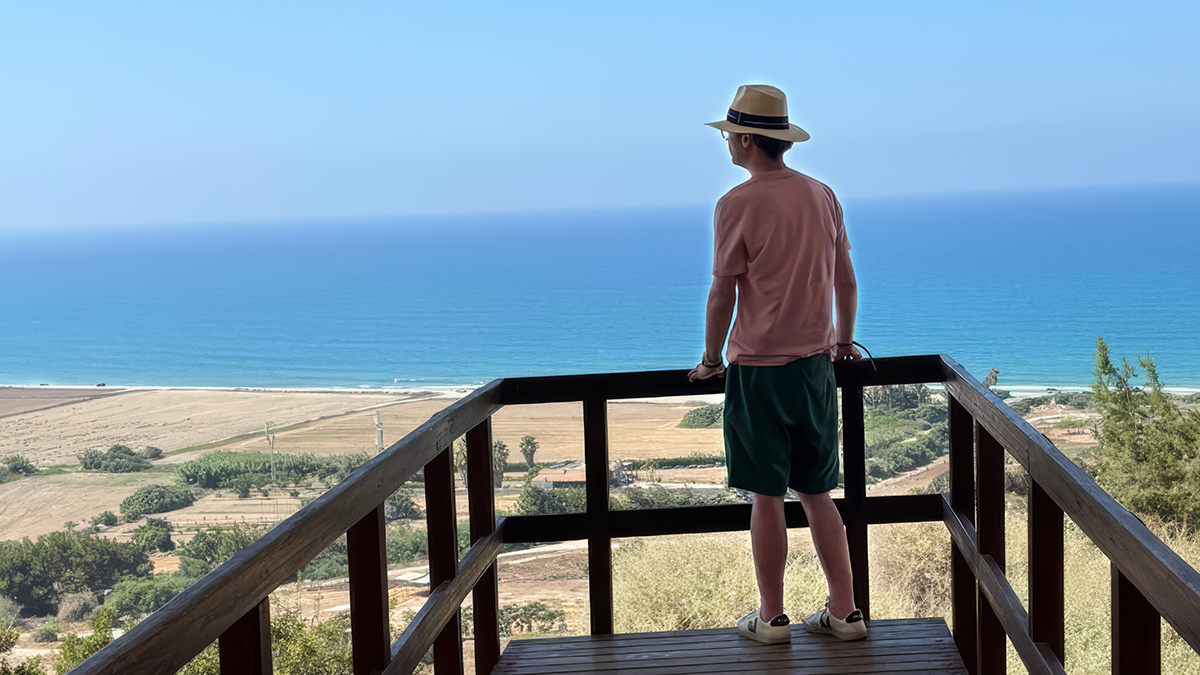
In 2024, I stood overlooking the waters of the Cypriot coast, on the place where St Paul and St Barnabas are said to have first stepped ashore to bring the Gospel to the Gentiles.
The sense of the setting all carried that simple truth the Gospel insists upon: that we are fearfully and wonderfully made, worth more than many sparrows, bought at a price.
Months later, looking through old photographs, I found myself returning to those images of Cyprus. One monastery in particular lingered.
At St Barnabas, near Famagusta, I paused before a memorial to clergy killed during the Ottoman period. Outside, a dark statue held my gaze – a testament to the wounds history leaves behind.
A memory that does not harden
Yet the memorial did not seem to demand vengeance. It invited something slower: a way of remembering that refuses to harden into hatred.
In that stillness, I recalled the line from Ephesians: “He Himself is our peace… destroying the dividing wall of hostility.”
Cyprus, with its contested histories and divided landscape, taught me the difference between remembering a wound and letting it define what comes next.
Pain can be acknowledged without being weaponised. Memory can be honoured without being sharpened into hatred.
Coffee with an unlikely companion
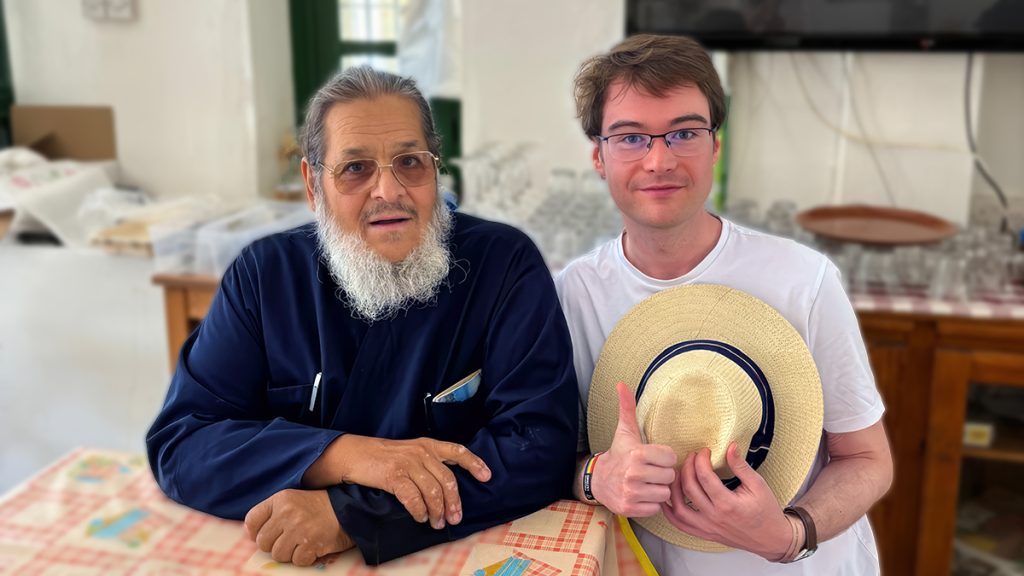
In the hills of the Karpaz Peninsula, I met an Orthodox priest whose parish was adorned with Russian icons and nationalist memorabilia. His views were fierce, shaped by a world where faith and identity had fused.
Yet we found ourselves sitting together in a café, sharing instant coffee. We spoke openly about our lives and the worlds that formed us.
It became, unexpectedly, an exercise in accompaniment: listening without reducing him to his beliefs. Humanity spoke to humanity.
A Good Samaritan on a hilltop
And then, on a hilltop where the oxygen thinned and my mother suddenly collapsed, humanity spoke again. With no phone coverage and no shared language, I knelt beside her, helpless.
A Muslim man stopped his car, helped me lift her gently into the back seat, and drove us to our accommodation. His compassion was immediate, instinctive, without hesitation.
The Good Samaritan arrived in a form I did not expect.
He did not ask what I believed. He did not ask where I came from. He simply saw someone in need and became a neighbour.
A lesson for our political age
And perhaps this is the lesson the Cyprian hills offer to our political age – including to Donald Trump, Javier Milei, Narendra Modi, and all who would turn faith into a boundary rather than an invitation.
Before we are members of nations, tribes, churches or parties, we are human beings standing before one another. The Gospel crosses borders. Nationalism builds them.
Among all the photographs from Cyprus, the one I remember most clearly is not the coastline or the monasteries. It is the image of my mother with a stranger who stopped his car.
For in that moment, the dividing wall came down, and the Gospel looked less like a boundary than a road.
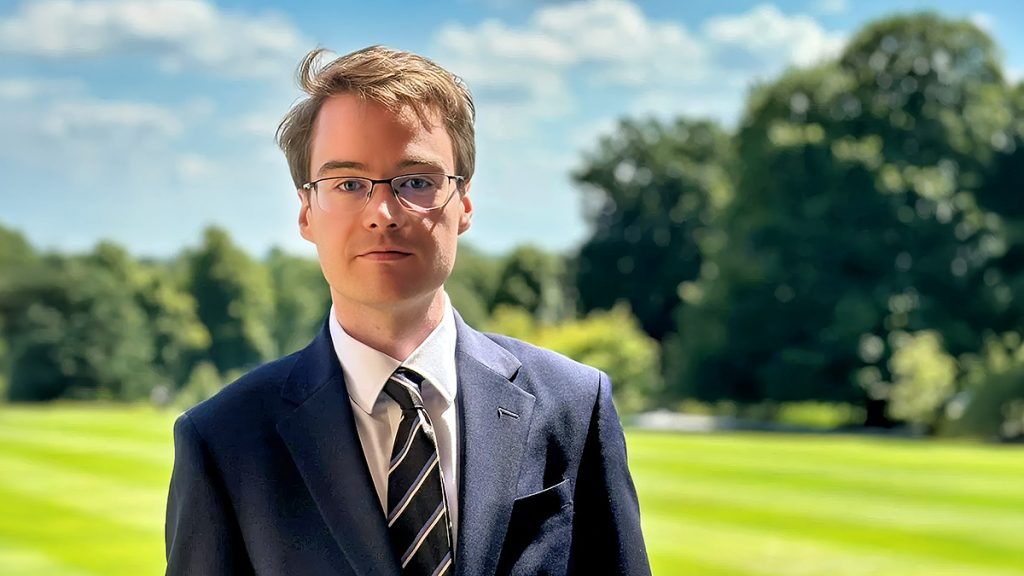
- James Gordon Reid Haveloch Jones is an educational consultant, public theologian, and author of an Amazon Top 50 Study Skills bestseller. He is an Honorary Associate Fellow of St George’s House, Windsor Castle, and a trustee of the Heythrop Association at the University of London. He completed post-graduate studies at the University of Oxford Faculty of Theology. He is a Contracted Contributing Writer for the Catholic Bishops’ Conference of England and Wales (“God Who Speaks”) and a guest writer for: The Tablet, Church Times, National Catholic Reporter and Premier Christianity. Website: www.jamesgordonreid.co.uk