
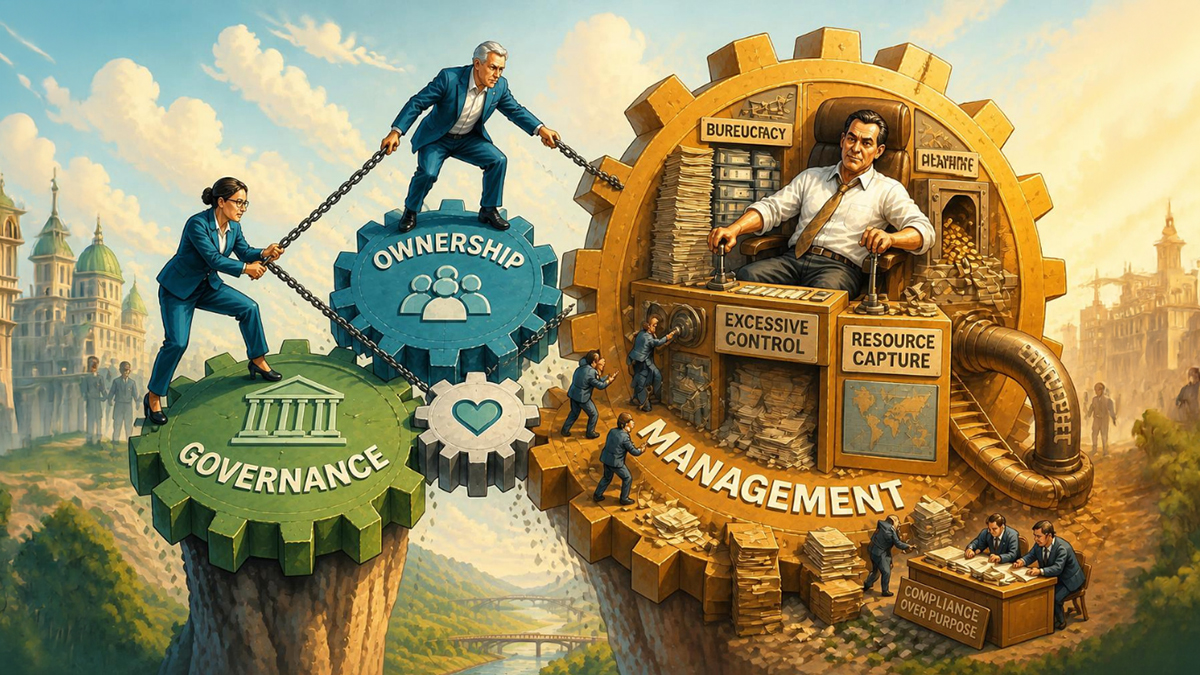
The proposal, some weeks back, by FIFA president Gianni Infantino to sell off part of the World Cup to private interests has happily been withdrawn after regional confederations threatened to boycott FIFA events entirely.
But it underlined some darker aspects of business that leak into areas where they do not belong: the financialisation of civic, not-for-profit entities and the corruption of managerialism.
Those protesting against Infantino’s plans claimed, correctly, that the world game is “for the people.”
Football — soccer — is a form of global civic and community life in most parts of the world.
True, there are powerful business interests attached to it, and the players are certainly not amateurs, but the fans remain the real powerhouse that the money men have to respect.
The biggest club in the world, Real Madrid, is owned by its members, although president Florentino Pérez has outlined plans to allow external investors to acquire a minority stake in a commercial subsidiary.
That would represent a betrayal of the membership and could undermine the club’s non-profit status.
How can that status be maintained when investors would automatically be focused on making a profit?
The same applies to FIFA, which is also a non-profit organisation. Private investment would have compromised that status.
It is perhaps inevitable that senior management thinks more about money and less about protecting civic life or communities.
It has long been the case that people in senior positions are rewarded with very large salaries. Infantino receives an eye-watering US$6 million a year.
Pay across sectors
Very generous remuneration is common across the not-for-profit sector, including charities.
In Australia, the salaries of not-for-profit chief executives can exceed a quarter of a million dollars and rise as high as $350,000 to $500,000 in some charities.
Senior managers are also generously rewarded. While this is not necessarily questionable — running large organisations is difficult — it is worth noting.
The second lesson of Infantino’s failed proposal concerns the psychological pitfalls of managerial power.
Management is, for the most part, an activity in which people are given control over organisations they do not own, the exception being owner-operators.
Most chief executives of the world’s largest corporations possess only a sliver of their companies’ shares.
Power without ownership
Microsoft chief executive Satya Nadella owns less than 0.05 per cent of the company’s shares.
Alphabet chief executive Sundar Pichai owns about 0.02 per cent, as does Amazon chief executive Andy Jassy.
Senior managers in government and not-for-profit entities, of course, have no ownership at all.
It is also instructive to compare ownership and power at the world’s largest investment manager, BlackRock.
The company manages more than US$15 trillion in assets but has a market capitalisation of only about US$171 billion.
The power it wields across the world vastly outweighs its value as a company. It is number one in the world for assets under management, but ranks only around 120th among publicly traded companies by market capitalisation.
“He behaved as if FIFA was his to do with what he wanted. And when he was forced to withdraw there was no sign of conscience or regret.”
When power corrupts
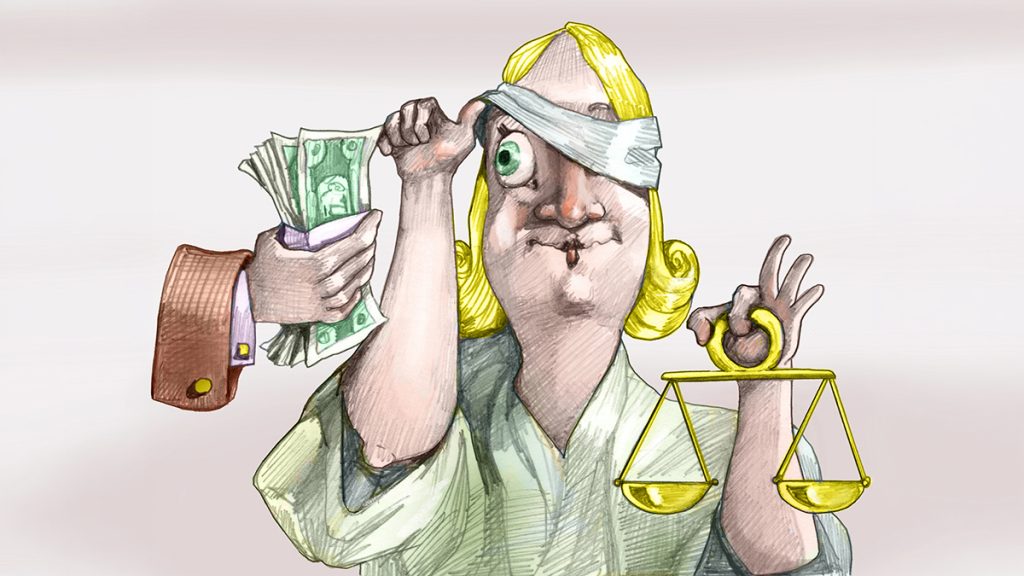
To state the extremely obvious, power corrupts.
That is the threat posed by what is termed the professional-managerial class, which is not genuinely capitalist in the traditional sense because capitalism is associated with ownership.
Unsurprisingly, much of the language used by that managerial class resembles the language of socialist or communist regimes.
Think, for example, of the immoral phrase “human resources,” which replaced the word “personnel.”
Can there be a more demeaning description of human beings than reducing them to inanimate resources? From that perspective, we are mostly water. Calling workers “slaves” might be equally apt.
Infantino’s behaviour graphically and publicly displayed such psychological corruption.
He behaved as if FIFA were his to do with as he wanted. When he was forced to withdraw the proposal, there was no sign of conscience or regret.
It was simply noted that the project had “caused significant friction” and that the divisions it created were “no longer in the interest of the objective set out in the first place.”
What he should have said is that he had wrongly behaved as though the organisation were his to do with as he wished.
The moral test
Those in senior management face a great moral challenge.
Given that many leaders rise through the ranks because of extreme ambition, it is no surprise that so many fail the test.
Anyone who has worked in a corporate environment, as this writer has, is likely to have witnessed more wickedness and self-interest from senior managers than ethical integrity.
The great writer C. S. Lewis summed it up in 1961, offering what is also probably a good description of FIFA headquarters:
“I live in the Managerial Age, in a world of ‘Admin.’ The greatest evil … is conceived and ordered (moved, seconded, carried, and minuted) in clean, carpeted, warmed and well-lighted offices, by quiet men with white collars and cut fingernails and smooth-shaven cheeks who do not need to raise their voices. Hence, naturally enough, my symbol for Hell is something like the bureaucracy of a police state or the office of a thoroughly nasty business concern.”
- David James has over 28 years of experience as a financial journalist. His career includes 25 years as a senior writer and columnist for Business Review Weekly. He writes regularly for Eureka Street.
- First published in Eureka Street. Republished with permission.