

A rumor used to travel slowly. Someone would mention something at work, or over a few drinks, and if it was juicy enough, by the week’s end, it may have reached a few people.
Now it takes one post. One clip. One caption written confidently enough to sound true.
Suddenly, thousands of people are talking about someone they’ve never met as though they know every detail of their life and in today’s deeply polarised online culture, people often accuse first and verify later — if they verify at all.
Reputations rise or collapse through screenshots, rumors, half-context, and emotionally charged posts shared by strangers chasing outrage, attention, or approval from their side of the internet.
We don’t just share information anymore. We pass judgment — quickly, publicly, and often without the full picture.
Tearing people apart has started to feel disturbingly normal.
When opinions become weapons
Social media doesn’t leave much room for hesitation. Everything pushes you to react — like, share, comment, reply.
If you’re not early, you’re irrelevant. If you’re not sharp enough, you disappear into the noise.
So, when a video appears — someone shouting in a supermarket aisle, a tense exchange on a train, a clip uploaded halfway through an argument — people jump in immediately.
Almost instantly, the conclusions begin:
“He’s abusive.” “She’s lying.” “They’re disgusting.” “It’s the migrants again.” “Most priests are abusers.”
Nobody wants to sit with uncertainty anymore. Very few people are willing to give someone the benefit of the doubt.
Online, hesitation comes across as weak, so people speak as though they already know the full story.
Calumny
And that’s exactly where the sin of calumny slips in quietly, almost unnoticed.
Calumny is more than ordinary gossip. The Catechism of the Catholic Church describes it as making false statements about someone in order to damage their reputation.
It directly violates the Eighth Commandment — “You shall not bear false witness against your neighbour”.
It doesn’t always look dramatic. Sometimes it’s just a “like and move on”, a repost because something “feels right,” or a screenshot shared without context.
Once it spreads, correction rarely travels at the same speed. And even when clarification comes, it rarely restores what was lost.
In particular, teenagers can develop anxiety after becoming viral targets.
The Church isn’t immune
This problem shows up inside religious spaces too — sometimes more sharply than anywhere else.
People who would normally speak carefully face-to-face can sound very different behind a screen, and online Catholic conversations can become intensely polarised.
Before the death of Pope Francis, a controversy in Spain showed how quickly this can escalate. A group of priests on a YouTube discussion made joking remarks about him, including comments about praying for his death.
Online, it spread quickly and drew strong condemnation from Church leadership. The priests later apologised, but the damage to trust within the wider community had already been done.
What makes it uncomfortable isn’t just that it happened. It’s how easily it can.
Honesty isn’t always kind
One of the most common justifications online is honesty. People say, “I’m just calling it out,” or “someone had to say it.”
Sometimes that’s fair; there are moments where silence is wrong. But honesty without care becomes something else entirely.
Pope Francis had spoken about “verbal violence” in digital spaces, warning how quickly people slip into defamation while believing they are defending truth.
That tension matters. Because intention doesn’t automatically protect impact.
A person can genuinely believe they are exposing wrongdoing and still end up spreading something unverified. The result is the same: someone’s reputation takes a hit before the facts are even settled.
Why cruelty spreads so fast
Part of the reason social media becomes toxic so easily is distance. People speak differently when protected by screens.
Most individuals would never walk into a room and publicly humiliate someone surrounded by others. Online, though, it happens every hour.
The physical distance removes normal social restraint. Human beings become profile pictures instead of actual people.
There’s also the reward system. Anger gets attention. Harsh opinions get shared. Mockery gets engagement.
Calm, balanced discussion usually disappears beneath the noise which means the counter applies; the environment slowly shapes behaviour.
Recovering basic decency online
None of this means we should avoid difficult conversations or stay silent in the face of real wrongdoing. Abuse, corruption, injustice — these things need to be called out.
But there’s a difference between seeking truth and feeding outrage.
A healthier online culture starts with restraint, even if social media rarely rewards it.
A few habits help more than we think:
- pause before reposting something emotional;
- separate what feels true from what can actually be verified;
- stop guessing people’s motives; and
- ask whether you’d say the same thing face-to-face.
And sometimes, simply not joining in is the most responsible move.
At the centre of all this is human dignity. As Pope Leo XIV recently emphasised in his message for the 60th World Day of Social Communications, technology should ultimately serve the truth of the human person — not reduce people to content, headlines, or outrage.
The thing we keep forgetting
It’s easy to treat social media like background noise, something we dip in and out of without thinking too much about it. But it isn’t neutral.
It shapes how we see people, how we talk about them, and how quickly we decide their worth.
Calumny and hate speech rarely arrive in obvious forms. They slip in quietly — through reposts, half-jokes, quick assumptions, outrage passed along in a hurry.
In the moment, they don’t feel like much. Almost harmless.
Then suddenly, they’re attached to someone’s name.
And the uncomfortable part is this: the internet moves on quickly, but the person being talked about usually can’t.
Maybe the real question isn’t how fast we react online. It’s how often we should have paused, and didn’t.
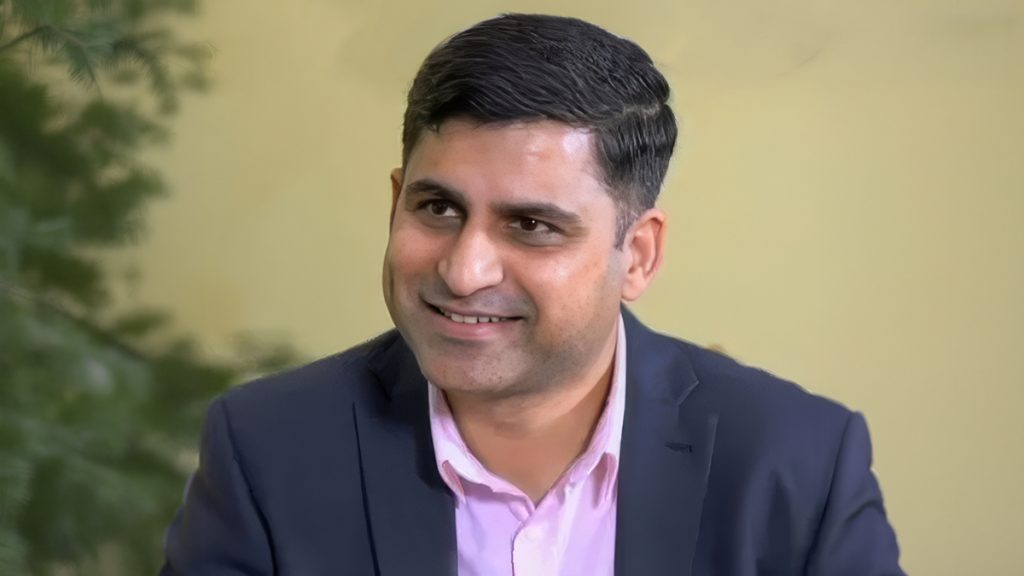
- Lavoisier Fernandes is a London-based writer whose work spans faith, theology, the papacy and psychology. As well as contributing to several Catholic publications, he has presented radio and television podcasts engaging with people across faith traditions.