

A student sits in my theology class — a class on the Incarnation — and their phone is out.
They are not looking at me. They are not looking at the text. They are somewhere else entirely, thumbs moving, face blank with the particular vacancy that screens produce.
And the rest of the room catches the infection within minutes. Heads drop. The lesson I prepared, the idea I was genuinely excited to share, lands in empty air.
What bothers me most is not the rudeness, though there is that. What bothers me is the waste.
Here is a generation with more access to theological resources than any in history — ancient texts at their fingertips, virtual tours of holy sites, AI tools that can summarise Aquinas in plain language — and they are using that same technology to be somewhere else while God is being discussed three feet away from them.
That contradiction is the real subject of this piece.
Information was never the problem
The Church has never suffered from a shortage of theological content. If anything, the opposite has been true — there has always been more to know than any one person could absorb in a lifetime.
What has always been scarce, and what has always mattered more, is the conditions under which content becomes encounter.
The Incarnation makes this uncomfortably clear. God did not solve the problem of human distance from the divine by sending better information. The prophets had already tried that, at length.
God solved it by showing up — bodily, locally, inconveniently present in a specific place among specific people who could touch him and argue with him and ultimately crucify him. The medium was the message before anyone coined that phrase.
Which means teaching theology well has never really been about coverage. It has been about presence — the teacher’s, the student’s, and if we believe what we are teaching, something more than both.
A phone-filled classroom is not just a discipline problem. It is a theological symptom. It reveals how thoroughly we have separated learning from encounter, content from contact, information from transformation.
What technology can and cannot do
I am genuinely enthusiastic about what these tools can do when they are used with intention.
A student who puts on a VR headset and stands in first-century Jerusalem — feeling the press of the Passover crowd, hearing the market, registering the spatial reality of the city in their body rather than just their mind — brings something different to the discussion afterward.
Their questions change. They are no longer interpreting a map. They are remembering a place. That is not a small thing.
AI that notices what a student is genuinely wrestling with and surfaces the right passage from Job, or a question they had not thought to ask, or a paragraph from Simone Weil that cuts straight to the nerve — that is attentiveness made scalable.
It is not replacing the teacher. It is doing something the teacher, managing thirty different spiritual histories in the same hour, physically cannot do alone.
And digital platforms that carry theology into people and places that translation never reached are not conveniences. They are expressions of the Gospel’s own logic, which consistently moved toward the places and people that institutions overlook.
Technology, in other words, is not the enemy of incarnational teaching. Distraction is. Passivity is. The substitution of consumption for reflection is.
These problems existed long before smartphones.
The four things screens miss
My students with their phones out are not bad students. They are students who have never been given a compelling reason to put the phone down — which is partly a cultural failure, partly a pedagogical one, and sometimes mine.
But there are four things I have never seen a screen produce, no matter how sophisticated the platform.
- Genuine reflection, which requires slowness and a willingness to sit with discomfort.
- Inspiration, which travels person to person like a contagion and cannot be uploaded.
- Integration, the slow work of connecting a theological idea to the actual shape of your life.
- Imitation, which is the oldest form of theological education — watching someone take God seriously and catching it from them like a fever.
These four things are not supplemented by technology. They are either protected from it or quietly destroyed by it, depending on how deliberately an educator builds the conditions for them.
What this demands of us
The student on their phone during a theology class is not my adversary. They are my diagnosis — a sign that something in the body of the classroom has gone wrong, and that the physician standing at the front may be part of what ails it.
They are telling me that I have not yet made the stakes feel real. That the connection between this ancient mystery and their actual life — their loneliness, their ambition, their fear of death, their hunger for something they cannot name — has not been made viscerally clear.
That is not entirely their failure.
So yes, use the tools. Use VR to put students inside the stories their bodies need to remember.
Use AI to meet each learner where they actually are rather than where the syllabus assumes they are. Use every platform that carries the Word into corners it has not yet reached.
Be genuinely enthusiastic about what these tools make possible, because the possibilities are real.
But then put the screens away and ask the question that no algorithm can answer: Do you believe any of this? Does it change anything? What would it cost you if it were true?
That is where theology actually lives. Not in the content delivered, but in the silence after the question.
Technology can bring students to the edge of that silence. What happens there — the flinch, the opening, the refusal — remains, as it has always been, entirely human.
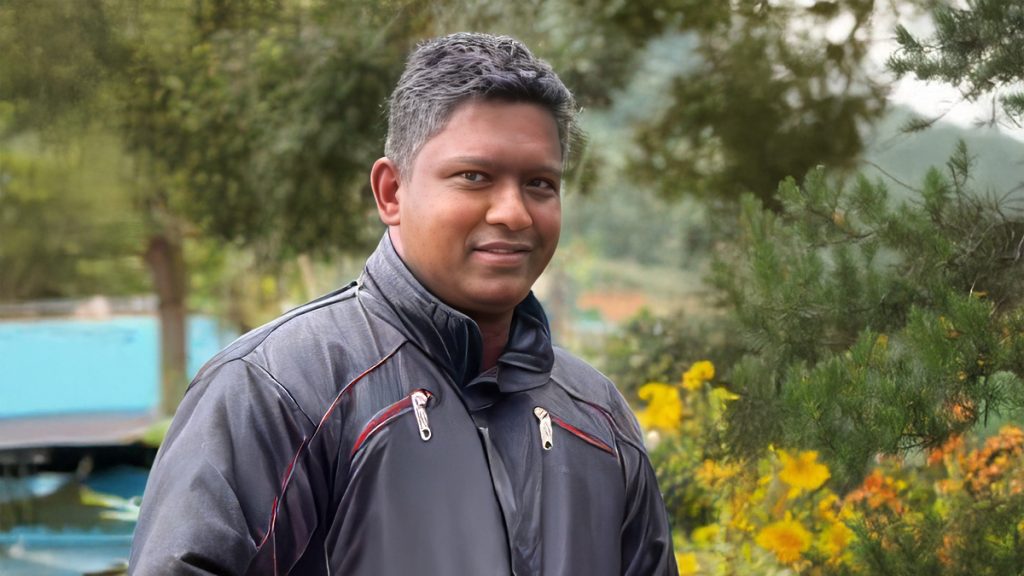
- John Singarayar SVD holds a doctorate in Anthropology. He is an author of several books and regularly contributes to academic conferences and publications focusing on sociology, anthropology, tribal studies, spirituality, and mission.