
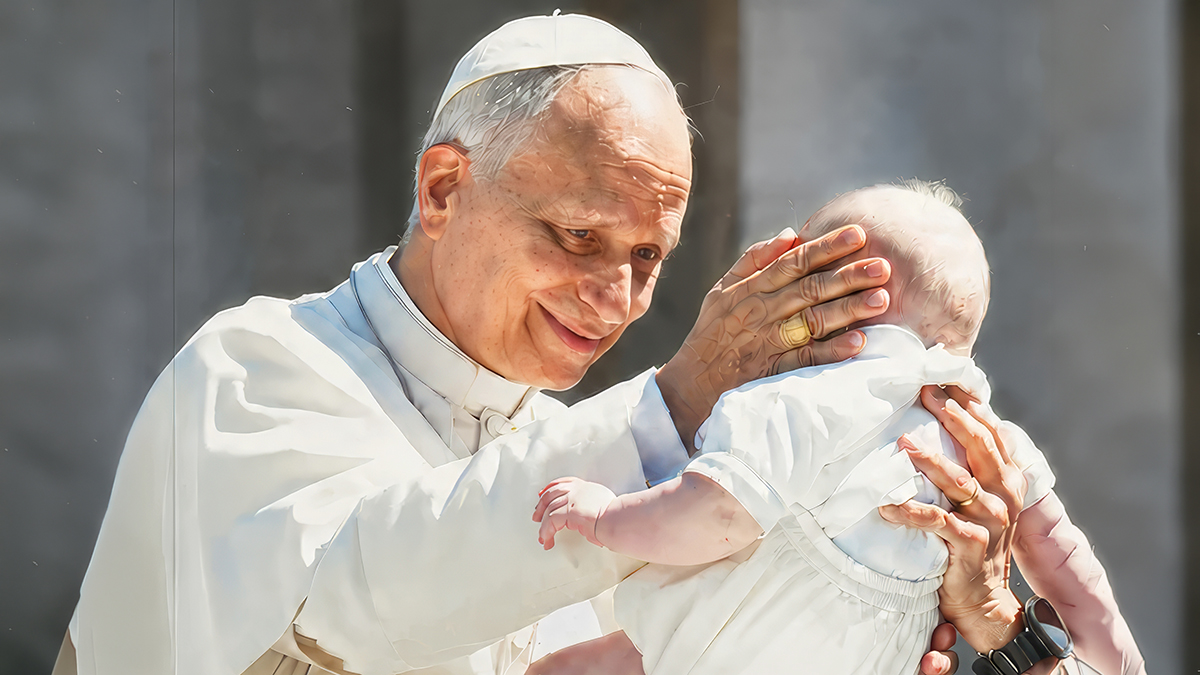
Pope Leo XIV’s encyclical, Magnifica Humanitas, is a learned, wise, eloquent, and useful document that is only partly about artificial intelligence.
Its lessons should be helpful to many modern institutions — including my own, journalism.
Those expecting the Pontiff to declare holy war on AI and Silicon Valley will be disappointed.
Those who wish to claim AI as a new religion will be similarly bereft.
Apart from a few timely and almost obligatory references to children and screens, this is not a document influenced by the moral entrepreneurs seeking to inflate and exploit fears of technology.
Though it calls for regulation, it does not attempt to prescribe statutes.
This is a document intended for generations, to inform our discourse as we manage secular upheaval.
I will quote liberally, though I recommend reading it in full.
Leo opens with an apt Biblical metaphor, contrasting the Tower of Babel with the rebuilding of the walls of Jerusalem.
Babel was a doomed project of immense hubris, constructing a tower to the heavens.
“It was an impressive feat: a single language, a single technology, a single direction,” he writes. “However, the project concealed a profound danger: It was a project conceived without reference to God, supported by uniformity that eliminated diversity and that chose homogenization over communion.”
That does sound familiar these days.
The rebuilding in Jerusalem, on the other hand, was undertaken following prayer and permission with the people of the city collaborating through acts of listening and communion.
Leo’s encyclical is a profound testament to the value of community — a lesson I try to teach to students of media.
Babel or Jerusalem
Leo goes to pains to make clear that “technology should not be considered, in itself, as a force antagonistic to humanity.”
Quoting Pope Benedict XVI, he continues, “On the contrary, it has formed part of our history since the beginning as ‘a profoundly human reality, linked to the autonomy and freedom of man.’”
He continues:
Technology has the power to heal, connect, educate and protect our common home; but it can also divide, exclude and generate new forms of injustice. In the abstract, technology in and of itself is not a solution to humanity’s problems, just as it is not inherently evil. In practice, however, technology is never neutral, because it takes on the characteristics of those who devise, finance, regulate and use it. Therefore, the primary choice is not between a “yes” or “no” to technology, but rather between constructing Babel or rebuilding Jerusalem; between a power that claims to dominate the heavens and a people who work together in the presence of God to rebuild the walls of fraternal coexistence.
He calls for technological innovations, including AI, to “be evaluated by asking a crucial question: Do they truly help individuals and peoples to become more humane and fraternal, while respecting our common home and future generations?”
Leo warns of unprecedented control by private, transnational corporations that monopolize “expertise, data, and decision-making authority.”
He warns of the “risk of being misled by deceitful goals, such as the prospect of a technology that promises to free us from all weakness.”
And he warns of the danger that “persons end up being reduced to a means of achieving results, a resource to be used and exploited, and are no longer recognized as a proper end in themselves who should never be instrumentalized.”
He prescribes the means to instead claim agency and shared responsibility to build for the common good, “so that humanity will never lose its beauty.”
The civilization of love will not arise from a single or spectacular gesture, but from the sum total of small and steadfast acts of fidelity that serve as a bulwark against dehumanization. For this reason, it is worthwhile pausing to reflect on some aspects of how we, each in our own way, can cooperate in building the civilization of love. Without presuming to exhaust this theme, I would like to propose five paths toward daily and public responsibility: the need to disarm words, building peace through justice, adopting the perspective of victims, cultivating a healthy realism and reviving dialogue and multilateralism.
Generously quoting his predecessors to trace the history of the Social Doctrine of the Church — from Rerum Novarum through the Second Vatican Council to Pope Francis — Leo lays his foundation with sets of principles that guide the Church as a model for other institutions: “Listening, dialogue, and service … the dignity of every person, the cohesion of communities, and the good of all … the contributions of philosophy and of the human and social sciences … the importance of listening to scientific research and of encouraging a serious and honest debate among experts while welcoming a diversity of opinions … justice … Understanding that the truth is a gift to be shared, not a possession to be monopolized.”
Truth is not property
As a journalist, that last observation on truth struck me.
Journalists like to think they traffic in truth and — especially now in fights with AI companies over copyright — publishers claim ownership of it.
Shouldn’t news organizations follow the same advice Leo gives to technology companies: that “truth is a gift to be shared, not a possession to be monopolized…. In this way, the truth of the Gospel is not imposed from above, but grows over time within the concrete interweaving of lives, communities, and cultures. This is not a truth that fears diversity, but instead welcomes and guides it. It does not eliminate conflicts, but transforms them, reuniting that which history tends to scatter.”
Truth is too precious to hoard or sell.
In discussing the power of technology companies, I believe Leo is also, if unwittingly, describing the exclusionary power that mass media have wielded over the last century:
These entities effectively set the conditions for access, determine the rules of visibility and shape the very possibilities for participation. When such power is concentrated in the hands of a few, it tends to become opaque and evade public oversight, increasing the risk of distorted forms of development that give rise to new dependencies, exclusions, manipulations and inequalities.
It is not until halfway into his encyclical that Leo directly addresses artificial intelligence and “the danger of humanity becoming a victim of its own achievements.”
He says he does not intend to offer a comprehensive treatment of the technic but wishes to “ensure that it will always be human intelligence, with its conscience and freedom, that guides technical innovations and responsibly determines their use and limits.”
Nor does Leo try to define artificial intelligence, though by examining — and defending — human intelligence, he defines what it is not.
[W]e must avoid the misconception of equating this type of “intelligence” with that of human beings. These systems merely imitate certain functions of human intelligence. In doing so, they often surpass human intelligence in speed and computational capacity, offering tangible benefits across many fields. Yet this power remains entirely tied to data processing. So-called artificial intelligences do not undergo experiences, do not possess a body, do not feel joy or pain, do not mature through relationships and do not know from within what love, work, friendship or responsibility mean. Nor do they have a moral conscience, since they do not judge good and evil, grasp the ultimate meaning of situations, or bear responsibility for consequences. They may imitate language, behavior and analytical skills, or even simulate empathy and understanding, but they do not understand what they produce, for they lack the affective, relational and spiritual perspective through which human beings grow in wisdom. Even when these tools are described as capable of “learning,” their way of doing so is different from that of a human person. It is not the experience of those who allow themselves to be shaped by life and grow over time through choices, mistakes, forgiveness and fidelity. Rather, it is a form of statistical adaptation based on data and feedback, which can be very effective, but does not imply inner growth.
In his rejection of the claims of machine sentience, consciousness, or — God save us — life, I am on Team Leo: this is impossible, technically and definitionally.
I am grateful to see the Pontiff directly reject transhumanism (“the enhancement of human beings through technologies — such as biomedicine, body engineering, devices and algorithms”) and posthumanism (which “challenges anthropocentrism and envisions a hybridization of human beings, machines and the environment, even anticipating a threshold where humanity surpasses itself in a new evolutionary stage”).
In short: playing God.
These are the quasireligious beliefs of some AI cultists, bundled into the acronym #TESCREAL (Google it).
Leo further also calls out media for credulously covering these claims.
These perspectives form the ideological background present in some centers of technological power and occupy the collective imagination in a simplified form, especially in the media and on social networks. They tend to foster enthusiasm for new technologies through a futuristic vision of an “enhanced human being” or “human-machine hybrid.”
Therein hangs the odious stink of eugenics.
If the human being is treated as something to be perfected or surpassed, it becomes easier to accept that some lives are less useful, less desirable or less worthy. In the name of progress, “necessary sacrifices” may begin to be justified, placing the burden on the most vulnerable in pursuit of a supposed optimization of the species. In this regard, the aforementioned warning of Saint Paul VI retains great foresight: indeed, scientific and technological advances, when detached from moral and social progress, end up turning against humanity. For this reason, a clear distinction must be made. It is one thing to integrate technology within a human-centered, relational vision; it is quite another to be guided by an outlook that devalues human limits and promises a purely technical form of “salvation.”
So it is well and good — necessary, actually — that Leo examines the nature of human life and collective humanity in the context of AI.
When we embrace the possibility of transcending ourselves through God’s grace, we do not deny our nature, nor do we become less human. On the contrary, as Pope Francis explained, “We become fully human when we become more than human, when we let God bring us beyond ourselves in order to attain the fullest truth of our being.” Herein lies the radical departure from Promethean dreams: what saves humanity is not enhanced self-sufficiency, but a relationship that liberates, a communion that transforms. In this light, a technology that merely classifies and optimizes what already exists can, however unintentionally, become an obstacle to change and growth. For an algorithm, an error is a flaw to be corrected; for a person, however, an error can be a catalyst for profound change. A person’s future is not calculable, but depends on one’s freedom — elevated by the inexhaustible grace of God — and on the relationships cultivated.
Democracy and disinformation
In his exploration of artificial intelligence and its effects, Leo returns to the subject of truth in the context of democracy.
He notes that disinformation has been around long before the accelerating technology of AI.
“Truthful information,” he observes, “does not arise from centralized or automated control.”
Again, the lesson is not just for AI but for mass media, which has been centralized and controlled since its mechanization and industrialization at the turn of the prior century.
(That is the subject of my upcoming book, Hot Type.)
Then Leo adds an observation that leaves me applauding: that truth in public discourse “is deeply relational, built through bonds of trust and shared practices, as well as an honest exchange with others and with the world. Only the shared pursuit of the veracity of facts, perceived as a common good, can provide a solid foundation for just communication.”
In my research for my prior book, The Web We Weave, I researched what people did to ferret out truth before the invented institutions of editing and publishing imbued the technology of print with authority.
I came across the concept of FAMA — Latin for “it is said,” the root of the words “fame” and “infamy” — a social system of maintaining one’s reputation for credibility as source, subject, object, or teller of information.
Our print institutions turn out to be inadequate to the scale of speech today, so out of necessity, we are left to return to such a system of social responsibility.
We as a society are out of practice with judging truth on our own, having been told it could be handed to us by media that claimed ownership.
That was always an abdication of responsibility.
“Indeed, dialogue is an ordinary part of human life,” says Leo. “It involves acquiring an attitude that seeks to forge bonds of fraternity built on listening, an open demeanor, making time for each other and even wasting time together.”
I am gratified that Leo cites Arendt on the subject.
“Indifference to the truth leads, slowly but surely, to a descent into totalitarianism. As the philosopher Hannah Arendt wrote, the ideal subjects of such regimes are not so much those who are ideologically convinced, but rather ‘people for whom the distinction between fact and fiction (i.e., the reality of experience) and the distinction between true and false (i.e., the standards of thought) no longer exist.’”
He adds: “When people come to believe that nothing is genuinely true and that principles are hollow words, then the fuse in their hearts is lit for new eruptions of intolerance and aggression.”
I am also tickled to hear Leo sounding positively McLuhanesque when he discusses “an ecology of communication,” recognizing, in terms James Carey might approve of, that communication “is not only the transmission of information, but it is also the creation of a culture.”
This is the premise of my book, The Gutenberg Parenthesis: that before and after the age of print — both in the time of FAMA and in the age of the internet — public discourse and public opinion are emergent from the public, rather than imposed upon a mythical, monolithic mass.
How we use these tools and powers again is up to us.
Leo has much to say about the value of education and schools in the age of AI.
“We must learn, then, how to exercise restraint in the use of AI and to protect our young people from the promise of the perfect machine, from that subtle temptation which renders human thought seemingly superfluous precisely when it is most needed.”
He has much to say about technology in the economy, decrying “finance for its own sake” and the metric of GDP, which neglects “aspects essential to the overall wellbeing of people and the environment.”
He cites Pope Francis, who denounced
the growing dominance of a technocratic paradigm in our globalized world: the tendency to let the logic of efficiency, control and profit alone shape personal, social and economic decisions. This makes it clear that technology is not simply a tool. When it becomes the standard by which everything is judged, it begins to dictate what matters and what can be discarded, reducing creation to an object of exploitation and human beings to mere cogs in a system driven toward ever greater efficiency.
Work, dignity, and AI
And he worries about the dignity of work — including that which goes into the making of AI — and makes clear that the Church has long supported labor and unions.
Today, the convergence of automation, robotics and AI is rapidly transforming the very structure of work. It is said that this will bring great improvements for everyone. In reality, however, the “new ways” of working are not necessarily better, for “while AI promises to boost productivity by taking over mundane tasks, it frequently forces workers to adapt to the speed and demands of machines, rather than machines being designed to support those who work. As a result, contrary to the advertised benefits of AI, current approaches to technology can paradoxically de-skill workers, subject them to automated surveillance and relegate them to rigid and repetitive tasks. The need to keep up with the pace of technology can erode workers’ sense of agency and stifle the innovative abilities they are expected to bring to their work.” Precisely in order to avoid this drift, it is necessary to design systems that are centered on the human person and not solely on performance.
Some in AI-Land argue the solution to a de-skilled and unemployed workforce is universal guaranteed income.
Leo would seem to disagree.
For these reasons, work is not simply an instrument; it expresses and enhances the dignity of our lives. It is a requirement of the human condition, a normal path toward maturity, development and personal fulfilment. In this regard, financial assistance to the poor may at times be necessary in emergencies, but it cannot become the sole response, since the goal is to enable each person to live with dignity through his or her own work.
The Vatican invited a co-founder of Anthropic to speak alongside the Pope.
On the one hand, Anthropic presents itself as the good AI company, its leaders standing on conscience to prevent their tools being used as autonomous weapons of death.
It promises that its models’ behavior will be aligned with its “constitution.”
Then again, I have long argued that to believe an AI model can be imbued with ethics, let alone guardrails, is a fool’s errand, for — just as with Gutenberg’s type — there is no way to anticipate and prevent every possible malign use of a technology.
It was, after all, movable type that opened the door — did not cause but made possible — the Reformation.
Ethics cannot be baked into a machine; ethics must inform our use of it.
Leo writes:
It is not enough to invoke ethics in the abstract; robust legal frameworks, independent oversight, informed users and a political system that does not abdicate its responsibility are required. Otherwise, change will be governed only by technocratic thinking and presented as necessary and inevitable, ultimately imposing rules shaped by those who control data, infrastructure and computing power.
We cannot be satisfied with merely calling for the moralization of machines — the so-called “alignment” of AI with human values — without also having the courage to insist on a further condition: the possibility of openly discussing the ethical frameworks involved and subjecting them to shared standards of social justice. Otherwise, those who control AI will impose their own moral vision, which will become the invisible infrastructure of these systems. A more moral AI is not enough if that morality is determined by a few.
The impossibility of technology’s moral autonomy is particularly potent given the state of technology and war.
Sometimes there is talk of “artificial moral agents,” as if machines were able to distinguish between right and wrong with greater consistency than a human being. Yet moral judgment cannot be reduced to calculation, for it involves conscience, personal responsibility and the recognition of the other as a person. Therefore, it is not permissible to entrust lethal or otherwise irreversible decisions to artificial systems. No algorithm can make war morally acceptable. AI does not remove the intrinsic inhumanity of conflict; indeed it can only bring about conflict more quickly and render it more impersonal, lowering the threshold for resorting to violence, transforming defense into threat prediction and thus reducing victims to data. In this way, it will accustom us to the idea that violence is inevitable and needs only to be optimized.
In the end, the encyclical is a meditation on technology, power, and justice.
Indeed, entrusting an algorithm in practice with the power to select who is worthy or not, without anyone bearing responsibility for that judgment, is to hand over the task of redefining the boundaries of human possibilities….
From this follows a simple but compelling consequence: we cannot consider AI to be morally neutral. In reality, every technical tool embodies choices and priorities through what it measures, ignores and optimizes, and how it classifies people and situations. If a system is designed or used in a way that treats some lives as less worthy, or excludes them without the possibility of appeal, then it is not merely a tool “to be used well,” since it has already introduced criteria that contradict the inalienable dignity of the human person. For this reason, ethical discernment cannot be limited to asking whether we are using a system for good or bad purposes; it must also examine how that system is designed and what vision of the human person and society is embedded in the data and models that guide it.
For AI to respect human dignity and truly serve the common good, responsibility must be clearly defined at every stage: from those who design and develop these systems to those who use them and rely on them for concrete decisions.
Yes.
Responsibility for AI rests not only with its creators but also with every user, with all of us.
It is critical to end noting that Leo’s encyclical has much positive and constructive instruction on ways to responsibly use and manage the technologies of the age with transparency, accountability, choice, and justice.
At this point, however, a subtle temptation may emerge, namely the thought that the problems are too big and we are too small, and that our choices, therefore, cannot make a difference. This is a polite form of resignation, often disguised as realism. Certainly, not everyone has the same power to make a difference. There are those who govern, make investment decisions, lead institutions, conduct research, educate, produce or provide information, and then there are those who only seem to live their daily lives. Yet, no one is without responsibility. We all have our own areas for action, and it is precisely there — and nowhere else — that we must choose whether to fuel the mentality of force (even if only through indifference, cynicism, lies or hatred), or to preserve the mindset of peace (with truth, moderation, closeness and care).
Amen.
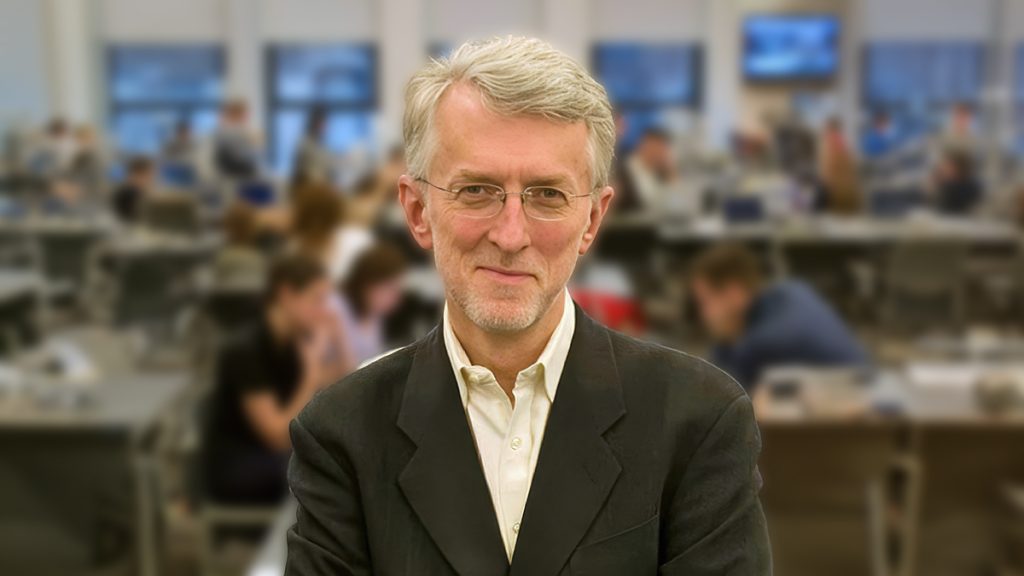
- Jeff Jarvis is the Emeritus Leonard Tow Professor of Journalism Innovation at the City University of New York’s (CUNY) Craig Newmark Graduate School of Journalism, where he formerly directed the new media and entrepreneurial journalism programs and is a visiting professor at Stony Brook University and a fellow at Montclair State University’s Center for Cooperative Media.
- The author of many books Jeff’s latest is Hot Type – The Magnificent Machine that Gave Birth to Mass Media and Drove Mark Twain Mad
- This piece first appeared in Buzzmachine.com. Republished with permission.
Jeff also appeared on the Intelligent Machines podcast with Leo Laporte and Robert Ballicer, SJ.