
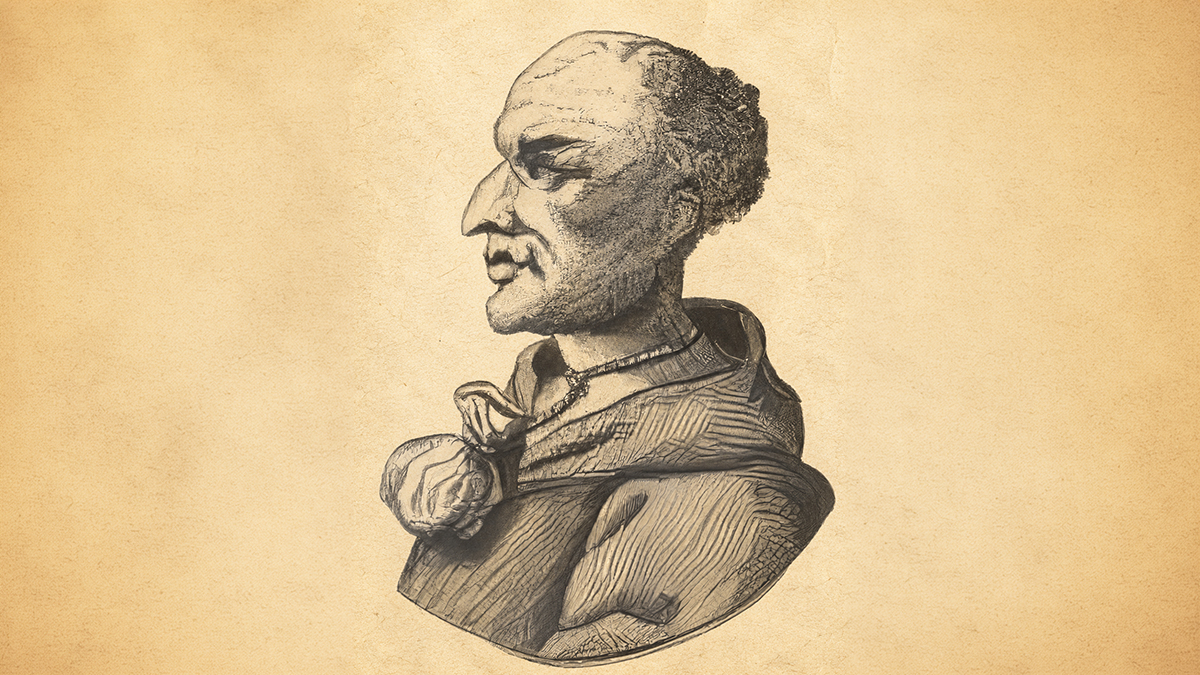
In 1992, Pope John Paul II officially quashed the Church’s condemnation of Galileo Galilei (1564-1642).
In fact, the Church had unofficially accepted that the Earth went around the Sun for centuries. However, it was largely hailed as an ‘apology’ to Galileo and seen as an admission that the Church could be mistaken.
But is Galileo the only historical thinker who deserves ‘rehabilitating’?
What about the monk Jovinian, whom St Jerome labelled ‘the slave of vice and self-indulgence, a dog returning to his vomit.’
Jovinian’s four propositions
Jovinian had put forward an argument which on the surface seemed hostile to the extreme ascetic movement as practised in the late fourth century.
We do not possess the exact terms of his thesis and must reconstruct it from Jerome’s refutation, Adversus Jovinianum.
Jerome reports Jovinian as producing four propositions, which stated:
- Virgins, widows, married women, washed in the sweetness of Christ, if they do not differ in other respects, are of the same merits.
- Those who, full of faith, have been reborn in baptism cannot be overcome by the devil.
- There is no distinction between abstaining from food and receiving it with thanksgiving.
- All those who have faithfully kept their baptismal vows will receive the same reward in heaven.
Jerome’s obsession with virginity
Jerome, a passionate promoter of virginity and monastic asceticism, was obsessed with the first proposition and turned his venom on Jovinian.
His treatment of the other propositions was cursory, and he seems to have missed the underlying argument that Jovinian stressed the importance of baptism in the Christian life.
Over the centuries, this belief in the significance of baptism and the dignity and equality of all Christian believers disappeared, and a ‘two-tier’ system evolved: clergy and religious, and, on a lower level, the laity.
Vatican II reinstated our patristic heritage and endeavoured to recover baptism’s central importance in the Christian life for all believers.
The Catechism of the Catholic Church 1213 states: “Holy Baptism is the basis of the whole Christian life, the gateway to life in the Spirit, and the door which gives access to the other sacraments.”
This is totally in line with Jovinian’s teaching — all baptised Christians are equal before God.
However, Jerome saw those who had consecrated their lives to the Lord through monastic profession as Christians of a ‘higher kind,’ who would earn a much richer reward in the next life.
Jerome wins the day
Jerome’s polemic against Jovinian was at first greeted with shock in Rome because of its crude language and vitriol.
But the tide turned and Jerome won the day: Jovinian’s teaching was declared heretical.
But how heretical was Jovinian?
It was Jerome who skewed scriptural references to express his own ideas; it was Jerome who bent scriptural quotes to give them meanings they were not intended to bear but fitted his own interpretation.
Who else needs rehabilitating?
If we today owe Jovinian a sincere apology and ‘rehabilitation’ how many more need to be reinstated now that Church thinking has moved on?
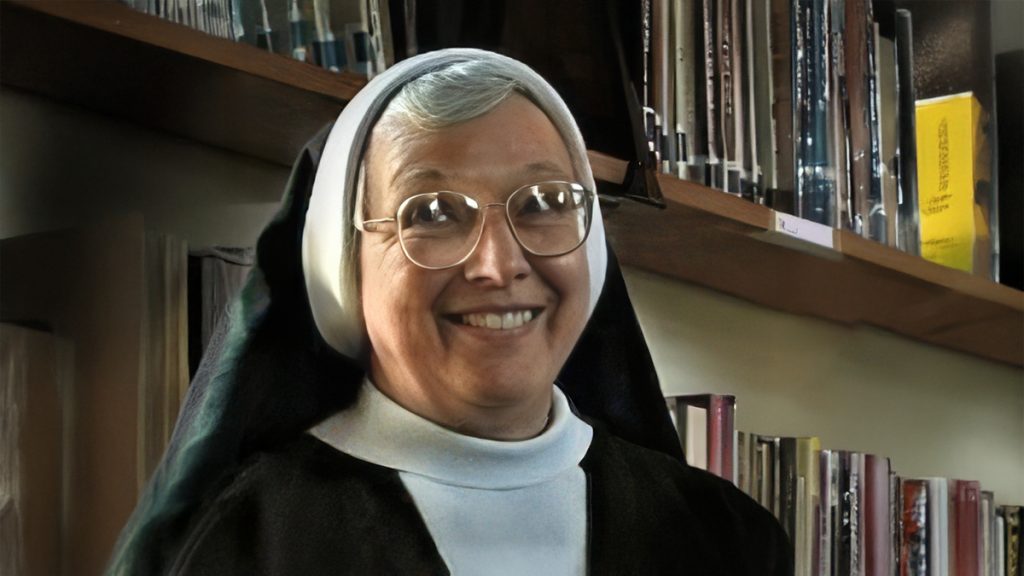
- Patricia Rumsey is the Abbess of a Poor Clare monastery. She has an MA and a PhD in Theology from the University of Wales, Lampeter, UK. She has written and published on liturgy and early Irish monasticism and has lectured in England, Ireland and Scandinavia.