
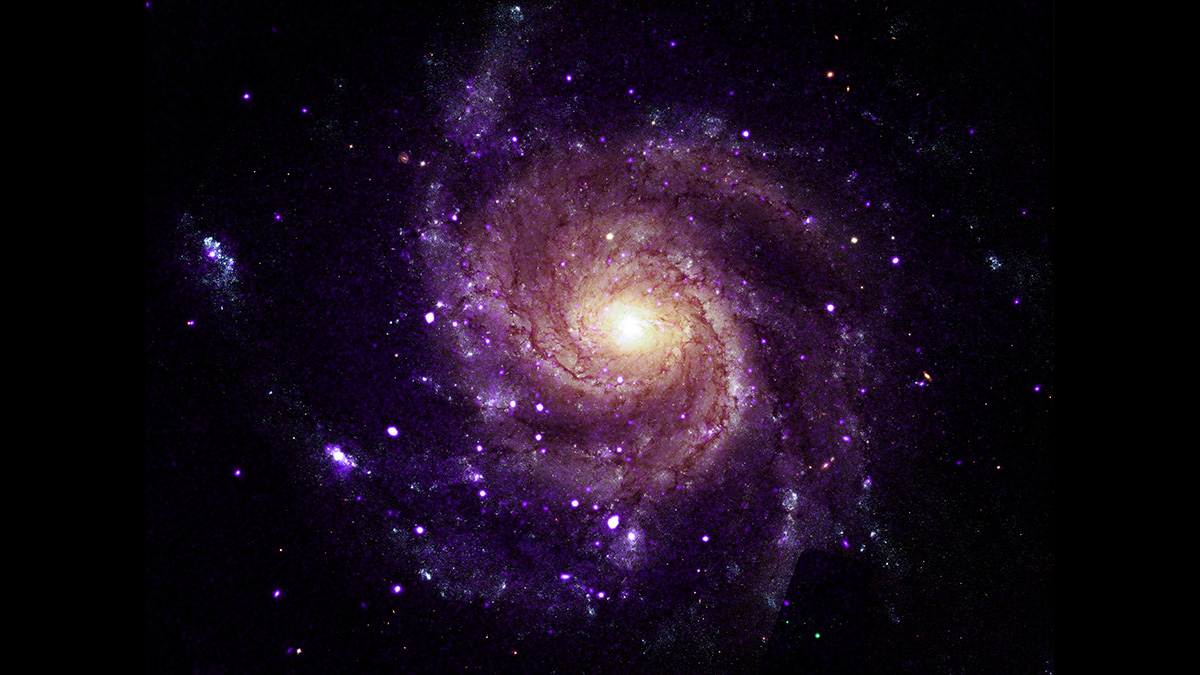
“Any living cell carries with it the experience of a billion years of experimentation by its ancestors.” Max Ludwig Henning Delbrück, molecular biologist, 1906-1981.
How do you feel when you read a quote like this?
Christians’ responses to this are likely to vary.
Many will have got as far as “living cell” and dismissed the rest due to bad memories of petri dishes and dissection knives they are glad to have left in the biology lab at school.
Some will see this quote as a fascinating scientific statement but one that bears no relationship to their faith or their everyday lives.
They see science as part of the secular world, naturally, because it is never mentioned in church.
The creationist view
Creationists have a story to tell too.
Others will baulk at the words “billion years”. The worldview of the young-earth creationist makes them suspicious of any evolutionary scientist.
Such “science-deniers” are in fact very rare. But they may have a point:
If the theory of evolution teaches that humanity came about as part of a random process – billions of years of experimentation rather than an intentional act of God – can it really be compatible with a Christianity that tells us God wants a personal relationship with each of us?
An unquestioned worldview
Evolutionary science has become an unquestioned part of how most people see the world, (if they consider it at all) – not just as a science but a social and moral explanation.
Most Christian churches accept it as a scientific theory, and gloss over or fudge the challenges it poses to some church teachings.
The joy of science
Meanwhile, thousands of Christians are working in science, embracing their calling to learn more about the world God created.
Like Professor of anatomy, Cecilia Brassett, whom I heard speak at the Christians in Science conference in Swindon last month:
“Science,” she said joyfully, “is discovering how amazing God is!”
Evidence of faithfulness
And Dr Anke Ardern-Arentsen, a Galactic Archaeologist who thanks God that the constant laws of physics allow us to learn about the universe.
Along with Jeremiah, she sees in this evidence of God’s faithfulness:
‘He who appoints the sun to shine by day, who decrees the moon and stars to shine by night, who stirs up the sea so that its waves roar— the Lord Almighty is his name: “Only if these decrees vanish from my sight,” declares the Lord, “will Israel ever cease being a nation before me.”’
Jeremiah 31:35-36 (NIV).
As for me, I find that reflecting on the deep history of human evolution is strangely reassuring in our current times. Scientific discoveries help us find our place in God’s creation.
- Louise Cook is a progressive Catholic with a diploma in theology and an insatiable curiosity for science and paleoanthropology.
- She will write more Flashes of Insight on questions of science and religion, exploring what it means to be human, in relationship with God and with God’s creation.
- Louise’s blog My Fleeting Mind covers issues relating to faith, evolution, the times we live in, and the stories we tell.