
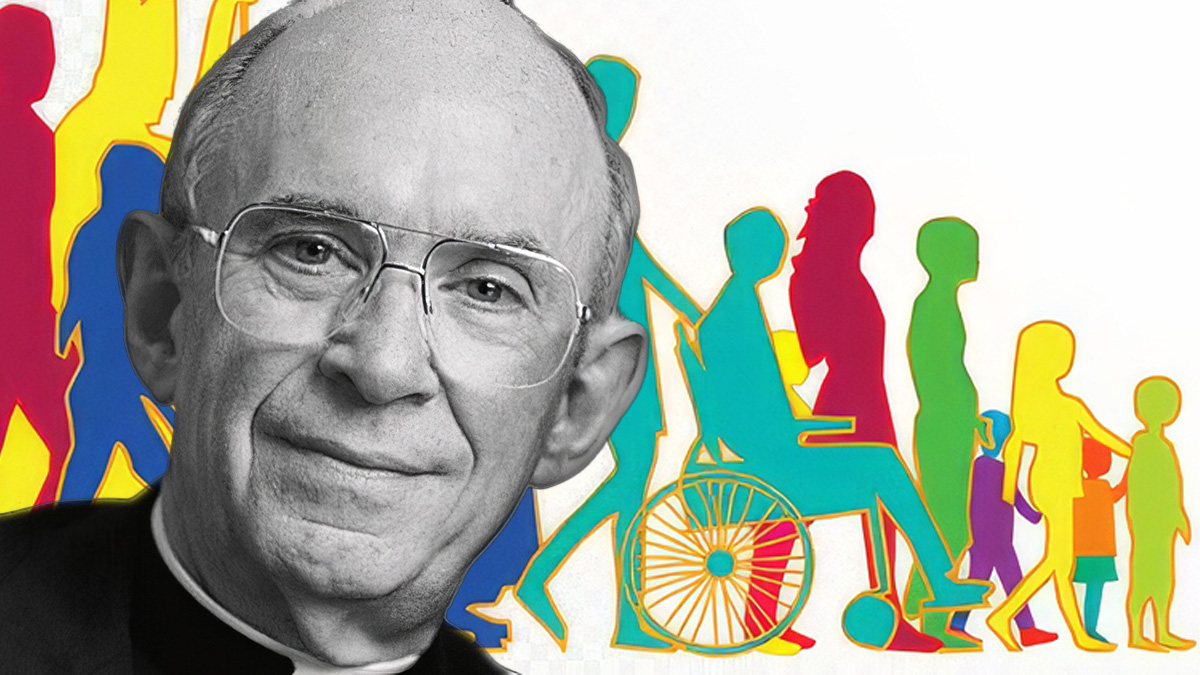
Cardinal Joseph Louis Bernardi was certainly the most consequential churchman the United States produced in the twentieth century.
He was the archbishop of Chicago from 1982 until his death.
As his biographer, I am now the director of The Bernardin Center at Catholic Theological Union where he asked us to continue “my legacy and ecclesial vision, both of which are rooted in the teachings of the Second Vatican Council” shortly before he died from an inoperable cancer on November 14, 1996.
We are approaching the thirtieth memorial of his death.
A question worth answering
A question I often feel pressed to answer is—at this distance of thirty years since he died, why should we still go to so much trouble to remember one Catholic bishop from the United States?
It is a good question, and an important one. I’m glad there are several good answers.
A public theologian
The first answer is the scale of Bernardin’s influence as a public theologian. Most famously, Bernardin popularized the consistent ethic of life.
The ethic is a way of framing challenging issues like abortion and the death penalty in a morally serious way. John Paul II accepted it, and Pope Leo has embraced it.
Bernardin developed the consistent ethic from his 1983 experience leading the U.S. bishops to write a pastoral letter against the nuclear arms race. “The Challenge of Peace” proceeded down an amazingly synodal path.
Bernardin not only led the bishops as they listened to experts and activists from every point of view, but also released drafts of the document twice for wide public input and comment.
The openness and the listening were unprecedented. They remain notable for being so unusual more than forty years later.
Shaped by Vatican II
Beyond Bernardin’s lasting impact on public issues, he also influenced the Church’s reception of Vatican II. Like many bishops of his generation, the Council transformed Bernardin’s vision of the Church.
In turn, he was a leader in the Church who implemented the Council’s directives in the liturgy, in the organization of the Church’s internal governance, and in its relationships with other religions.
Widely admired by many in the Catholic Church, Bernardin was the model of a post-conciliar bishop.
The gift of holiness
But the best reason of all to remember Bernardin, simply, is holiness.
Bernardin experienced several conversions throughout his life.
All of them deepened his commitment to prayer and his relationship to God. By the last two decades of his life, no matter how busy he was, Cardinal Bernardin gave the first hour of every day to prayer.
Not every minister in the Church is like that.
It was that conversion which gave Bernardin the strength and grace to experience his illness and share his dying with the world. That is why so many still remember him so warmly today.
Bernardin modelled what Henri Nouwen wrote— “if we could really befriend death we would be free people.”
Cardinal Bernardin showed us what freedom is and how it can be ours. May he now rest in peace.
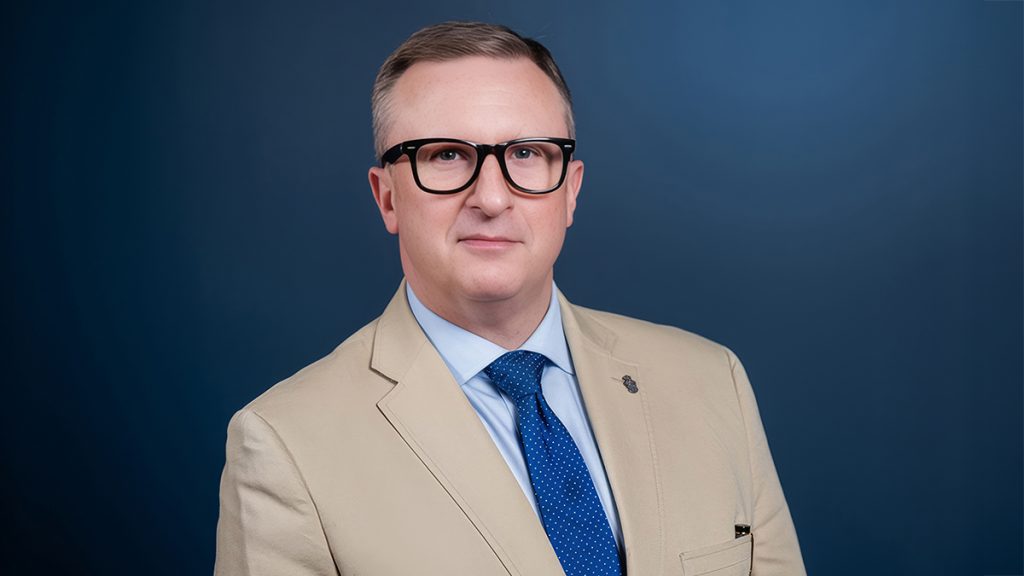
- Steve Millies is the director of The Bernardin Center at CTU. A political theorist who trained at The Catholic University of America, he taught political science for 15 years at the University of South Carolina Aiken before coming to Catholic Theological Union (Chicago, IL) where he teaches courses in history and Catholic social ethics.