
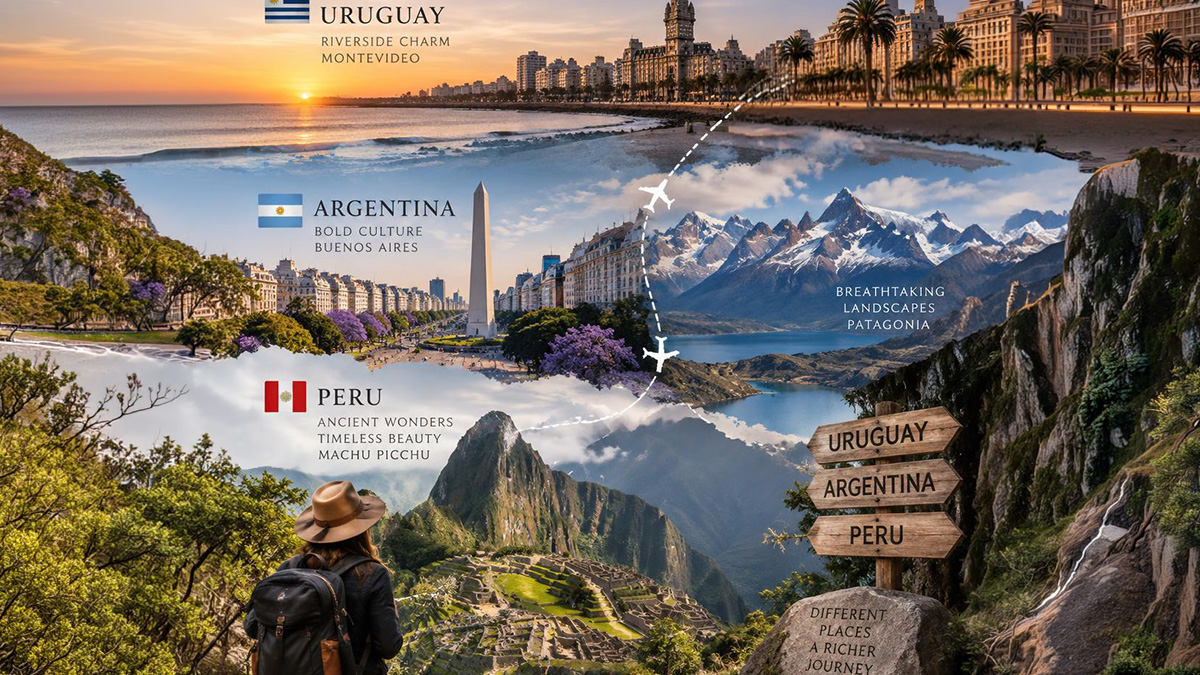
In eighteen months, Pope Leo XIV’s five journeys abroad have settled into a recognizable grammar, so that when he lands in Montevideo on Nov. 6 for a 12-day journey through Uruguay, Argentina, and Peru, the question worth asking is not only what he will say but whether his accent will change.
I believe it will, and that it says as much about the continent as about the man.
The road so far
It helps to recall the road so far.
His first journey, to Türkiye and Lebanon in late 2025, focused on origins and minorities, from Nicaea’s 1,700th anniversary with Patriarch Bartholomew to Lebanese Christianity, tempted by emigration.
In Africa last April, from Algeria to Cameroon, Angola, and Equatorial Guinea, he spoke as “a son of Saint Augustine” and, more sharply than many had expected, as a critic of power, calling corruption a form of idolatry and condemning the plunder of natural resources in countries governed for decades by the same men.
In June he became the first pope to address the Spanish parliament, where he joined the defense of unborn life to a demand for safe and legal pathways for migrants and asked lawmakers to “disarm language.”
Last month in France, from the Élysée to UNESCO, his focus was again institutional, carrying a plea for multilateralism and for a peace “unarmed and disarming,” before he met survivors of clerical abuse in Lourdes.
Read one after another, these journeys tell a single story about a Pope who speaks plainly to those who hold power, for whom peace means disarming words as much as weapons, and who never lets the vulnerable, migrants above all, slip out of the speech.
Same grammar, changed accent
What changes from place to place is not the message but who sits across the table.
In Madrid and Paris, it was a secular state still to be persuaded that faith can be neither silenced as irrelevant to public life nor imposed upon it.
In Cameroon and Equatorial Guinea, it was a young and growing Church standing before long-entrenched rulers.
In Beirut, it was a Christian minority that needed to hear that it still belongs where it has always lived.
The South American program keeps faith with that story while shifting its emphasis, for there is no parliament on the itinerary and no multilateral forum, although the courtesy calls on Presidents Yamandu Orsi of Uruguay, Javier Milei of Argentina, and Keiko Fujimori of Peru remain.
However, the center of gravity of Leo’s South American tour lies elsewhere: in a parish in Montevideo’s poor Casavalle neighborhood, at the Cottolengo Don Orione in Claypole, at the federal prison outside Buenos Aires; among the “representatives of popular devotion” gathered at Saqsaywaman; and with the Amazonian peoples in Pucallpa.
Three times, the program seats bishops alongside “synodal teams,” and six of its 12 days are in Peru, including Chiclayo, the diocese he once led.
For the first time, Leo will not be visiting so much as coming home.
Returning changes the meaning of a journey.
If Africa was St. Augustine’s homeland, and the birthplace of Leo’s religious family, Peru is where his ministry as a bishop took shape, and the program bears that mark.
We see that mark in the synodal teams seated beside bishops in three cathedrals and in the place given to popular piety at an Inca site.
Both speak the vocabulary of the ecclesiology of the 2007 Aparecida conference: that of a community of missionary disciples rather than of an institution receiving a visitor.
People have changed
In Paris and Madrid, the pope addressed the Church’s partners in public life, whereas in Lima and Chiclayo he will speak with the Church itself about how it decides.
The people waiting for him have changed, too.
Last month, I wrote about the decline in Catholic affiliation. But the Pew Research Center’s January report allows us to go a step further by measuring not only who belongs but also who moves.
Let us see some of these moves. In Argentina, 21% of adults were raised Catholic and have left, while only 4% have entered; in Peru, the figures are 18% and 4%.
Yet the door swings both ways, since 5% of Argentines and of Peruvians were raised Protestant and have walked away too.
Even in Peru, where 88% of adults still claim some religion, while Catholics fell from 76% to 67%, Protestants did not gain, holding at 18%, as the unaffiliated tripled from 4% to 12%.
Uruguay, absent from Pew’s study, shows where the road may lead, with roughly half its 3.38 million people declaring no religion, according to Latinobarómetro, twice the share of 2000.
The age of unbelonging
This is what I would call a second religious age, in which the question is no longer which church gains members, or who loses them, but how belonging itself wears thin across all confessions.
It recalls what French philosopher Paul Ricoeur (1913-2005) called a second naïveté, a faith that has passed through the critique of its own forms, except that here whole societies are making the passage, largely unaccompanied.
In Europe, Leo argued with secular states over the role of religion in public life, but in South America, his interlocutor will be unbelonging rather than unbelief.
Hence the shift in accent.
For a people drifting away from institutions, a speech before Congress is hardly persuasive, whereas presence among the poor, the imprisoned, and the indigenous, and a Church seen deciding with its laity rather than over them, may well be.
The continuities remain, perhaps with a sharper edge, since the critique of extractivism voiced in Africa will sound different in Pucallpa, where illegal mining is eating into the Amazon, and the defense of the vulnerable he carried to Madrid will ring differently in Buenos Aires, where official poverty climbed to 32.3% this year and the government rejects social justice itself.
Pilgrims usually travel toward a sanctuary, but this pilgrim travels toward a Church that has learned to walk without a map, among a people who still pray yet no longer stay.
If this second religious age poses a question for the Church, it is not how to win back those who have left, but how to become a home worth returning to.
Leo, of all people, should know the difference.
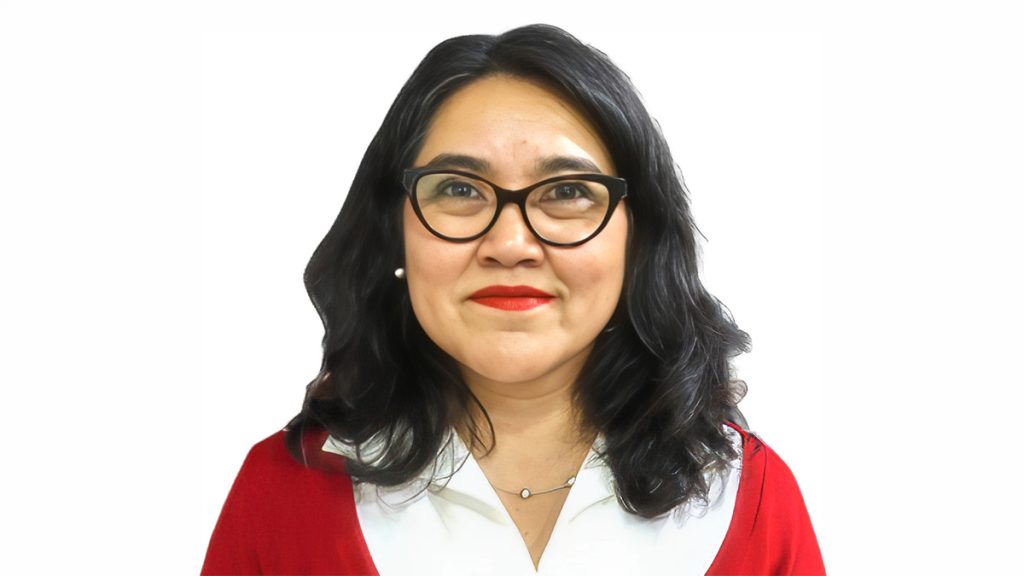
- Sandra Arenas Pérez is a Chilean theologian. She is Dean of the Faculty of Religious Sciences and Philosophy at the Catholic University of Temuco. She holds a doctorate in systematic theology from Leuven and her research covers ecclesiology, Vatican II Studies, and ecumenical theology.
- Arenas serves on the Theological Advisory Team of Caritas Latin America and the Caribbean and participates in a global missionary and formation initiative of the Dicastery for Evangelization.
- First published by Global Catholic. Republished with permission.