
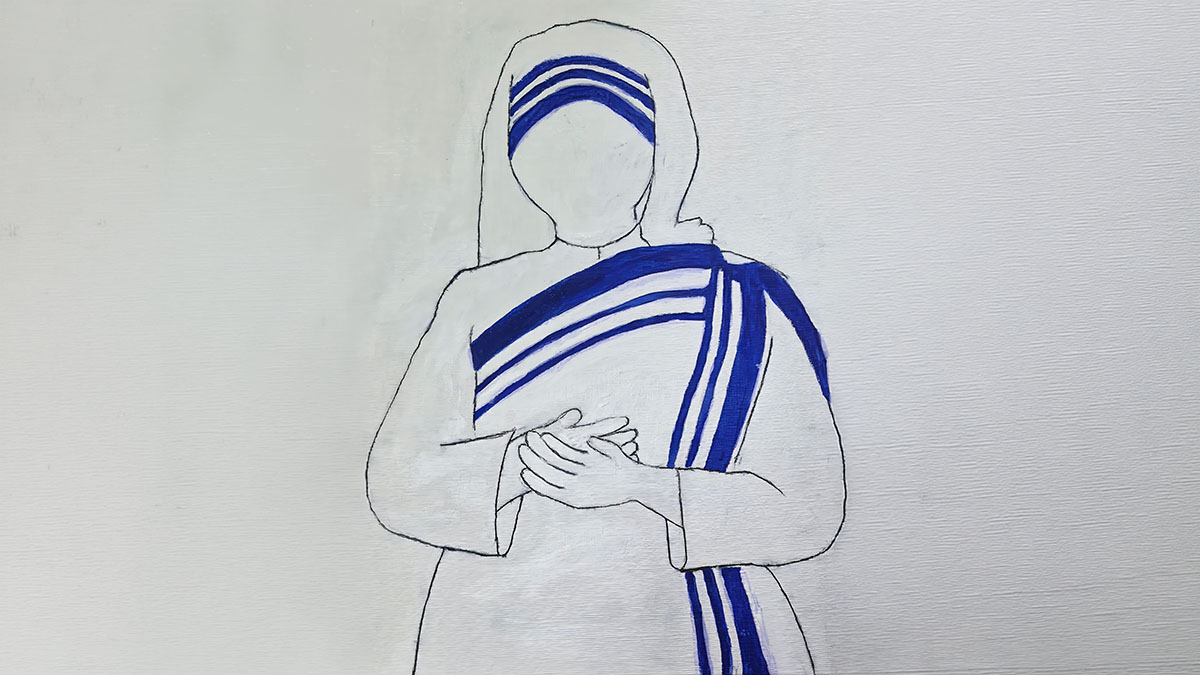
Among the dresses worn by women religious around the world, the sari worn by the Sisters of Mother Teresa, the Missionaries of Charity (MC), is arguably the most recognisable.
From Presidents to Prime Ministers, from Monarchs to Queens to the poorest of the poor, all will identify this sari, honor it and salute it.
More than most European dresses worn by women religious, this modest sari is acknowledged as a symbol of commitment, poverty, humility, and holiness.
Globally renowned artist M. F. Hussain simply painted a white sari with three blue bands, and instantly all knew that it represented Mother Teresa and all those who care for the poor.
A remarkable, unknown story
The sari has a remarkable story, largely unknown.
In 1948, after leaving the Loreto convent in Entally, central Kolkata, Mother Teresa opted for a sari.
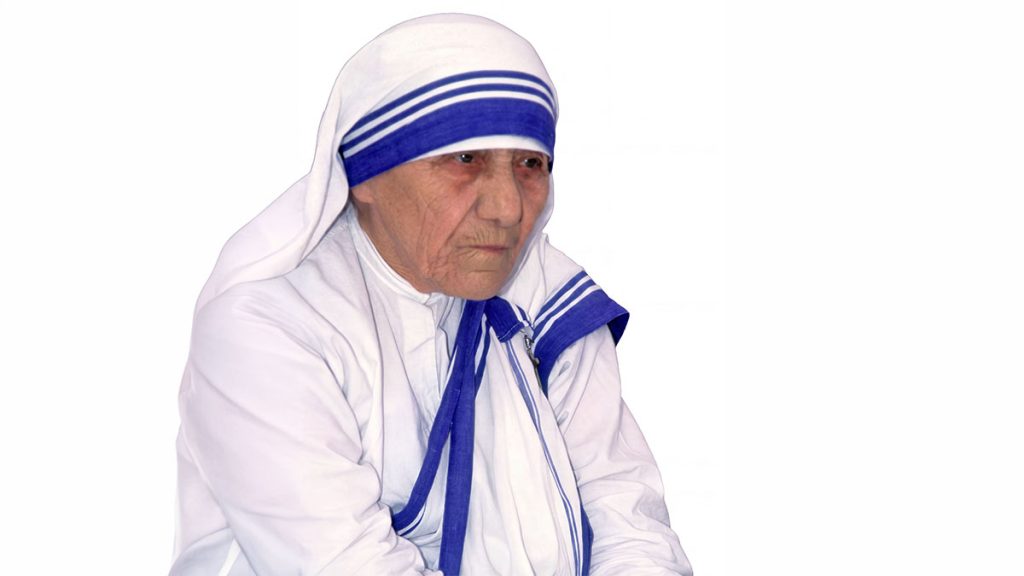
She chose a white sari with three blue stripes – blue being associated with the Blessed Mother.
The three bands represent the vows the religious take, and white stands for purity.
At a time when most religious congregations wore European dress, Mother’s choice was prophetic.
Choosing the poor’s sari
Mother Teresa’s love for India, the land she adopted, and her love for the poor she decided to care for, are clearly manifested in this.
She did not opt for a sari worn by the wealthy, but for the one worn by the poor.
To be precise, Mother’s sari is similar to the one worn by the poor women who cleaned the streets of Kolkata at that time.
While initially they bought saris from the shops, eventually the leprosy patients, at one of their centers, made saris for all MC Sisters.
Imagine how many days and sessions it may have taken for a new congregation to decide on the dress!
An uncompromising choice
Thankfully, Mother was uncompromising with regard to the choice of dress – it had to be Indian.
Sari is what many Indian women wear across the country, with some variations.
It is the dress that our own mothers and sisters wear.
Unlike the European dresses that often stand for power and authority, sari is considered decent and is highly respected.
When most women religious believed the only way to dress was to imitate European models, Mother Teresa insisted that it was possible to think differently.
When the Catholic faithful rarely discussed inculturation, she insisted that missionaries could learn from local cultures and the poor.
A lasting inspiration
Thanks to her courage, many other congregations, new and old, across India have opted for saris and given up Western outfits.
Hopefully, inspired by Mother Teresa, even those remaining Indian women religious who still wear western habits, would opt for sari, a symbol or love and sacrifice, of commitment and sanctity.
- Stanislaus Alla SJ holds a doctorate from Boston College, USA. He is an internationally published writer with interests in ethical concerns. He currently teaches at Vidyajyoti College of Theology, Delhi.
- Art student Deeksha Anthony paints a replica of M. F. Hussain’s original.