

I had to memorize it as a kid, like most school-going children in India.
Hardly knowing what a preposition can do in a sentence, kids learned these lines by heart, confessing loudly that democracy is “government of the people, by the people, for the people.”
Teachers added that India had been ruled by British monarchs, but now we lived in a democracy.
Struggles and sacrifices of ordinary people, as well as Mahatma Gandhi and others, were repeatedly recalled.
A treasure taken for granted
The presumption was that since we attained it, like a treasure, democracy would remain here and we could go about as usual.
Systems and institutions were established to ensure India would remain democratic.
Seeing governments collapse in nearby or far-away countries, Indians felt proud that things were better here.
Meanwhile, a lot was left to politicians—on how to nurture democracy and ensure that systems would remain democratic.
Youth’s diminishing role
While the youth had been involved in the freedom struggle, their role in nourishing democracy diminished afterward.
In general, all contributed their share to nation-building.
At times when human rights and dignity were violated, some students joined people’s movements, but parents largely preferred their kids stay away.
Christian educational centers, meant to involve students in the nation’s development, focused on hard work, discipline, and obedience.
Students were ready to play the game but not ready to discern and creatively play their part when the game itself was changing.
Still, some students’ movements trained their members to think critically, question injustice, and protest when needed.
Rights still unfinished
India is blessed with lots of resources, human and otherwise, yet has acquired ills needing significant intervention.
Dr. B.R. Ambedkar, architect of India’s Constitution, reminded the nation that while India got civil and political rights, large sections are yet to attain socio-cultural and economic rights.
The idea of ‘entitlement’—that some exist to be served and others to serve—is strong in the DNA of many.
Independence and the choice of democracy did not guarantee that all was, or would be, well.
Democracy continues to be wounded, and given the tectonic changes taking place, some worry if democracy itself is in danger.
A new student movement
While a small section of youth was directly involved in shaping India’s political landscape, tens of millions ignored it, imagining it the domain of politicians.
What began months ago as a students’ movement, questioning the ills paralyzing education, snowballed into a massive movement.
Centered in Delhi but spread across cities and towns, students, fearless and hopeful, began asking larger questions—demanding that governments be responsible and accountable, and debating what democracy is and how to sustain it.
Social media plays a crucial role in this churning.
For too long, Indian youth took democracy’s strength for granted, ignoring when its structures were undermined—but now they see, more clearly than before, that their future is intertwined with the nation’s.
Students are likely to discover the building blocks needed to reinforce democratic processes and confront what has hurt democracy.
Always in the making, democracy is as strong as we nourish it, and, in turn, it nourishes generations.
Commendable are the efforts of students, in India and globally, who work to strengthen democracy.
Once students realize democracy is the lifeline of modern times for the wellbeing of all—not merely a structure of governance—they will renew and embrace it.
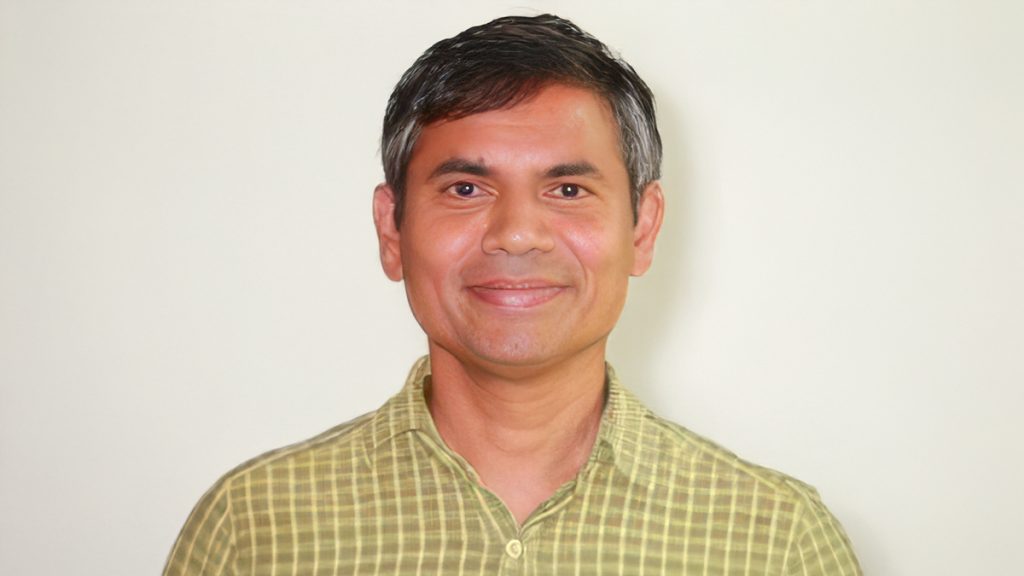
- Stanislaus Alla SJ holds a doctorate from Boston College, USA. He is an internationally published writer with interests in ethical concerns. He currently teaches at Vidyajyoti College of Theology, Delhi.