
In the 2023 national census in New Zealand, 52% of people indicated they had no religious affiliation, up from 42% in 2013 and 30% in 2001.
Similar trends can be found in many high-income countries.
Like the majority of New Zealanders, I too have no religious affiliation, but I am an uncomfortable atheist.
There is something missing from our faith-free lives; but what is it?
In 2021 I tried to find out. I did an intensive exploration of Christianity, the religion that is still, by far, the largest in New Zealand – 32% of people identified as Christian in the 2023 census, followed by 3% Hindu and 1.5% Islam.
As a community psychologist I learn by doing, so I attended a church in central Auckland, read many Christian books and listened to podcasts, and tried to put into practice what I was learning as I went.
What I found in church
Over the course of the year, I developed a sense of a ‘religious orientation’ that involves turning regularly and collectively towards our place in a vast mystery that is beyond our capacity to understand.
I observed listening and care for the other, deep-seated humility, and a willingness to live in the world as it is, rather than as we wish it was.
And I was deeply inspired and refreshed, having felt ground down by the blend of fear and entitlement that taints secular middle-class life.
Now, people without religious affiliation can put together a package of beliefs, practices and networks that target the qualities I’ve described.
But it’s a piece-meal, personal, and almost secretive business that is separate from our collective public lives. So, it’s flimsy and tentative; dependent on fickle yearnings that for most of us, simply aren’t enough.
People are social beings – we become ourselves by observing others and being observed by others. We may be inspired by the stories of lone heroes (saints included) but to live up to our sense of what is good and true, we need a culture that openly promotes the values we aspire to.
Why we need priests
And such cultures require directed human effort in which there are pivotal roles that function like the keynote species in a natural ecosystem.
These are people whose (literal) job it is to guide us, individually and collectively. People who say: it’s time to get back on that horse, friend. You belong here, not just for your sake but for the sake of the community too.
Belief may be optional in secular life,
but without dedicated caretakers of shared values,
belonging quietly frays
and eventually comes apart.
In other words, values-based living requires priests (or similar).
In Christian communities this includes the ministers, pastors, and vicars who both lead collective worship and pay attention to the families and individuals in their circle of care.
Without priest-like roles, the whole thing – well, it ceases to be a ‘whole thing’. Eventually it unravels as responsibility for keeping the show on the road is dispersed and no one feels they have the right – or the energy – to push through when needed.
What we lost
By turning away from institutionalised religion, we seculars lost our priests.
Sure, we’ve replaced some of their functions with counsellors, celebrants, influencers, therapists, and social workers. And we’ve created numerous resources that target the ‘spiritual but not religious’, including books, workshops, retreats and gurus.
But none of this helps us to gather with our day-to-day companions such as workmates, neighbours, and family members, and acknowledge that we are just people together in the life and mystery of this moment.
Becoming a secular priest
In 2021, sensing the value of priests, but oddly naive to the long-standing community that priests serve, I declared myself a ‘secular priest’. (There is nothing quite as bold as the optimism of the naive!)
I set up a website and advertised services. I wrote and delivered provocations (‘sermons’) and devised secular rituals, blessings and contemplative practices based on those I experienced at Rhythms of Grace, the church I attended.
I invited one-on-one personal conversations with people to explore their contribution to collective life. I did entry-level training as a celebrant and offered ceremonies for life transitions.
There were moments of magic during the year when in a service or at a ceremony we managed to invoke the sacred by our intention and care. I was profoundly moved by Christian wisdom and relished the opportunity to construct provocations in a similar genre that, I like to think, challenged people to be more open and patient.
I had many deep conversations, and I am enormously grateful to those who took the project seriously and learnt alongside me. We succeeded in keeping a tiny community alive for the year and I was the number one cheerleader and event manager.
But I was a priest without tradition or mandate, and so I only offered and experienced facets of the role.
I continue to see priest-like roles as pivotal for values-based communities – do away with them at your peril!
But, rather obviously, priests depend on a community which depends on them. More broadly, I continue to live with the question of what is missing in our faith-free lives and especially in our public, secular institutions.
So, there’s more to come.
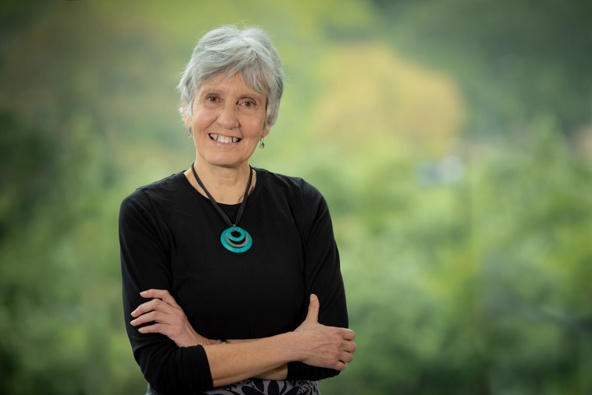
- Niki Harré is a psychology professor at the University of Auckland and atheist. In 2021 she spent a year as a self-appointed secular priest. The Calling: A year exploring what the secular world can learn from religion describes her experience. In this, the first of a three-part series, she discusses what the secular world has lost by turning away from institutional religion.