
In a country where the average teacher earns about 1,200 euros, the new net salaries of Greek bishops were set at about 3,500 euros.
Recent conversations in real and virtual cafes in Greece concern the increase in bishops’ salaries, which seems to scandalise the people.
This did not happen as a negotiation between the state and the Church, but as part of the state’s attempt to equate clergy salaries with salaries of civil servants.
Bishops, therefore, were given the salary status of Ministry Secretaries.
An old question
While this may not be unreasonable, there was a backlash on social media, which brought back the old question of whether clergy salaries should be paid by the state.
Several bishops, such as the Metropolitan of Patras, spoke immediately against the increase, saying that “just a rason [cassock/soutane] is enough for us, we should not demand more”.
Nevertheless, perhaps the Synod missed an opportunity to suggest a different regulatory framework that, while accepting state funding, pledged its use to different causes.
Better still, the Synod missed the opportunity to clearly express its views on the financial entanglement between the Church and the state, which goes back a couple of centuries.
A forgotten history
One would think it would be neater and tidier if the Church paid its clergy from its own income, like any private enterprise.
After all, membership in the Church is not mandatory.
What outsiders do not know, and unfortunately, many young Greeks do not realise, is that this is precisely how it used to be for centuries.
The Church took care of its own, receiving no state support.
In addition to the regular weekly income generated by the collection of the faithful, the Church had accumulated substantial property through donations and wills.
Confiscated property
The problem is that the Greek state has repeatedly appropriated most of the property of the Church – about 90% in the 20th century!
The last time this happened was in 1988, but the state had confiscated the majority of the property, leaving it unable to pay its salaries.
After the European Court of Human Rights ruled that the state had acted illegally, the compromise was that the state would pay the clergy’s salaries.
By the same token, any conversation for the further separation between state and clergy in Greece would have to acknowledge this balance and support the restoration of a substantial part of (what used to be) Church property, so that the Church could manage its own.
As this is not something that the state would possibly accept, the clergy does not waste its time asking for this unrealistic solution.
Yet, perhaps more thought should be put into the question of the delicate balance between Church and state.
A quiet precedent
Finally, a few people in Greece have realised that, a few months ago, the Greek bishops’ salaries were equated with those of Ministry Secretaries, and the Ministry Secretaries’ salaries were equated with those of the three Muftis who support the Muslim population (about 3% of the Greek population) in northern Greece.
Not surprisingly, there was no backlash in the media then…
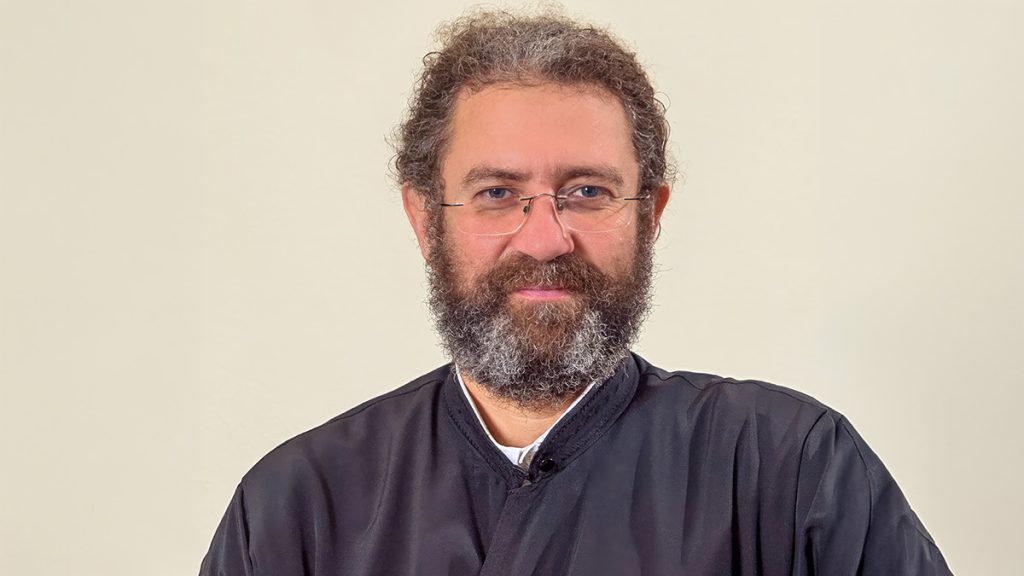
- Andreas Andreopoulos is a Greek theologian and priest.