
The image is jarring: a man dragged through the streets of Alexandria, his flesh torn away on the rocks, the ground stained red.
This is how the Coptic Church remembers the death of its founder. Not with soft iconography. With violence, and with pride.
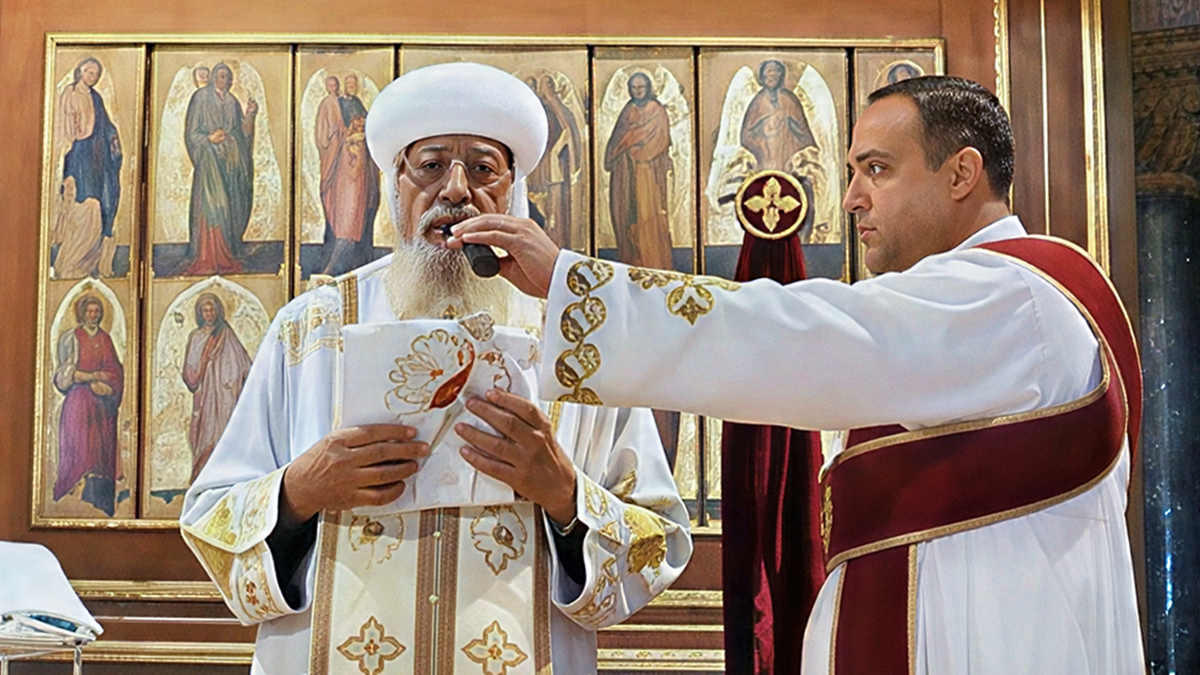
When Pope Tawadros II celebrated the Divine Liturgy at St Mark’s Basilica in Venice on May 9, 2026, that founding wound was quietly present in every chant.
More than ceremony
To outside observers, the event might have read as a gracious gesture — Rome offering its famous basilica for a visiting patriarch’s service. It was considerably more than that.
The Coptic Church does not celebrate its liturgy lightly. It will not pray in unconsecrated spaces. That Pope Tawadros chose to celebrate at St John Lateran in 2023 and now, at St Mark’s in Venice is a deliberate theological statement: these places, consecrated by the Roman Church, are recognised as genuinely sacred. The courtesy runs in both directions.
Twenty centuries, two hours
What made the Venice liturgy strange and luminous in equal measure was its compression of time. The first Alexandrian patriarch — St Mark the Evangelist, missionary, martyr — and the 118th stood in the same room, separated only by the membrane of prayer and memory.
Pope Tawadros addressed St Mark directly during the liturgy. He thanked him. He invited him to see what his church had become: scattered across the diaspora, bearing his name in cities St Mark could never have imagined. It was less a homily than a report delivered across twenty centuries.
The relic that never left
St. Mark’s relics were divided between Venice and Egypt long ago — a fracture that became, paradoxically, a bond. Where bodies are buried, claims are staked. Where they are shared, something harder to name begins.
That shared custody sits at the heart of the Coptic-Catholic relationship. It is not an agreement. It is not a reunion. It is something more durable: a common wound, a common ancestor, a recognition that the same blood runs through both traditions.
What reunion cannot yet say
Full communion between Rome and Alexandria remains unresolved. No one at Venice pretended otherwise.
But the categories of “progress” and “obstacle” — standard ecumenical vocabulary — feel inadequate here. What happened in Venice operated at a different register. Mutual recognition. Shared memory. Reverence for a martyr neither Church can claim alone.
The martyrs of Libya in 2015 — 21 men beheaded on a beach, their blood blessing the sand in Pope Francis’s phrase — stand in direct line from Mark’s death in Alexandria. The Coptic Church has always known that martyrdom is not an interruption of its story. It is the story.
Venice did not resolve that history. It honoured it.
The Coptic Church does not treat sacred space casually. That Pope Tawadros celebrated liturgy at a Catholic basilica — not once, but twice in three years — signals a quiet theological recognition that cuts deeper than diplomatic courtesy or interchurch goodwill.
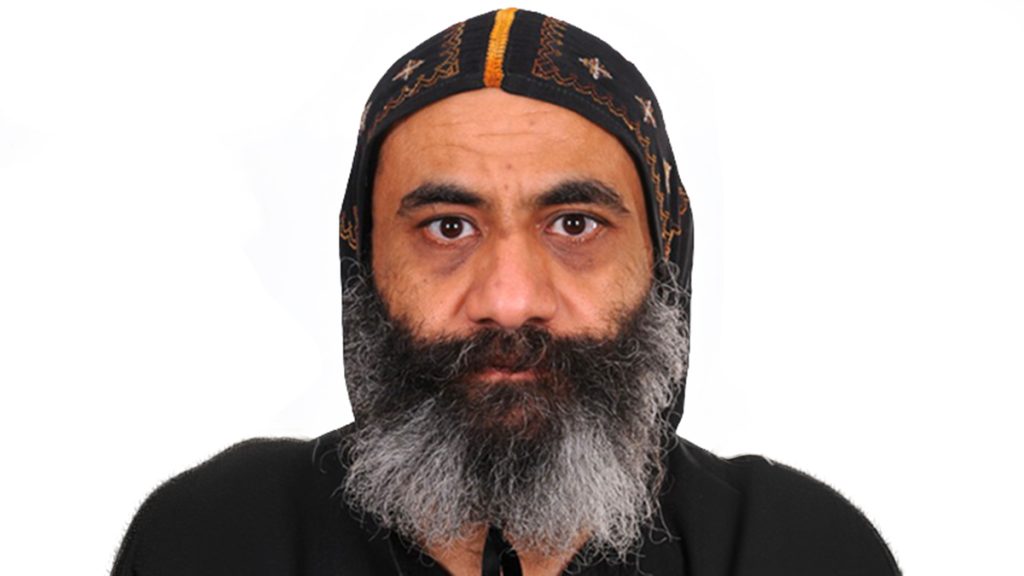
- Kyrillos ElMacari is a Coptic Orthodox monk. He holds a PhD in theology from Durham University. He completed a postdoctoral fellowship at the Angelicum, where he began his teaching career. His research focuses on patristic studies and the theology, history and ecumenical overview of the Coptic Orthodox Church, which he has represented at several ecumenical events.