
Symbols invite contemplation — but they can also be confronting and confusing. I experienced all three reactions when faced with a massive crucifix above the judicial bench in the Nuremberg Palace of Justice, where Nazis were tried for war crimes.
The crucifix had been common in Germany’s public buildings until it was replaced with portraits of Adolf Hitler as part of the Nazi secularisation project. After the war, the portraits came down and the crosses went back up. As though the space must be filled.
In 2018, the Bavarian government intensified the process by mandating that Christian crosses be placed at the entrances of all public buildings. Premier Markus Söder said they should not be seen as religious symbols but as a “clear avowal of our Bavarian identity and Christian values“. There was resistance, and the arguments continue.
Siblings at the altar
Some 110km north sits Würzburg Cathedral, named for St Kilian. Originally built in 752, it was restored after being bombed during World War II.
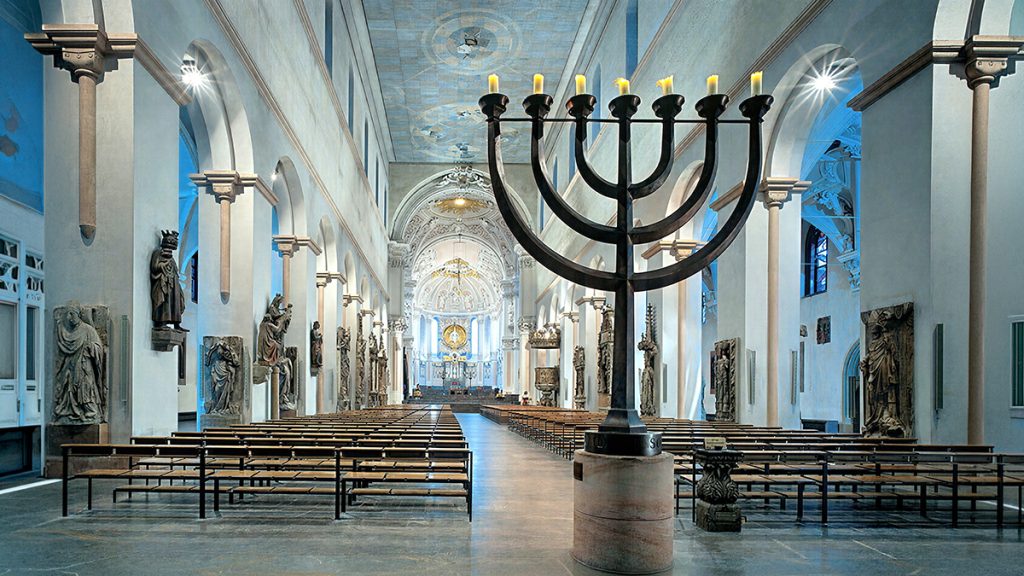
I didn’t expect confrontation in this beautiful building — but got it on the threshold, in the form of the giant menorah created in 1981 by Andreas Moritz. It’s unmissable and powerful.
When talking about symbolism in art, Carl Jung said that “their pregnant language cries out to us that they mean more than they can say“. That made sense on my repeated visits to the cathedral, pulled back by the menorah gazing towards the high altar where another crucifix hangs.
It felt as though the symbols were holding space so two siblings sharing the same mother tongue could find their post-Holocaust path together.
Nothing hidden at Dachau
Silence, space and tension appeared again at Dachau Concentration Camp. No entrance fee. No security checkpoint.
Just tree-lined paths inviting visitors to walk quietly through the camp, following the route a prisoner would have taken. Nothing was hidden. No one tried to convince me of the atrocities committed there.
At the far end of a vast open space — where prisoner barracks once stood — were Jewish, Catholic and Protestant memorials. Behind them stands a Carmelite Convent, built in the shape of a cross: a place of prayer and “a living symbol of hope“.
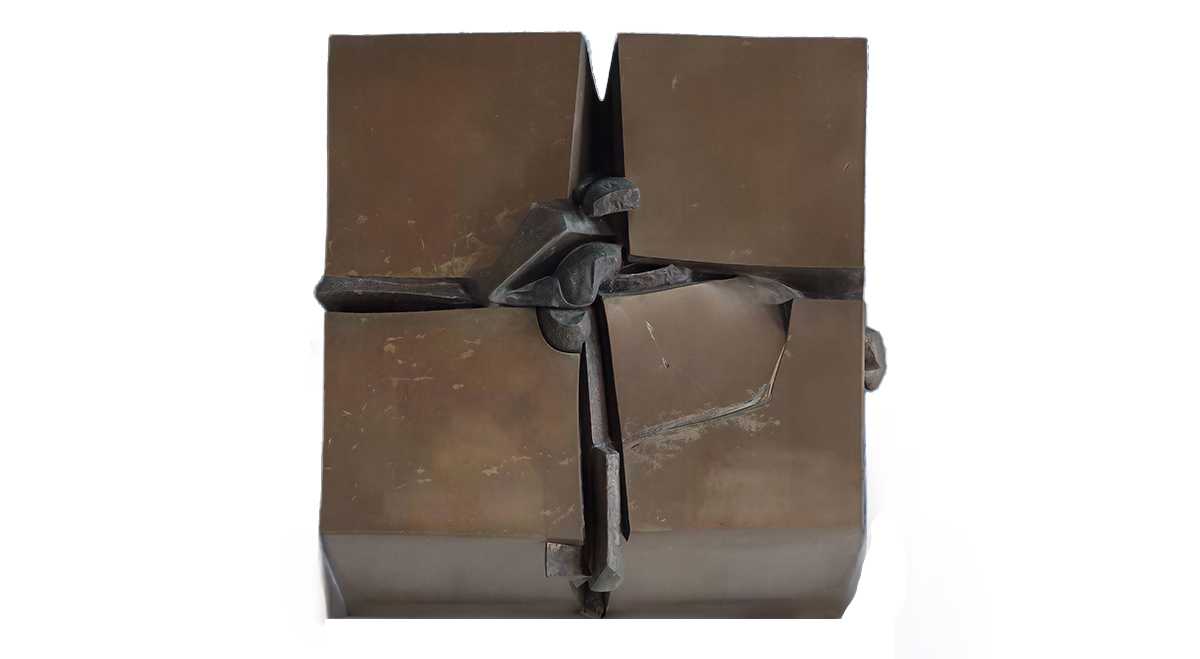
Inside the Protestant memorial, itself “a symbol of suffering and death, but also protest and resistance“, hangs another crucifix — unlike any I have ever seen. Within it, sculptor Fritz Koenig has embedded a creature struggling for freedom, appearing to destroy the very thing that threatens to subsume it.
Just before 3pm — the traditional hour of Jesus’s death — the bell beside the Catholic Mortal Agony of Christ Chapel tolled, as it does daily. Another symbol asking to be noticed, even if not understood.
As Murray Stein writes of symbols, what is being communicated is utterly untranslatable … at least for the time being.
A secular place turned holy
Walking away, I wondered whether Dachau — this secular place of suffering — had, through the presence of symbols, become something holy: a sanctuary inviting us to listen, to watch, wonder and wait. To move beyond judgement and imagine the liberating power of forgiveness.
- Sande Ramage loves exploring, one word at a time, what she and others mean by God, spirituality, and religion. She’s a healthcare chaplain, restorative justice facilitator, pastoral supervisor, and wordsmith. Inspiration arrives through pondering dreams in Jungian analysis, walking, movies on the big screen, live orchestral music, sopranos, and devouring books.