
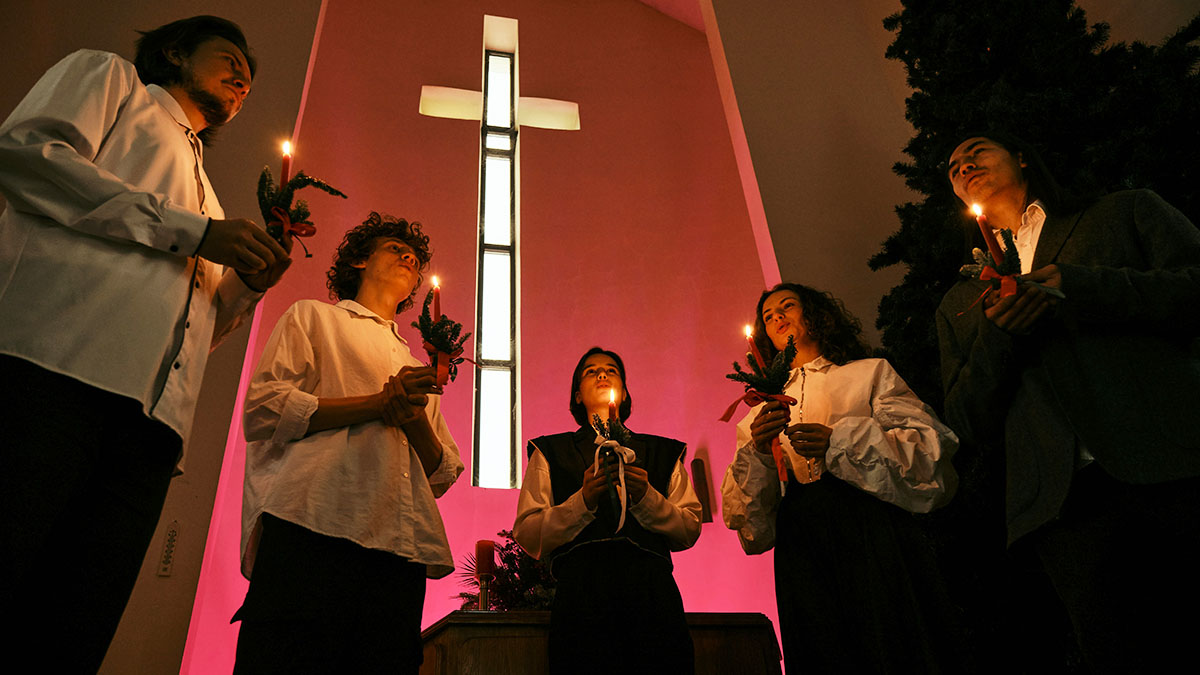
In the past couple of years Lachlan (then 9 years) and Liam (13) have asked to be baptized in their Christian community church in Canada.
Their eight-year-old sister, Esme is looking forward to her baptism next January.
Recently, while visiting, I joined my family for Sunday worship.
I was interested to discover how the faith in these young ones had been ignited and continues to be sustained.
A joyful Sunday service
Upon our arrival at the church, we were greeted by welcomers and invited to partake in refreshments. An enthusiastic young band led the gathering in songs of praise.
As people took their places, the music swelled. I looked around to see a community made up of young singles and families and a sprinkling of older worshippers.
After some time, one of the pastors joined the musicians on the stage. The children were invited to leave for their own bible study, while we refilled our coffee cups.
Once all were settled, the pastor began to preach. Some followed the scripture passage in their bibles.
Others, including a young woman beside me took notes in a specially prepared diary. All were clearly attentive to a message that was clearly relevant to their lives.
The service ended as it began, with more songs of praise. I could not help but notice the smiles and sense of joy that was palpable on the faces of the worshippers.
A seminar on the senses
The week before I had participated in a synodal seminar at Mount St Angel Monastery in Oregon with a focus on liturgy and the senses.
We began our weeklong study by engaging in a guided mystagogy activity with chrism. The elements of the exercise included the mixing of chrism and each receiving our own cloth-soaked portion.
The room soon smelled of the fragrance. We listened to the Word, and shared personal experiences.
I found the experience powerful and imagined how much richer liturgical ceremonies would be if chrism was more lavishly used in our sacramental encounters.
Reflecting on ritual and symbol
During the week we often came back to this experience, as we each shared own studies on the presence – and absence – of engaging the senses in the church’s liturgy.
We belong to a liturgical tradition that is rich in ritual and symbol. We worship together using word, song, and symbolic gestures, with great opportunities for sensual engagement.
If the elements of our Sunday worship were more lavish and abundant, we might more readily exude the joy and excitement that is attracting young people to newer Christian churches.
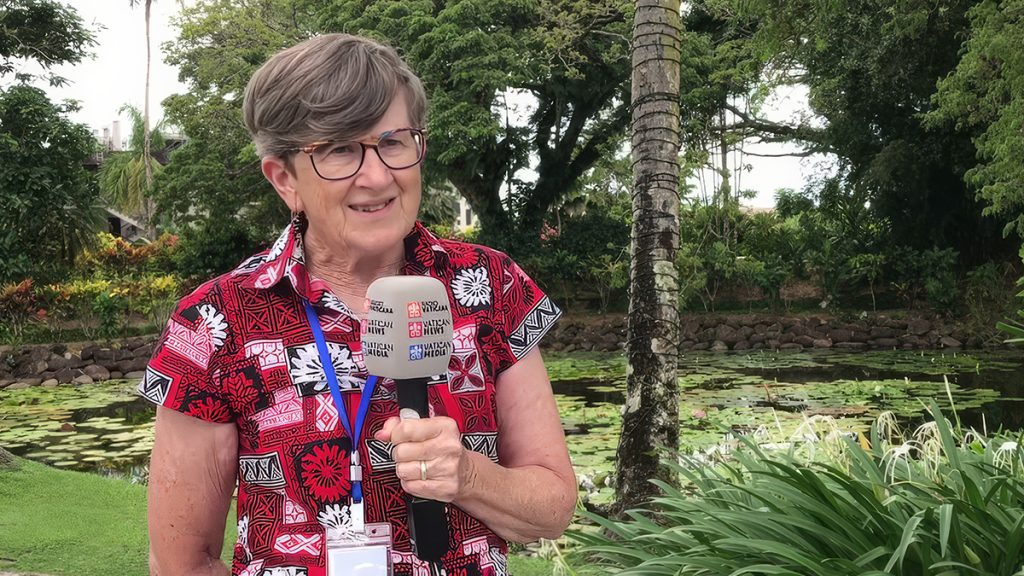
- Carmel Pilcher RSJ, PhD is a Liturgy and Culture Consultant and Educator, Darug and Gundungura country.