
The church and the world must look to Ghana’s Cape Coast Castle, where Anglican Archbishop Sarah Mullally recently stood praying on 31st July 2026 for reparative justice outside the dungeons where enslaved Africans were once held.
Pointing to the church chapel built directly above those cells, she called it a stark illustration of institutional complicity.
Her visit was an act of moral courage as it demonstrated willingness to name historical harm to begin the work of healing. We must all learn from her wisdom.
Naming neurodiversity as priority
Mullally brings this same clarity to ecclesial structures, naming neurodiversity as a priority for the Church.
She insists that dignity and participation must extend to those whose gifts have long been misunderstood or sidelined.
The connection between her twin focuses is clear: true justice always begins by naming wounds honestly.
Baptism and equal dignity
For Catholics, any conversation about neurodiversity must anchor in baptism. Through this sacrament, every person is sealed with equal dignity and incorporated into Christ.
Baptism is not conditional on cognitive style, sensory profiles, or neurological conformity.
If we take our own sacramental theology seriously, neurodiverse Catholics do not need to “fit in” to be included. The institutional Church must adapt around them, not the other way around.
Gifts, not burdens
Following Mullally’s example means listening with reverence to the lived experiences of neurodiverse believers; including their exhaustion and exclusion.
It means recognizing that they are gifts, not burdens to be managed.
Their unique perception and patterning of the world reveal facets of divine creativity that neurotypical experiences cannot fully capture.
It is worth remembering the great Apostle St. Paul was likely Epileptic, and Christ chose this neurodiverse man to bring Christianity to the Gentiles.
Reasonable structural adjustments are not concessions; they are acts of justice rooted in solidarity.
Ahead of the Church
Mainstream culture has already begun to articulate what the Church has not yet dared to embrace.
In the hit series The Chosen, Saint Matthew is portrayed as autistic. This choice has proven profoundly liberating for neurodiverse Christians and their families.
He is not a problem to be solved; he is central to the Gospel narrative. His neurological difference is not erased, but honoured as essential.
Here, the cultural zeitgeist is ahead of the Church, proving that neurodiverse representation can be both dignified and theologically resonant.
True healing requires active repentance and structural change: liturgies that do not overwhelm, communities that do not exclude, and leadership that refuses to treat accessibility as an afterthought.
An autistic or disabled Catholic is just as fundamentally a part of the Church as a bishop or the Pope. Baptism creates a single body, not tiers of belonging.
As Saint Paul reminds us, God chose what is weak to shame the strong. If the Church excludes neurodiverse people, it excludes Christ.
Archbishop Mullally has shown what courageous leadership looks like. Catholics should follow her example.
Not out of Anglican imitation, but out of absolute fidelity to our own tradition.
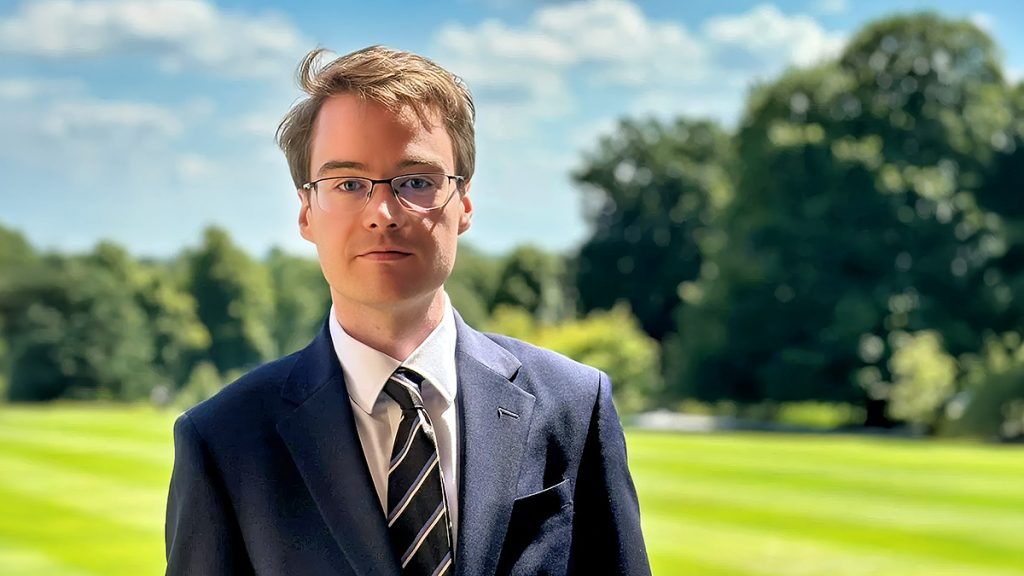
- James Gordon Reid Haveloch-Jones is an educational consultant, public theologian, and author of an Amazon Top 50 Study Skills bestseller. He is an Honorary Associate Fellow of St George’s House, Windsor Castle, and a trustee of the Heythrop Association at the University of London. He completed post-graduate studies at the University of Oxford Faculty of Theology. He is a Contracted Contributing Writer for the Catholic Bishops’ Conference of England and Wales (“God Who Speaks”) and a guest writer for: The Tablet, Church Times, National Catholic Reporter and Premier Christianity. Website: www.jamesgordonreid.co.uk