

Sydney just told its priests to bring back the kneelers, and Rome has told Germany’s bishops no to letting laypeople preach in place of the homily.
Neither answer is really about liturgy but about power.
Women, in particular, who used to be the backbone of the church, are leaving it in droves. They do not want to be part of their own oppression in such a patriarchal institution.
And so many young and not-so-young people are finding going to church irrelevant to their daily lives.
There is a dire need for visionaries within our contemporary Church.
Visionaries who can interpret the signs of the times and challenge us as the People of God to move into a future where fear of change gives way to a courageous embrace of Spirit-led change.
Resistance from the hierarchy
However, there is strong hierarchical pushback that interprets any forward movement, including the Synodal way, as a threat.
This pushback movement resists calls to bring the Church into the modern era and uses its hierarchical power to block any such challenge.
The recent pastoral letter issued for the Solemnity of Corpus Christi by Anthony Fisher, Sydney’s Dominican Archbishop, entitled “Adoring the Eucharistic Lord: Let Us Kneel Before the God Who Made Us,” is an indication of that resistance to change.
His solution to this existential crisis in the church is a return to pre-Vatican II practices and rituals.
Back to the future
Key directives from the Archbishop’s letter include:
- Restoring Kneelers — mandating the return of kneelers in every Sydney church where they had previously been removed.
- Teaching Postures — encouraging priests to guide the faithful in proper liturgical practices to enhance devotion, including signs of reverence before receiving Holy Communion, such as genuflecting or kneeling to receive Communion.
Rome says no to Germany
The Vatican, too, is resisting change.
On June 23 last, the Dicastery for Divine Worship and the Discipline of the Sacraments announced its rejection of a request made by the German bishops’ conference to allow “in exceptional circumstances, a duly commissioned lay member of the faithful to preach in place of the homily during the celebration of the Eucharist.”
It decreed that preaching the homily is “intrinsically linked to the proclamation of the Gospel” and is therefore restricted to ordained priests and deacons.
Where is Synodality heading?
This refusal by the Vatican to listen to the German Synodal movement and the German Bishops augurs badly for the future of Synodality, not just for German Catholicism but for the universal Church.
Justifying its refusal using medieval Vaticanese theology only makes matters worse.
Synodality, as a movement of the People of God and as the expression of the Sensus fidelium, is not effecting the change that so many Catholics — priests, religious, laity, and some bishops — had anticipated.
For them, it is like waiting for Godot, as the institutional Church is seen as impervious to reform even on non-essential issues.
The danger now is that, after giving their all to what so many faithful saw as a prophetic synodal process, they feel they have been shortchanged.
For them, this synodal journey is in danger of losing its way, and instead of a much-anticipated forward-looking synodal journey, it has led them down the garden path and is in danger of becoming a public relations exercise delivering rhetoric rather than substance.
Yet this disillusionment need not be the final word. However, we continue to live in and through the Spirit of hope.
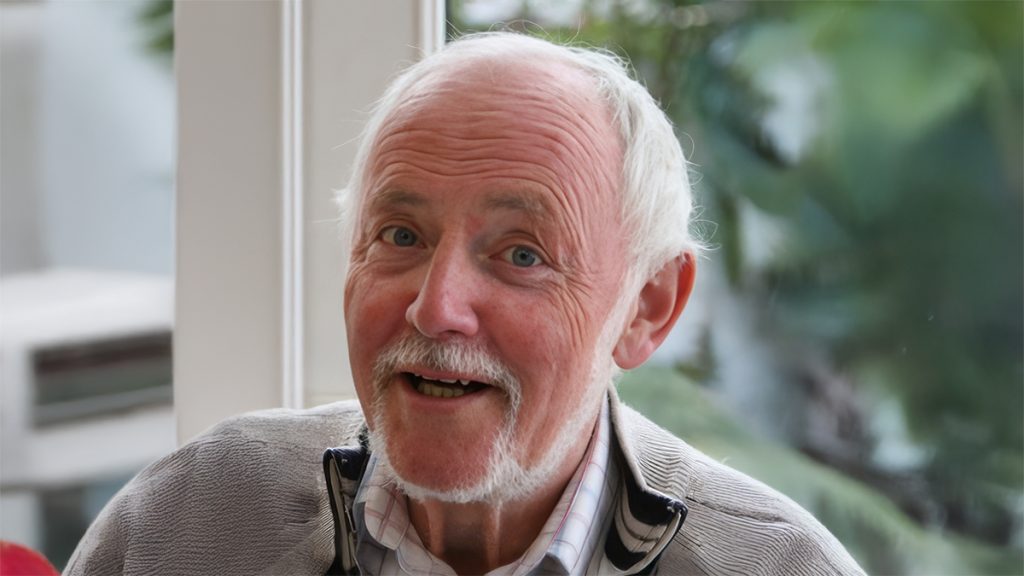
- Brendan Butler is a former secondary school teacher who specialised in teaching Religious Education. His postgraduate degree was in theology from the Antonianum University in Rome. In 1979, he co-founded “The Irish El Salvador Support Committee” and later “The Ireland Algeria Solidarity Group”. He was the co-ordinator of “The N.G.O. Peace Alliance” which was active in the Irish peace movement. He helped to revive the Catholic Church reform movement “We are Church Ireland”, of which he was joint co-ordinator and spokesperson for several years.
- He published My Story by Jesus of Nazareth, and actively contributes articles and letters on Church and human rights issues to Irish newspapers.