

As religious people, we can live in a dichotomous existence.
As we bless ourselves entering a Church, we step into a world characterised as holy and sacred, insulated from the profane world we have left. The identifying feature of the God into whose sanctuary we have entered is Holiness, and all persons and objects associated with His worship are sacred.
The person ordained to preside over the celebration of sacraments and rituals is a consecrated priest, a member of the sacred order of the hierarchy whose head, the Pope, is addressed as “his holiness”.
The distinguishing feature of this ambience is one of reverence and silence.
The otherness of this sacred world lies in stark contrast with the secular existence of most people, who live in an unholy world that needs to be redeemed.
The distinction between the holy and the profane, between the divine and the mundane, is the bedrock of traditional religious thinking – a gulf between the interests of human beings and the demands of God.
The Prophetic view of God
However, instead of holiness being synonymous with God, some modern theologians present Pathos (or “divine pathos”) as God’s identifying characteristic.
In this theology, God is not a cold, distant observer, but an emotionally alive presence who cares about and is affected by human history, moral choices, and human suffering.
Origin of the idea
Made famous by Jewish theologian Abraham Heschel and developed by Jürgen Moltmann in Germany and Kazoh Kitamori in Japan, all three built their theologies of the Passionate God from the ashes of World War II.
This concept of God:
- Challenges the old idea that God is remote and cannot feel or change.
- Shows God as an active partner in human history, not an unfeeling spectator.
- Presents a God who feels hurt by evil and brokenness.
- Reflects God’s choice to care deeply, showing a dynamic relationship with people.
This idea of “Divine Pathos” is both paradox and mystery.
For Heschel, ‘it is thought-staggering and hardly compatible with any rational approach to God that the Creator of heaven and earth should care how an obscure individual behaves towards widows and orphans, and is affected by what a tiny particle of his creation does or fails to do’.
A scandal
Many may feel scandalised by such a view, since we more readily associate God with absolute majesty, unimaginable grandeur, and all-powerfulness, an image portrayed in the Book of Revelation. It seems inconceivable that this Supreme Being should be involved in human lives.
Yet Pathos adds a new dimension to human existence. According to Heschel, human beings are raised beyond mere creaturehood to being “a consort, a partner, a factor in the life of God.”
This prophetic revelation of a God immersed in human history and affected by human actions was continued by Jesus of Nazareth, the incarnate Son of God, who presented a God driven by “Divine Pathos” for the oppressed and marginalised.
How our concept of God shapes our lives
Our concept of God significantly influences our lives. If we envisage ourselves as made in the image of the God of Holiness, we will strive to be a holy people.
If we conceive God as a God of Pathos, we, made in his image, will strive to live a life of pathos.
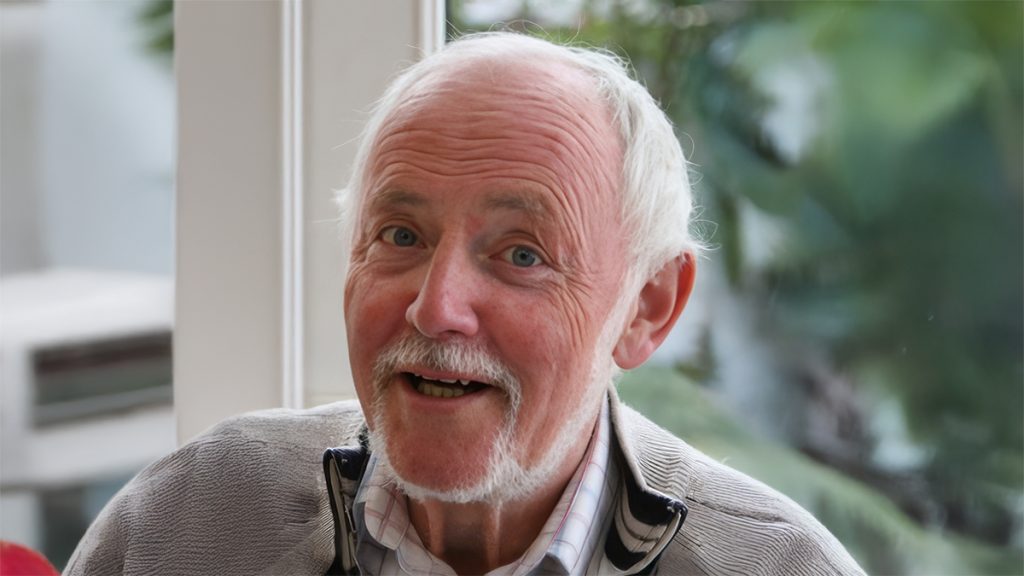
- Brendan Butler is a former secondary school teacher who specialised in teaching Religious Education. His postgraduate degree was in theology from the Antonianum University in Rome. In 1979, he co-founded “The Irish El Salvador Support Committee” and later “The Ireland Algeria Solidarity Group”. He was the co-ordinator of “The N.G.O. Peace Alliance” which was active in the Irish peace movement. He helped to revive the Catholic Church reform movement “We are Church Ireland”, of which he was joint co-ordinator and spokesperson for several years.
- He published My Story by Jesus of Nazareth, and actively contributes articles and letters on Church and human rights issues to Irish newspapers.