
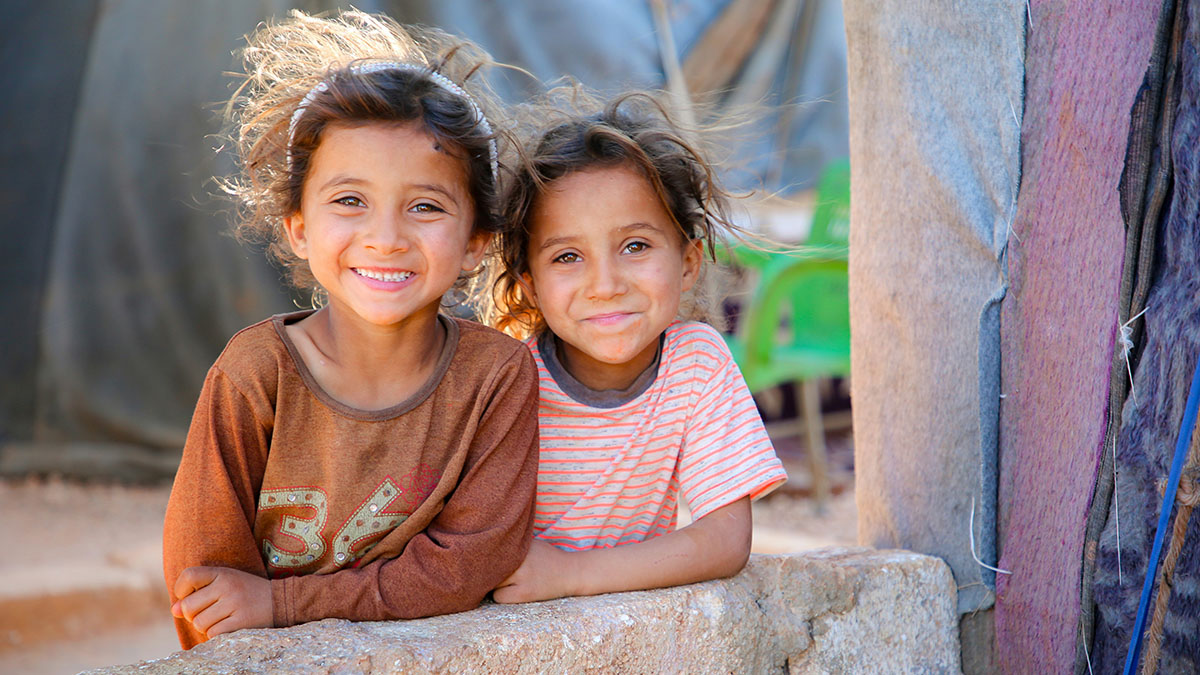
Nightly, we are bombarded by heartbreaking media images of starving children around the globe. Too often, we turn a blind eye and change the channel to avoid being distressed by their plight.
Children and youth are dependent on others for care and protection. We have a duty to protect them from harm and provide the essentials needed during their critical time of growth and development.
Catastrophic scope of hunger
Today, more than 100 million families, displaced by war, poverty and natural disasters, live in unsafe housing and lack the basic necessities of clean water and nutritious food.
Approximately 45 million children across the globe suffer, especially in the Global South, from severe malnutrition. Even in affluent Canada, an estimated 1.15 million children live with food insecurity.
An appalling 45% of deaths of children under 5 yrs. globally are linked to its consequences.
Devastating effects of malnutrition
High-quality nutrition is critical for the optimal growth and development of children and adolescents, especially from conception to 3 years.
Their brains are physically growing, and they are particularly susceptible to inadequate nutrition, resulting in infant mortality, low birth weight, smaller brain mass and lower academic achievement.
Unanswered cries for basic needs are deeply traumatic. Children’s brains are also developing crucial neural pathways.
Developmental traumatology has shown serious, enduring mental health issues in chronic unanswered cries for food, including loss of trust in caregivers and lifelong PTSD “fight or flight” reactions to stress.
Moral outrage over promises
In April, 2016 the U.N. proclaimed 2016-2025 the Decade of Action on Nutrition Sustainable Development Goals for 2030: ending hunger, achieving food security and improved nutrition, sustainable agriculture, ensuring healthy lives and wellbeing for all ages.
Sadly, on June 25, 2026, the U.N. reported rising hunger and growing inequity. Accountability for household food security needs to be a pillar of public policy.
Deep systemic analysis of the root causes of hunger is urgently needed.
Food-based interventions are crucial but fail to reduce hunger. The causes of childhood hunger include poverty, conflicts, natural disasters, and inflation.
Hunger fuels multi-generational poverty.
Research shows the crucial importance of universal basic incomes; stronger care systems; public employment guarantees, ecological restoration; and fair wealth distribution, which empowers parents.
The Sustainable Development Goals Summit in September 2027 will report on the present crisis. There is an urgent need for effective response if traumatic failure is to be averted.
Challenge of political shifts
The U.N. Roadmap for the Eradication of Poverty Beyond Growth declared “The scarce resources we have should be used to prioritize the basic needs of people in poverty…rather than serve the frivolous desires of the ultra-rich.”
Pope Francis identified widespread avarice and greed as “a sickness of the heart.”
Let us open our eyes, ears, and hearts to the plight of hungry children.

- Nuala Kenny is a Sister of Charity in Halifax, Nova Scotia, and a pediatrician. An officer of the Order of Canada since 1999, she has published several books, including Healing the Church (Novalis, 2012) and Rediscovering the Art of Dying (2017). She is co-author of Still Unhealed: Treating the Pathology in the Clergy Sexual Abuse Crisis (Novalis and Twenty-Third Publications, 2019). She most recently published A Post-Pandemic Church: Prophetic Possibilities (Novalis and Twenty-Third Publications, 2021).