
A central illusion in most religions is that their beliefs, structures, and rituals are unchanging.
They assert a continuity that stretches back into, quite literally, time immemorial.
This phenomenon has been studied for more than a century: Mircea Eliade’s notion that religion links people to their mythic original time – in illo tempore – being its most famous description.
Theoretically, for monotheists such as Christians, this should not be the case: only the Creator could be beyond time, and since all else (the creation) is subject to time, the norm should be that every creature is changing and developing.
And, indeed, this is at the core of our human situation: we are on a journey, life is a pilgrimage.
Change will only cease at some future, unknown moment.
Unfortunately, most Christians slip into thinking their particular focus of attention, usually either “the bible” or a “deposit of doctrine,” is not only immune to change but somehow perfect, and the last word that is to be said on a topic.
A painful exclusion
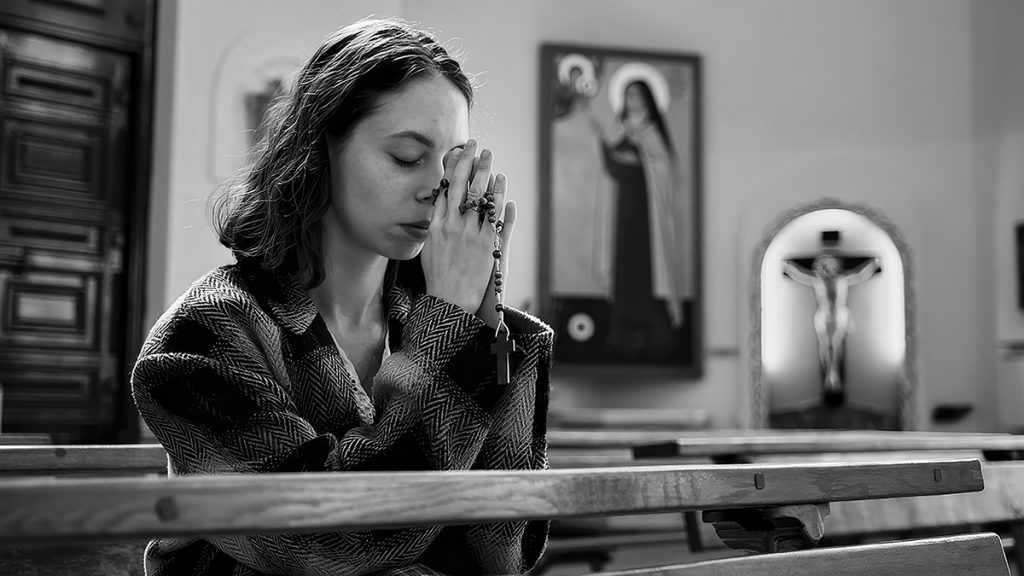
One particular bit of doctrine that affects practice that has got stuck in this way (i.e. it is repeated rather than reflected upon) is the Catholic Church’s statement that only those they consider in doctrinal agreement with them on the significance of the Eucharist (labelled variously as “Holy Communion” / “the Mass” / “the Lord’s Supper”) can participate fully at its celebration.
Put crudely, this means that
- If you are a Protestant, you are not invited to eat or drink at a Catholic service, and
- A Catholic, even if welcome at a Protestant Eucharist, must refuse to share fully in the meal event by eating and drinking.
It hurts people
This policy of clear blue water between denominations was standard policy for centuries, but with the rise of the ecumenical movement in the twentieth century, it seemed out of place.
Nonetheless, the Catholic Church, while willing to talk about unity, saw this step as impossible “until there was unity of faith” (i.e. doctrinal uniformity) without recognising that this approach postpones sharing, actual ecumenism, until the end of time.
So the “dialogues” are only abstract chatter.
This matter might seem like a mere curious ritual detail, except that the very groups involved all see gathering to thank the Father through Jesus as the centre and summit of worship.
Not to share at a eucharistic celebration casts a doubt and a cloud over moves towards unity.
This Catholic no-go attitude not only creates deep hurt and tension at official levels in relations between church leaders, but it creates tensions in households every Sunday where partners want to worship together, but one or the other feels excluded – it is a question that causes hurt to people.
This problem appeared to be easing in the aftermath of Vatican II (1962-5), but in recent decades, under two conservative popes (John Paul II and Benedict XVI), the situation deteriorated again.
Indeed, in 1998, the Catholic bishops in Britain and Ireland issued a statement, One Bread One Body, which, de facto, forbade any sharing of communion until a very distant (not to say impossible) future moment.
Moreover, in a very conservative climate, it became clear there was serious resistance to any discussion or research.
Significantly, One Bread One Body has served as the basis for many other Episcopal Conferences’ documents.
It is now, by default, the Catholic norm.
Francis opens the door
This negative climate of silence was changed suddenly in 2015.
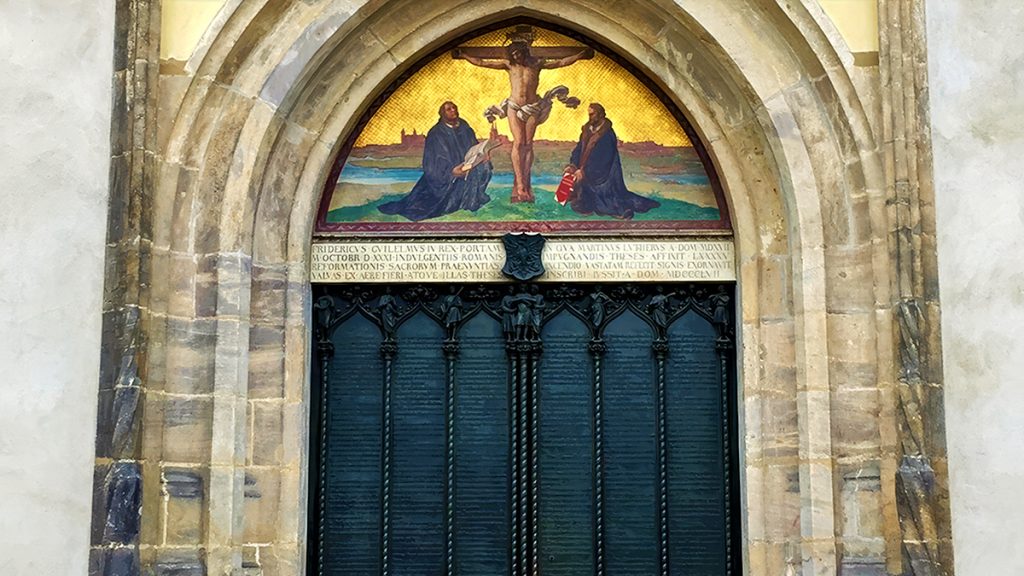
To mark the 500th anniversary of Martin Luther throwing down his challenge to the papacy, Pope Francis visited the Lutheran Church in Rome.
Afterwards, he agreed to take questions from the congregation and this issue of intercommunion was, not surprisingly, the very first item raised.
Rather than closing down the question, the Pope opened several new avenues of thought that could lead to a change in Catholic law and practice.
Pope Francis used his familiar approach, stating that the church is more of a field hospital for suffering humanity than an oracular lawgiver.
What, he wondered, if communion was food for a journey needed by people, rather than a reward?
This new openness caused ripples.
While all noted that the comments implied a new openness, conservatives dismissed it as no more than thinking aloud: a lapse in precision rather than a signal for change.
However, few noticed that Francis also called on theologians to explore this difficulty afresh.
A meal for all
So can one create a theological rationale for change?
Here is just one such argument. We, humans, need food, but only through human teamwork can we eat. Robinson Crusoe, the ideal individualist, is a great story, but fanciful. We also collaborate to cook it – even alone in a bedsit, there are others generating electricity!
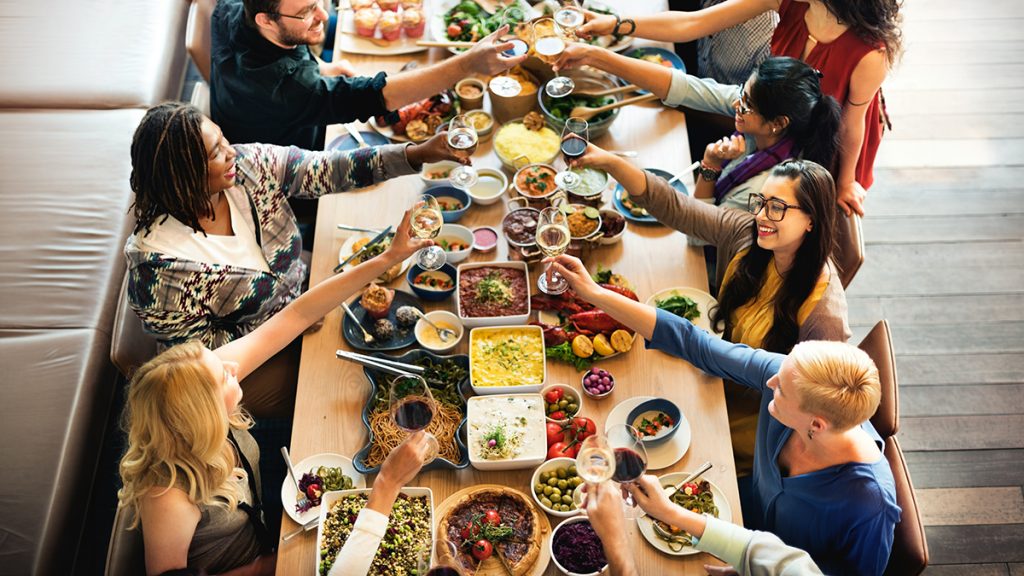
We, humans, do not simply eat together; we share meals.
Meal-sharing is distinctively human, and this sharing has an inherent structure.
This has implications for the Eucharist because, to say the least, its form is a meal.
Can you be present, and I refuse to share the food with you? To do so makes my own act contradictory: I act in a non-human way.
Could such behaviour ever be worthy towards anyone, much less someone whom, because of baptism, I already am willing to address as “sister” or “brother”?
Family meals must promote reconciliation by sharing, or they are dishonest and so unworthy of worship.
Fixing this ulcer of division among Christians means reimagining the meal Jesus bids his followers share in his memory.
If we talk about unity, but do not eat together, we are not being truly human.
Moreover, the notion that doctrine is a fixed body of ideas – by analogy of the way some people speak of “the laws of physics” – is itself a real threat to the proclamation of the gospel.
After all, at the heart of the gospel is the news that God has done something new in Jesus of Nazareth.
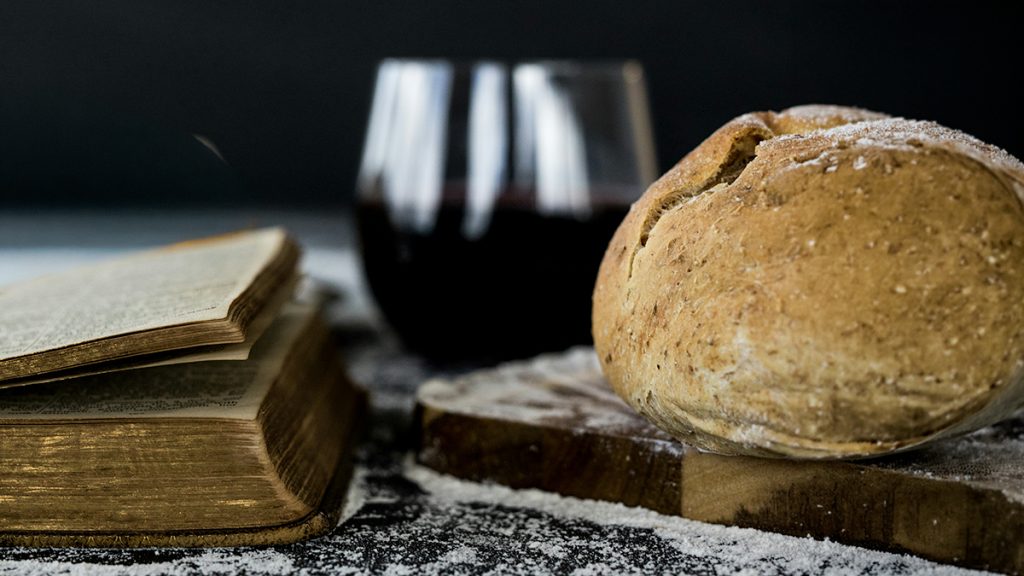
This moment: Eat!
We now have a new pope – and we still have the problem, and it would be a great pity if the late pope’s field hospital approach were forgotten.
But we do not need further dialogue, yet more research, but action.
Will Leo XIV take the much-needed step — and share the food that is on the table with those willing to stand with him around that table?
The time of talking is over: it is time to eat.
- Thomas O’Loughlin is a presbyter of the Catholic Diocese of Arundel and Brighton and professor emeritus of historical theology at the University of Nottingham (UK). His latest book is Discipleship and Society in the Early Churches.
- His latest book is “Shaping the Assembly: How Our Buildings form us in Worship”.